


What Size Generac Generator Do I Need?
Most homes need a Generac standby unit between 10 kW and 24 kW. The right size depends on what you want to keep running during an outage.
A 10-14 kW model covers essentials such as the refrigerator, sump pump, and lights. A 20-24 kW unit can power central air, a water heater, and most daily appliances at once. Larger houses with heavy HVAC, electric heat, or 400 amp service may need 26 kW or more.
The most accurate way to size a Generac home generator is to add your running watts, account for the initial starting load, then confirm the number with a professional load calculation. This Generac sizing guide walks through the numbers by home size, panel amperage, and appliance load.
At Grounded Electric, we help families prepare for outages with safe, reliable backup power. Our licensed team, led by Robert “Bobby” Mulholland and co-owner Barret Abramow, matches every install to your property’s power needs and long-term plans.

How to Determine the Right Generac Size
We provide safe and affordable electrical work for both homes and businesses.
How Do I Determine What Size Generac I Need?
The first step is deciding what you want to keep on. Do you want backup for essentials only, or full coverage for the entire house?
Grounded Electric reviews your priorities, from critical appliances to central air and water heaters, then recommends a unit that fits. Sizing is about electrical load, not guesswork, so we build the recommendation around real wattage numbers.
Running vs. Starting Wattage
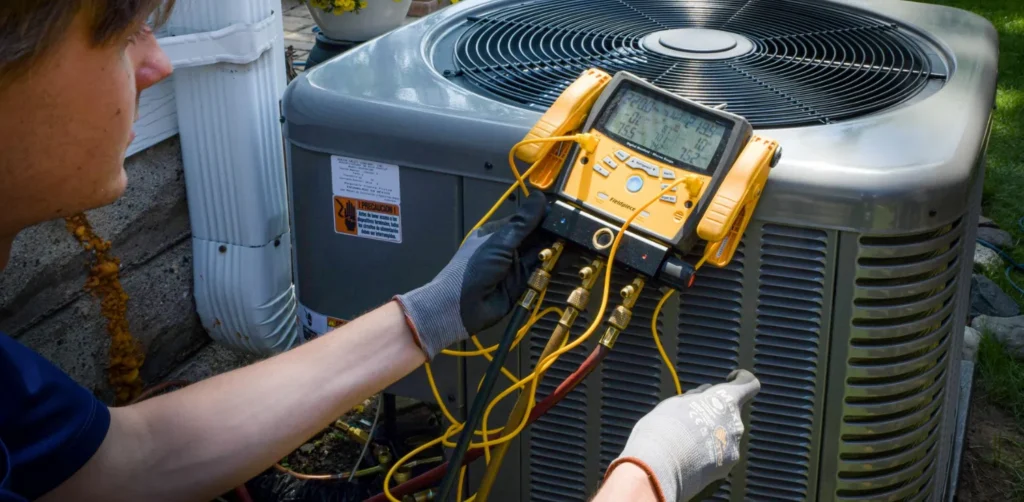
Appliances draw two kinds of power: running and starting. An air conditioner might use 2,000 watts to run but pull up to 4,000 watts to start.
Knowing both numbers prevents overload. Our electricians calculate the running total and the single largest starting surge to find the standby capacity your house re
Common Appliance Loads
Here are typical running and starting figures for the systems most families want covered. Motors and compressors need the extra surge for only a few seconds when they switch on.
| Appliance or System | Running Watts | Starting Watts |
|---|---|---|
| Refrigerator | 700 to 800 | 1,200 to 2,200 |
| Water heater (electric) | 3,000 to 4,500 | Minimal surge |
| Central air system | 2,000 to 4,000 | 4,000 to 6,000 |
| Sump pump | 1,000 to 2,000 | 2,000 to 3,000 |
| Furnace blower | 600 to 800 | 1,200 to 1,600 |
| Well pump | 1,000 to 1,500 | 2,300 to 3,000 |
Add the running watts for everything you plan to run at once, then add the single highest starting figure. That sum is the minimum output your standby system must deliver.
The 20/20/20 Rule
A widely used buffer among installers is the 20/20/20 rule: add 20% to your running wattage, 20% for starting surges, and 20% for future needs. This cushion keeps the unit from operating at its limit and leaves room for a new appliance or an addition down the road.
A useful guideline is the 20/20/20 rule: add 20% to your running wattage, 20% for starting surges, and 20% for future needs. This buffer ensures your generator can handle unexpected demand.
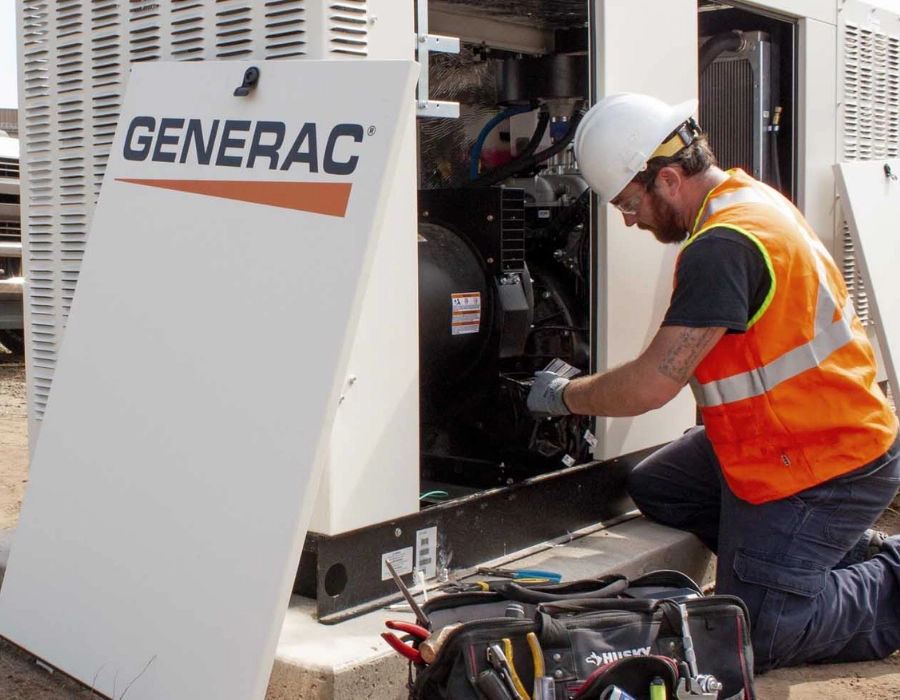
Generator Size Options
Best Whole House Generator Choices
This section breaks down the standard Generac generator sizes, from covering a few essential circuits to running the whole property. The right choice comes down to your load total and your cooling type.
Best Whole House Generator Choices
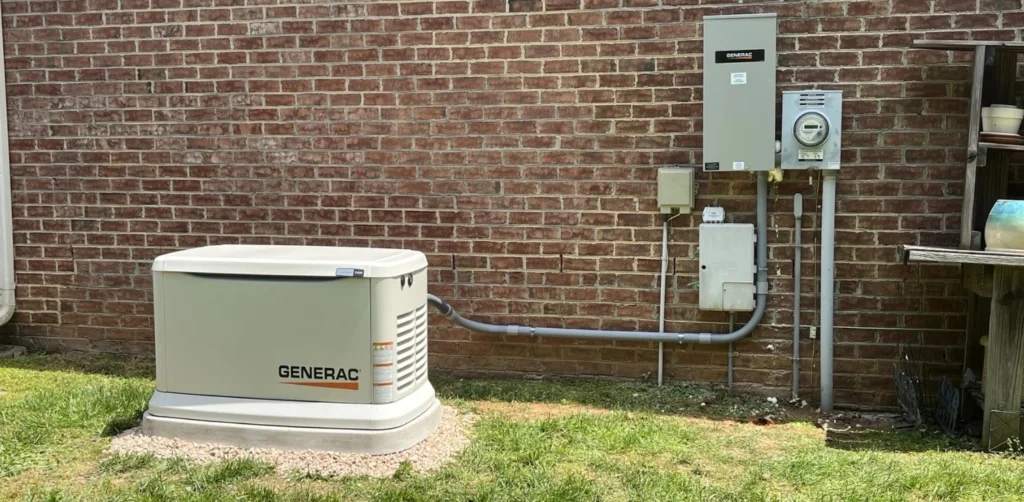
For families who want complete coverage, a Generac whole house generator is the strongest option. These units keep every system running, including heating, cooling, and major appliances, through an extended outage.
The table below maps four common backup goals to a recommended size range.
| Backup Goal | What It Powers | Recommended Size | Notes |
|---|---|---|---|
| Essential circuits | Refrigerator, sump pump, furnace blower, lights, key outlets | 10 to 14 kW | Safety-focused backup for smaller households |
| Comfort coverage | Essentials plus kitchen loads, home office, one AC unit | 16 to 18 kW | Depends heavily on HVAC starting watts |
| Whole-house convenience | Most everyday circuits, central air, major appliances | 20 to 24 kW | Load management may still be recommended |
| Large or high-demand | Multiple HVAC zones, well pump, electric heat, EV charger | 26 kW and up | Often a liquid-cooled unit with a load calculation |
10–14 kW for Essentials
A 10- 14 kW unit covers lighting, refrigeration, and small appliances. This size suits smaller households that want basic comfort and safety during an outage without paying for capacity they will not use.
16–22 kW: Is a 22kW Generator Enough?
For medium- to large-sized households, a 20- 24 kW unit is often ideal. A 22 kW model can power critical systems such as central air, a water heater, and several appliances at once, which makes it one of the most popular choices for full-time backup.
26–48 kW for Large Properties
Houses with large square footage or high electrical demand may need a 26- 48 kW unit. This range provides full coverage for heating, cooling, and heavy loads such as pool pumps or EV chargers.
26–48 kW for Large Properties
Portable units offer temporary relief but require manual setup and constant refueling. A home standby system, wired through a transfer switch, starts automatically when the grid fails and is the safest long-term choice for reliable backup.
Generac Sizing by Home Size
Square footage is a starting point, not the whole answer. A smaller house with electric heat or a well pump can need more capacity than a larger one with fewer high-demand loads. Use this Generac generator sizing chart as a planning reference, then confirm the final number with a load calculation.
| House Size | Recommended Size | Typical Coverage |
|---|---|---|
| 1,200 sq ft | 10 to 14 kW | Lights, refrigeration, basic comfort systems |
| 1,500 sq ft | 16 kW | Essentials plus one air conditioning unit |
| 2,000 sq ft | 20 to 22 kW | Heating, cooling, daily-use appliances |
| 2,500 sq ft | 22 to 26 kW | Full or partial whole-house coverage |
| 3,000+ sq ft or 400 amp | 26 to 48 kW and up | High-demand systems, liquid-cooled units |
1200 Sq Ft Homes
A 1,200 sq ft house typically carries a lighter total load than larger homes, so the 10-14 kW tier is usually enough. Homes this size rarely run central air and a well pump on the same panel, so the total starting watts stays manageable.
1500 Sq Ft Homes
A 1,500 sq ft house typically fits a 16 kW unit, which covers essentials plus an air conditioning system.
2000 Sq Ft Homes
The common question is what size Generac generator for a 2000 sq ft house? Most need a 20-22 kW unit capable of powering heating, cooling, and all daily-use appliances.
2500 Sq Ft Homes
Larger 2,500-sq-ft houses often call for 22-26 kW. The right size depends on total wattage demand and whether you want full or partial coverage.
Larger 2500 sq ft homes often need 22–26 kW generators. The generator size for your home depends on the total wattage demand and whether you want full or partial coverage.


Technical Sizing Factors
200 Amp Service and Panels
What size Generac for 200 amp service? Most houses on a 200-amp panel land on a 22 kW unit, though a whole-house install can run 24 kW or larger, depending on your loads.
A 200-amp service can carry more power than a 100-amp panel, so a standby unit for 200-amp service is generally sized larger to support the full load. What size standby generator for 200-amp service is right for your home usually comes down to a 22 kW unit, though a full load calculation confirms the exact number.
Choosing the correct capacity keeps the panel fully backed without tripping breakers. If your current panel can’t support the size you need, an electrical panel upgrade is usually addressed at the same time as the generator install.
Sizing for 400 Amp Service
What size generator do I need for 400 amp service? A 400-amp panel signals substantial demand, which is common in larger houses with multiple HVAC zones, electric heat, or extensive smart systems.
Homes this size usually need a liquid-cooled unit rather than a standard air-cooled model, often 26 kW or more. Because the load is complex, a professional load calculation is essential to size it safely and to account for future additions such as an EV charger or a pool.
Generac Space Requirements and Clearance from the House
Generac space requirements generally call for at least 18 inches from the house, 60 inches from doors, windows, and fresh-air intakes, and 36 inches of open space in front for service access.
How close can a Generac generator be to the house? Local codes and the manufacturer’s manual set the minimums, and they vary by municipality. Our team confirms the exact clearances for your property so the install passes inspection the first time.
Transfer Switches,
Safety, and Compliance
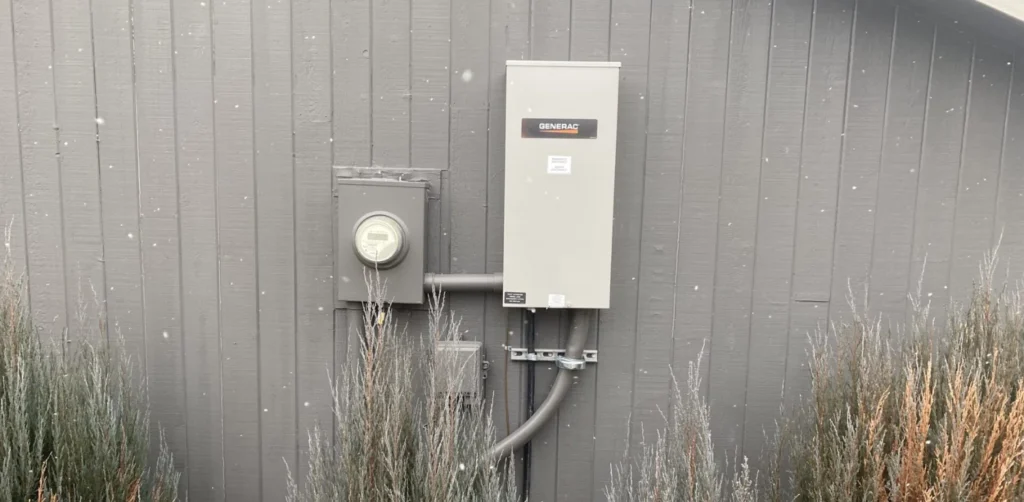
Every standby unit must connect to a transfer switch. This device prevents backfeeding and keeps the installation compliant with local electrical codes. At Grounded Electric, Barret Abramow oversees compliance checks to protect both safety and property.
Generators can run on natural gas or propane. Fuel choice affects performance, costs, and runtime during long power outages. Our licensed team evaluates which option fits your household best.
Heating, Cooling, and
EV Chargers
Systems like central air, electric heat, or an EV charger place heavy demand on the system. These loads often push a house toward a 22 kW or larger unit to handle the starting surge and steady draw.
Fuel Source and
Consumption
Standby units run on natural gas or propane. Fuel choice affects performance, cost, and runtime through a long outage. Our licensed team reviews which option fits your household and confirms the supply can keep up when the unit runs alongside your other gas appliances.
If you want to estimate runtime before deciding, our fuel consumption calculator breaks down usage by generator size and fuel type.
Professional Installation and Support

Site Evaluation and Permits
Proper installation starts with a site evaluation. Bobby Mulholland and his team inspect the property, size the unit, confirm clearances, and secure the permits before work begins. For a full breakdown of what to expect, see our guide to generator installation cost in NJ.
Ongoing Maintenance and Service
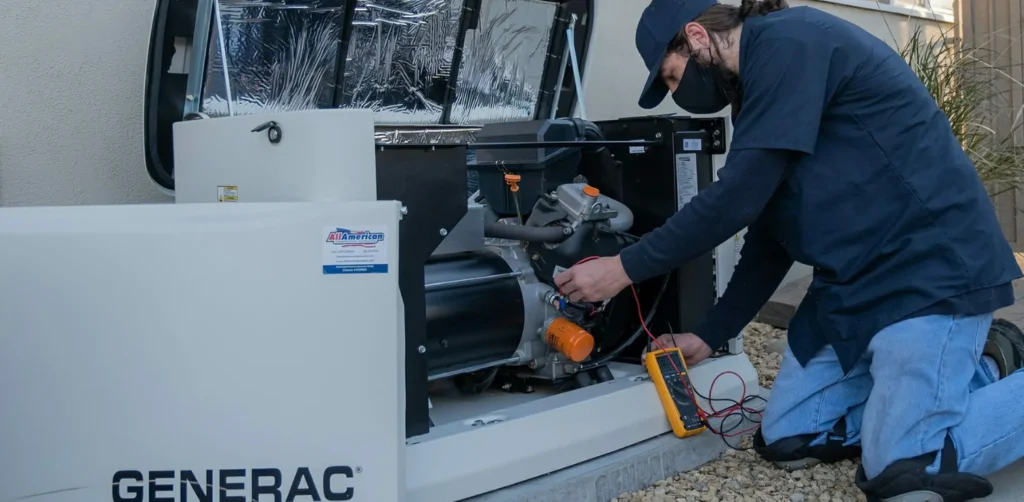
Standby units need regular care, including oil changes and inspections. Grounded Electric offers maintenance packages that keep your backup system reliable when you need it most.
Generac Sizing FAQs
- What happens if I choose a unit that is too small? An undersized model struggles to meet demand, especially when a large appliance like your air conditioner starts. It can overload, trip its breaker, and shut everything down, which is why getting the size right from the start matters.
- Can I size a unit by square footage alone? Square footage gives a rough starting point, but it should never be the only method. A smaller house with electric heat or a well pump may require more capacity than a larger one, so sizing should be based on the actual electrical load.
- Should I cover the whole house or just the essentials? That comes down to your priorities. Many families are comfortable powering essentials like the refrigerator, sump pump, and lights; others want a whole-house system that keeps central air and every outlet running. We help you weigh both.
- How close can the unit sit to the house? Clearances are set by local code and the manufacturer, usually at least 18 inches from the house and 60 inches from doors and windows. We confirm the exact distances for your property during the site visit.
Posted on GoogleTrustindex verifies that the original source of the review is Google. Grounded has been responsive, timely, informative and very professional.Posted on GoogleTrustindex verifies that the original source of the review is Google. Great company to work with. Very professional.Posted on GoogleTrustindex verifies that the original source of the review is Google. I had a great experience with Grounded Electric! The job was to replace a kitchen light fixture and the switches—nothing major, but the electrician who came out was actually both co-owner, which really stood out to me. They were incredibly thorough, took the time to explain everything clearly, and made sure to clean up every few minutes as he worked. On top of that, he was easy to talk to—engaging in conversation just like a friend would, which made the whole experience even better. Great service from start to finish. Highly recommended for all my friends in the area.Posted on GoogleTrustindex verifies that the original source of the review is Google. Very professional, knowledgeable and helpful. I plan to use barrett and his team again and again!!Posted on GoogleTrustindex verifies that the original source of the review is Google. Kyle and Ralph came today to work on a tripped circuit issue in my home. Kyle diagnosed the problem and reviewed the process with me. Fair price and friendly service. They were very professional and was very courteous when keeping a clean area during the job. It's great to find a trustworthy electrical company, Thank you Barret for scheduling your team to visit in such short notice. Will plan to use this company's service in the future 100%.Posted on GoogleTrustindex verifies that the original source of the review is Google. If looking for an electrician, Grounded Electric is my go-to. Bobby and Barrett are extremely knowledgeable, dependable and get the job done as quoted. I have had them over for numerous jobs and I am always very impressed with their work product and turnaround time. These guys are the best!Posted on GoogleTrustindex verifies that the original source of the review is Google. I called Grounded Electric in the suggestion of a social media friend. I can happily report that all of my interactions with Barrett, owner, and his crew have been nothing short of stellar. They came on time to walk through the house to we see what we needed. They sent an estimate and away we went. Grounded Electric is reliable, well priced, honest and communicative. In addition, to being a wonderful electric company, they are a wealth of information. When we needed a plumber GE recommend someone who was as fantastic as they are. I have already sent several friends to GE. My friends have been equally happy with GE. I could not recommend them more wholeheartedly!Posted on GoogleTrustindex verifies that the original source of the review is Google. from start to finish Grounded too care of what we called them for and more. they came in time, were the most professional i have ever worked with and guided us through all our issues in our home. i would trust them with the smallest to largest electrical work you ever need. the the prices are fair and up frontPosted on GoogleTrustindex verifies that the original source of the review is Google. Giys were great came the next day for everything done and cleaned up perfectly like they were never there highly recommendLoad more
Contact Grounded Electric
Need help with your electrical panel, generator, or smart home setup? Grounded Electric serves Edgewater NJ and nearby areas with fast, licensed, and dependable service.
For full renovation or remodeling support beyond electrical work, consider working with a trusted General Contractor in Bergen County. A2Z Construction offers full-service project management for kitchens, bathrooms, and home additions.

Call any time

Free Estimates

Over 35 Years of Experience

Talk With Us Directly When You Call

Fast Response

Licensed Electricians

Generac-Certified Installers