


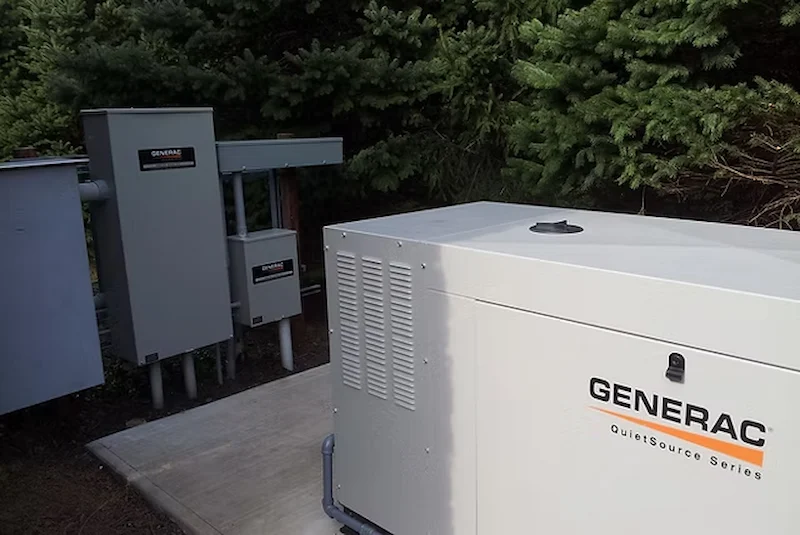
A standby unit for a 200-amp service usually falls between 20 and 26 kW, depending on the loads you plan to run during an outage.
While a 200-amp electrical service supports many home systems, the right capacity is based on appliance demand, not panel rating alone.
Homes with central air conditioning or other high-draw equipment may need more output. This load-based planning reflects how Grounded Electric evaluates standby power needs.
Key Takeaways
- Backup capacity for a 200-amp service depends on total electrical load, not the main circuit breaker rating.
- Proper sizing must account for both running power and startup surges from motors and air conditioning systems.
- Whole-house units follow common kW ranges, but transfer switch limits affect usable power.
- Portable models cannot power a full 200-amp panel and support only selected circuits.
- Wire gauge, code compliance, and site conditions affect safety and reliability.
What Generator Size for a 200 Amp Service Covers
A 200-amp service does not mean a backup unit must supply 200 amps. The panel rating shows the maximum capacity protected by the main breaker, not actual usage. Most homes draw far less power at any one moment.
Priority loads often include heating, air conditioning, refrigeration, lighting, and outlets. Larger or heavier loads, such as electric ranges or pool equipment, may be included or left off.
This is why 200-amp service generator size comes down to how much power runs at the same time. Two homes on identical panels can need very different output based on their appliances.
How Many kW Is a 200 Amp Service
A 200-amp residential service delivers up to about 48,000 watts, or 48 kW, at 240 volts. That figure comes from a simple calculation: 200 amps multiplied by 240 volts.
So when people ask how many watts a 200-amp service is, the answer is the ceiling, not the everyday draw. No typical home runs anywhere near 48 kW at once.
That gap between the panel ceiling and real usage is exactly why a whole-house unit in the 20 to 26 kW range can back up a home wired for 48 kW. You size for what runs together, not for the maximum the panel allows.
How to Calculate Standby Generator Size
Limits of Online Generator Size Calculators
Online generator calculators estimate output from appliance lists. They help with early planning, but cannot measure real startup overlap. They also miss future changes in demand.
These tools cannot account for transfer switch setup, fuel supply limits, or local codes. Final sizing should confirm the estimate against real load data.
Essential Circuits and Appliances
Start by choosing which circuits must stay powered. Common examples include HVAC blowers, refrigerators, sump pumps, lighting, and a home air conditioner. Listing these circuits defines base demand.
Licensed electrician Robert “Bobby” Mulholland often notes that accuracy here prevents oversizing or undersizing. Each appliance should include its running wattage. This list guides every decision that follows.
Common Appliance Wattage Reference
Typical appliance demand helps with planning. Actual values vary by model and condition.
- Refrigerator: 600 to 800 running watts
- Central air conditioner blower: 500 to 1,200 watts
- Sump pump: 800 to 1,500 watts
- Lighting circuit: 300 to 600 watts
- Microwave: 1,000 to 1,500 watts
This snapshot shows why startup power matters and how appliance demand compares in a detailed generator wattage chart.
Starting Watts vs Running Watts
Some equipment draws extra power at startup. Motors, compressors, and air conditioning units may need two or three times their running watts. Ignoring this can overload a backup unit.
Standby systems must handle both running and startup demand. Correct planning protects equipment and keeps power stable during an outage.
How Load Management Runs the Whole House
Load management is the reason a smaller, more fuel-efficient unit can back up a full home. It assigns priority to heavy loads and staggers them so they never all draw power at once.
Take a real example. About 15,000 watts of electric baseboard heat pulls roughly 62 amps, close to a third of the service. A 3-ton central air conditioner pulls around 5,000 watts, or about 21 amps.
You rarely need both at the same time. A load management system can hold the air conditioner until the heat cycles off, or pause the electric range while the water heater runs. This is called load shedding.
You and your installer decide which circuits get priority. Non-essential loads wait their turn, which lets a 22 kW unit cover a home that might otherwise seem to need far more.
How Transfer Switch Capacity Affects Generator Sizing
The transfer switch controls which circuits receive power. Its rating must match the backup unit and panel setup. Output alone does not control power flow.
A properly rated transfer switch safely manages heavy loads. An undersized switch can limit usable power even behind a larger standby system.
Whole House Generator Options for 200 Amp Service
A whole house generator for 200 amp service powers most or all panel circuits through an automatic transfer switch. These systems reward careful planning up front.
Homes with electric heat, large cooling systems, or many appliances need a closer review. Project Manager and Co-Owner Barret Abramow often checks layout and load balance to avoid overload on a 200-amp backup generator.
Typical kW Ranges for Full Backup
Many homes reach full coverage with units ranging from 22 kW to 30 kW, above the 20 to 26 kW typical range cited earlier, because full-home coverage assumes more simultaneous load than an average setup. Larger or all-electric homes may need more. Final output depends on how many loads run together.
There is a headroom rule worth knowing. Manufacturers rate capacity under UL 2200, the safety standard for stationary generator assemblies, then advise running at 80 percent or less for longevity. So if a load calculation points to 17 kW, an installer will often recommend a 22 kW, 24 kW, or 26 kW unit for margin and future loads.
These ranges allow for startup surges from heavy loads and align with guidance on the size of the Generac generator you need for residential systems. That same reasoning explains why most homes land on a 200-amp Generac service, and a 22 kW to 26 kW 200-amp Generac generator covers the average case.
Matching the Transfer Switch to a 200 Amp Service
A 200-amp service pairs with a 200-amp automatic transfer switch. As a rule, the switch rating must match the service equipment rating, so a 200-amp automatic transfer switch for generator setups is standard here.
The rating matters during normal operation, not just outages. In everyday use, power flows from the utility through the switch to your panel, and the switch protects that path.
During an outage, the switch moves the source from the utility to the backup unit. Even when the unit’s output is high, the switch guards itself, the wiring, and the panel from loads above its rating.
Generator Size Reference for Common 200 Amp Homes
This table breaks down generator size for 200 amp service by real home setups and reflects ranges commonly shown in a generator size chart. It focuses on load type, not panel rating.
| Home Setup | Typical Loads Included | Common Range |
|---|---|---|
| Small Home, Gas Heat | Lights, fridge, outlets | 18 kW to 20 kW |
| Average Home | HVAC, air conditioning | 22 kW to 26 kW |
| Large Or All-Electric Home | Electric HVAC, range | 28 kW to 30 kW+ |
These ranges are planning guides and must be verified on site.
Diesel vs Gas Generators
Fuel type affects runtime and upkeep. Natural gas units connect to utility lines and never need refueling. A 200 amp diesel generator requires stored fuel but delivers strong, steady output.
Modern units are built to run efficiently when matched to demand. Both fuel types can support a 200-amp service when planned correctly.
Portable Generator Limits for 200 Amp Panels
Portable models differ from standby systems. They power selected circuits only and have limited output. They work best for short outages.
A portable unit handles a handful of circuits, not the whole panel.
What You Can Realistically Power
Portable units can run lights, internet equipment, and small appliances. High-demand systems, like a central air conditioner, must stay off.
Transfer switches or interlock kits safely manage power. They also prevent dangerous backfeeding.
Special Load Considerations
Some homes include equipment with unusually high demand. These loads need special review. Ignoring them can cause failure during an outage.
What Size Generator for a 200 Amp Welder
Welders draw high current at startup. Backing one up often calls for much higher output, and power phase also affects sizing.
Running a welder during an outage is often impractical. A professional review is required before you count on it.
High-Demand Equipment Risks
High-demand equipment such as central air conditioning units, electric ranges, welders, and large pumps can strain a standby system. These loads often draw high startup current that may exceed available capacity.
If heavy loads start together, voltage drop or breaker trips can occur. That can shut the unit down or shorten its lifespan. Each high-demand device should be reviewed to confirm safe operation during outages.
Wire Size and Electrical Safety
Output must match conductor limits. Wire gauge, breaker rating, and load all work together. Safety depends on proper matching.
Is 2 AWG Good for 200 Amps
Many homes use 2 AWG copper or 1/0 aluminum for 200-amp service. Suitability depends on insulation and installation method. Local codes may vary.
If the existing panel cannot support the right conductor size, an electrical panel upgrade should be completed before a standby unit is installed. Conductor gauge must be confirmed before connection.
Code Compliance Basics
Standby systems must comply with the National Electrical Code. The rules cover grounding, bonding, transfer switch placement, and spacing. Compliance reduces shock and fire risk.
Grounded Electric is a Generac Certified installer, reflecting adherence to installation standards.
Why Panel Rating Does Not Equal Backup Capacity
That gap between rated capacity and real draw is exactly why breaker math matters.
Look inside a typical 200-amp panel, and you might find 40 breaker spaces, and with tandem breakers, room for up to 80 circuits. Add up all those breaker values and the total runs well past 200 amps, into the four figures.
The single 200-amp main breaker caps the whole panel at 200 amps no matter how many circuits are installed. Your home simply never draws all of them at once, so backup planning follows actual loads.
Understanding this prevents overspending, improves reliability, and supports a clearer process for choosing a home generator.
Common Mistakes When Sizing Generators
One mistake is planning around the panel rating rather than the actual load. A 200-amp service does not reflect how much power a home uses at one time.
Another is ignoring the startup surge from motors and air conditioning systems. That can cause breaker trips or shutdowns.
Overlooking future electrical additions is also common. New appliances or heavy loads can exceed available capacity if no one plans for them.
If you want clear answers based on your home’s actual electrical load, a professional review can help. Scheduling an evaluation allows a licensed electrician to confirm the right output, circuit priorities, and safety requirements. Many homeowners also ask about installation cost at this stage, since it factors into the final decision.
Getting the load calculation right the first time avoids a costly resize later.
