



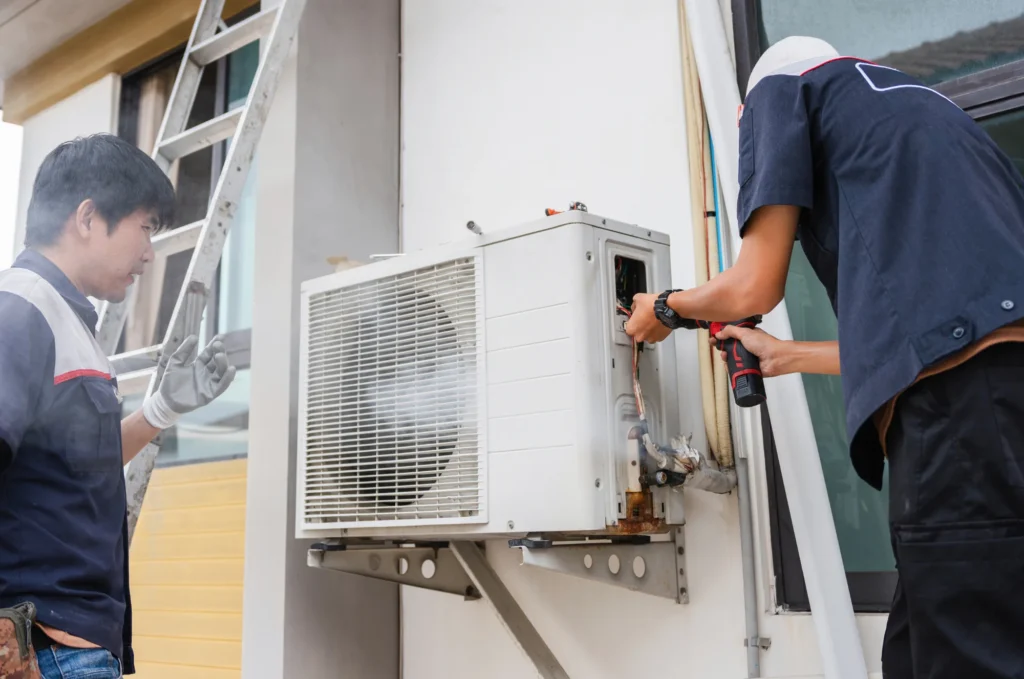
Deciding between HVAC and electrical work is one of the most common questions in the skilled trades. The HVAC vs electrician comparison comes down to daily work, training requirements, and earning potential.
HVAC technicians focus on heating, ventilation, and air conditioning systems that control temperature and air quality. Electricians focus on the electrical systems that power buildings – panels, wiring, lighting, and controls.
Grounded Electric regularly works alongside HVAC contractors, and knowing where each trade begins and ends is useful for anyone considering either path.
Key Takeaways
- HVAC technicians and electricians solve different problems: HVAC technicians cover heating, ventilation, air conditioning, and refrigeration systems, while electricians handle the wiring, panels, and electrical infrastructure that power those systems.
- Electricians generally earn more, with a U.S. median of around $61,590 per year compared to $57,300 for HVAC technicians, though specialization in commercial refrigeration or building automation can close that gap.
- Electrical work has a steeper learning curve, requiring mastery of a 1,000-page codebook updated every 3 years. At the same time, HVAC training is shorter and more accessible, making it a common entry point for career changers.
- Training costs for both trades range from $1,200 to $15,000, depending on the program, and both require a high school diploma – but HVAC certification can be completed in as little as 6 months, versus 4 to 5 years for a journeyman electrician license.
- The two trades regularly overlap on the same job: electricians run the dedicated circuit and connect power to HVAC units, while HVAC technicians handle the mechanical installation, refrigerant lines, and system startup.
Which Trade Is Right for You?
The right trade depends on what you enjoy doing every day. HVAC suits people who like mechanical problem-solving, customer interaction, and working with heating and cooling systems.
Electrical work suits people who prefer technical structure, code compliance, and a wider range of project types. Both trades offer job stability, a clear career path, and the ability to move into ownership roles over time.
What Does Each Trade Actually Do?
Electrician Job Duties and Responsibilities
Electricians install, maintain, and repair electrical systems in homes, businesses, and industrial buildings. The work includes running electrical wiring, installing panels, setting up electrical components such as switches and breakers, and fixing faults.
Electricians follow the National Electrical Code and work alongside HVAC technicians on shared job sites. The work environment changes regularly – from residential service calls to large commercial builds – which keeps the day-to-day varied.
Robert “Bobby” Mulholland, lead electrician at Grounded Electric with over 30 years of experience, regularly coordinates with HVAC crews on projects where electrical and mechanical scopes overlap. Knowing where one trade ends and the other begins matters for both safety and code compliance.
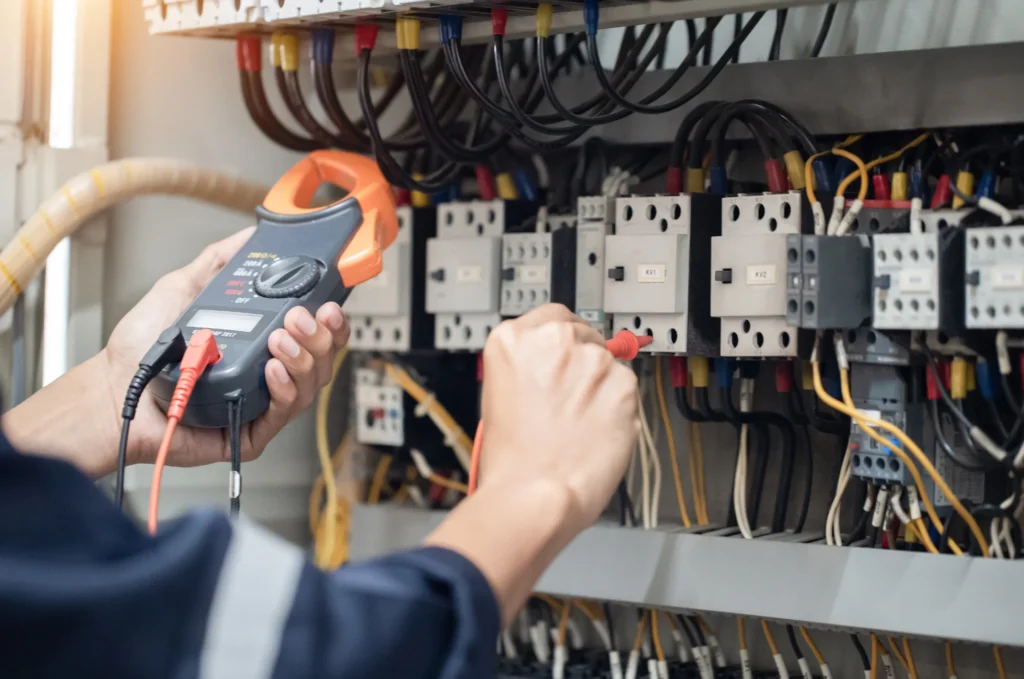
HVAC Technician Job Duties and Responsibilities
HVAC technicians install, service, and repair heating, ventilation, and air conditioning systems. Their work includes handling refrigeration systems, testing air quality, replacing parts in furnaces and cooling systems, and diagnosing failures.
When HVAC systems fail, technicians trace the problem through both mechanical and electrical components to find the source. HVAC techs also work with low-voltage electrical wiring and components, but their scope stops short of the dedicated circuits that power the units.
Training, Licensing, and Cost to Get Started
How to Become a Licensed Electrician
Becoming a licensed electrician starts with a trade school program or a 4 to 5-year apprenticeship – and how long it takes to get an electrician license depends on the route you choose and your state’s requirements. Most training programs require a high school diploma to enroll.
After completing the required hours, candidates take a state exam to earn their journeyman license. A master license comes later and allows electricians to pull permits and run jobs independently.
How to Become a Certified HVAC Technician
HVAC training programs run between 6 months and 2 years and also require a high school diploma. After completing HVAC training, technicians must pass the EPA 608 exam to handle refrigerants legally. This applies in every state. Some states require an additional contractor license in addition to that.
HVAC vs. Electrician Cost of Training and Licensing
Trade school programs in both fields range from $1,200 to $15,000, depending on the length and the school. Union electrician apprenticeships are often sponsored, which lowers out-of-pocket costs.
HVAC programs cost less upfront, but EPA exam fees and licensing add to the total. Both trades cost far less to enter than a four-year college degree.
What Makes More Money: HVAC or Electrician?
HVAC vs. Electrician Salary by Experience Level
According to the U.S. Bureau of Labor Statistics, electricians earn a median of around $61,590 per year. HVAC technicians earn a median of around $57,300. Entry-level pay in both trades ranges from $18 to $22 per hour.
The gap widens at the top – master electricians in union shops or industrial settings often out-earn most HVAC technicians, and certain highest-paying jobs for electricians can push that ceiling even further. HVAC techs who specialize in commercial refrigeration systems or building automation can close that gap.
Demand, Job Outlook, and Long-Term Earning Potential
The BLS projects electrician jobs to grow 11% through 2033, with HVAC at 9%.EV charging, solar, and smart home climate controllers are driving electrical demand. Aging equipment and new construction are driving HVAC work.
Barret Abramow, Project Manager and Co-Owner at Grounded Electric, notes that tradespeople who build both technical and business skills early tend to move into leadership roles faster.
What Is Harder: HVAC or Electrician?
Difficulty, Learning Curve, and What to Expect
When asked which is harder, HVAC or being an electrician, most experienced tradespeople say electrical work is the steeper climb.
Electricians must master circuit theory, load calculations, and a codebook exceeding 1,000 pages, updated every three years.
HVAC covers refrigeration cycles and mechanical systems with a lighter theory load. That said, HVAC work is physically tough – rooftop installs in summer and crawl space repairs in winter are standard.
What Is the Hardest Trade to Get Into?
An electrician is widely considered one of the harder trades to enter. The licensing path is long, and the code requirements are strict.
HVAC is more accessible, with shorter training timelines and a faster path to certification – which is why it attracts many career changers.
HVAC vs. Electrician Pros and Cons
Advantages and Drawbacks of Being an Electrician
Pros:
- Higher average wages than most trades
- Strong union representation in many markets
- Access to residential, commercial, and industrial project types
- Clear licensing path with defined advancement stages
- High earning ceiling, especially at the master electrician level
Cons:
- Long licensing path – 4 to 5 years to journeyman
- Extensive code knowledge required and updated every 3 years
- Real safety risks working around live electrical systems
- Strict attention to safety protocols is required on every job
Advantages and Drawbacks of Being an HVAC Technician
Pros:
- Faster entry into the workforce than electrical
- Lower upfront training costs
- Steady demand year-round with strong seasonal peaks
- Skilled techs rarely run short of work
- Clear path to specialization and business ownership
Cons:
- Uncomfortable working conditions – heat, cold, confined spaces
- On-call demands during extreme weather
- Refrigerant regulations change frequently and require ongoing updates
- Physical strain from rooftop work, attic access, and heavy equipment
Electrician and Air Conditioning: Where the Two Trades Overlap
When Electricians and HVAC Techs Work Together
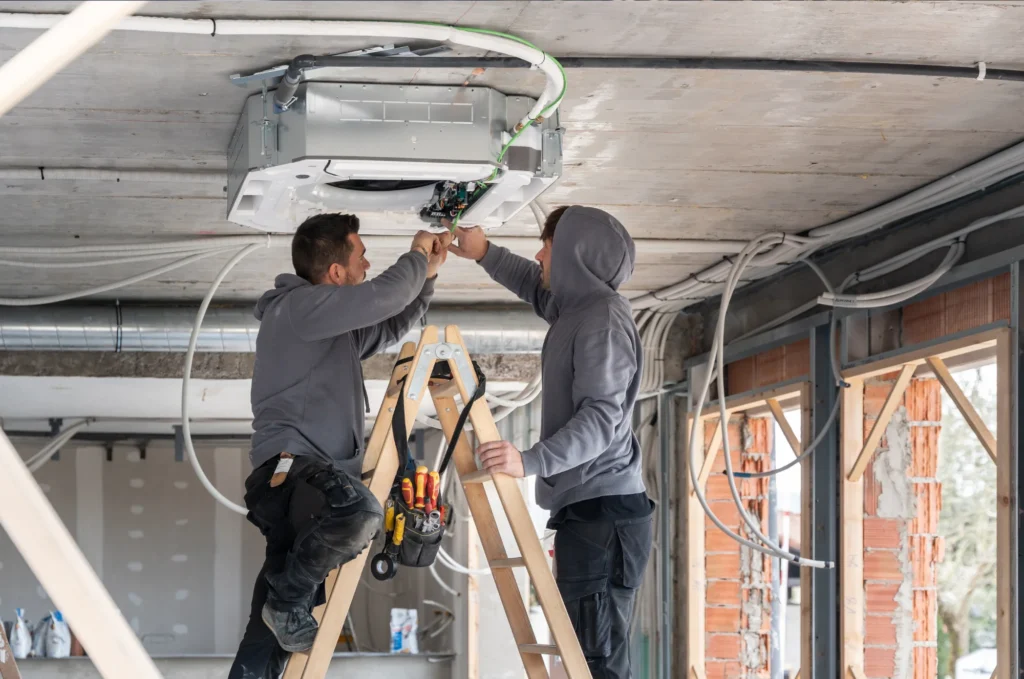
The electrician-air conditioning relationship clearly shows how two trades share one job. When a new system is installed, an electrician runs the circuit and connects power. The HVAC technician handles the mechanical install, refrigerant lines, and startup. Neither trade finishes the job alone.
On commercial projects, technicians and electricians coordinate closely – electrical capacity, conduit routing, and inspection schedules all have to align. Grounded Electric is Generac Certified, a credential that reflects the same standard of technical preparation required on complex multi-trade installations.
Which Career Fits You Better?
Skills and Strengths That Suit an Electrician
Electrical work fits people who are comfortable with math, enjoy applying technical rules, and have patience for detailed documentation. Precision matters – mistakes in electrical work create safety hazards. People who prefer large, structured projects over fast service calls tend to do well here.
Skills and Strengths That Suit an HVAC Technician
HVAC suits people who enjoy mechanical work, handle a variety of tasks well, and communicate easily with customers. Physical resilience and the ability to work without close supervision are both important. People who adapt quickly to different systems and buildings tend to thrive in this trade.
Career Advancement Options in Both Trades
Both trades offer a clear path from entry level to licensed professional to business owner. Electricians go from apprentice to journeyman to master electrician, then into contracting or management.
HVAC technicians advance from entry-level techs to service managers or company owners. Specialization in solar, industrial controls, commercial refrigeration, or building automation increases earning potential in either skilled trade.
Frequently Asked Questions
Is HVAC Harder to Learn Than Electrical Work?
Most tradespeople find electrical work harder. The National Electrical Code is extensive and applies across many different types of jobs. HVAC covers refrigeration theory and mechanical systems that many people pick up faster. Both require ongoing learning, but the starting point is steeper for electricians.
Can an Electrician Do HVAC Work?
An electrician can handle the electrical side of an HVAC install – circuits, power connections, and thermostat wiring. They cannot service refrigerants or do the mechanical work without an EPA 608 certification. Some tradespeople hold both, which makes them more flexible and more valuable on the job.
Can You Work in Both HVAC and Electrical?
Yes. Dual-trade technicians are valued in commercial buildings, hospitals, and large residential properties. These sites need regular attention for both systems. The extra training takes time, but it leads to higher pay and more job options across both the electrician and HVAC technician career tracks.