



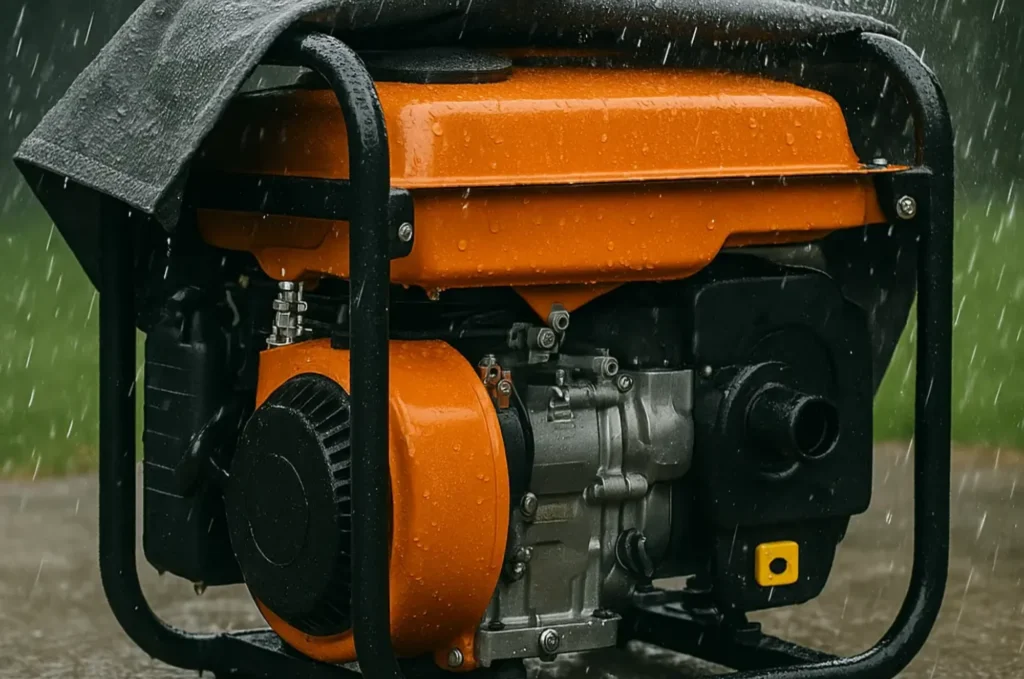
Grounded Electric, a licensed electrical contractor serving Bergen County, NJ, works with homeowners during every storm season to ensure generator setups are safe, code-compliant, and ready for any weather conditions.
Key Takeaways
- Generators can get wet, but operating or storing one without protection causes damage ranging from corrosion and short circuits to complete electrical failure.
- Running a generator in the rain is only safe with a canopy-style running cover, flat, dry ground, and at least 20 feet of clearance from any door, window, or vent.
- No portable generator is fully weatherproof – most fall at IP44 or below, which means a running cover is required every time you operate one in wet weather.
- If your generator gets wet, shut it off immediately, let it air-dry for at least 24 hours, and check the oil for water contamination before attempting to restart.
- In New Jersey, permanent generator installations require a permit, a licensed electrical inspection, and a code-compliant transfer switch installed by a licensed electrician.
Can You Run a Generator in the Rain?
Running a generator in the rain is possible, but only with the correct precautions in place. Without a proper generator cover and safe placement, wet weather turns a portable generator into a shock hazard and a potential fire risk.
The minimum requirements are a canopy-style running cover, flat, dry ground, and at least 20 feet of clearance.
Keep this clearance from any door, window, or vent. Robert “Bobby” Mulholland is a licensed electrician with over 30 years of field experience. He says poor placement during storms is one of the most common generator mistakes in Bergen County and that it’s easy to avoid.
Can a Generator Get Wet When Not in Use?
An off generator is still at risk. Moisture that enters the fuel system, carburetor, or electrical components while the unit sits idle causes corrosion, clogs, and starting failures – and these are among the most common generator problems that surface during power outages, exactly when you need the unit most.
Keep the generator dry between uses by storing it in a garage or shed. If outdoor storage is unavoidable, use a fitted cover and add a fuel stabilizer for any storage period longer than 30 days.
Can a Generator Get Rained on While Off?
Yes, repeated exposure to rain corrodes terminals, rusts the frame, and degrades wiring insulation. Most starting and performance issues that appear after a generator sits unused through winter trace back to moisture exposure during storage – including cases where a generator won’t stay running after the first start.
Will It Hurt a Generator If It Gets Wet?
Yes. Using generators in wet conditions without proper protection can cause damage ranging from surface corrosion to complete electrical failure, depending on how much water enters and where it goes.
Water lowers the electrical resistance of conductive surfaces, allowing current to flow through the casing and into anyone who touches it. This risk of electric shock applies whether the generator is running or has recently shut off.
Moisture inside the unit bridges electrical connections that are designed to stay separate. The result is short circuits that can burn out the alternator, damage the control board, and, in serious cases, ignite nearby materials.
Water that reaches the engine cylinders causes mechanical damage on top of the electrical risk – seized pistons, scored cylinder walls, and hydrolocked engines are all possible outcomes depending on the volume of water involved.
Carbon Monoxide Risk in Covered or Enclosed Spaces
Carbon monoxide is the danger that follows every attempt to keep a running generator dry in bad weather. When homeowners move a generator into a garage or under a low overhang to shield it from rain or snow, carbon monoxide accumulates rapidly.
The gas is colorless and odorless, and exposure can be fatal within minutes. Running a generator outdoors with at least 20 feet of clearance from the home is not a suggestion – it is a safety requirement.
Are Generators Weatherproof?
No generator is fully weatherproof. Most portable generators fall between IP23 and IP44 on the ingress protection scale, meaning they tolerate incidental moisture but are not designed to run unprotected in rain or standing water.
IP ratings use two digits. The first measures protection against solid particles. The second – the one that matters here – measures water resistance.
IP23 means the unit can handle water spray at an angle. IP44 handles splashing from any direction. IP54 adds dust protection on top of that. Most portable generators are rated at IP44 or lower, which means a canopy cover is not optional in the rain.
A gas generator is no more water-resistant than any other portable unit. Fuel type does not change weather resistance.
Standby generators are the exception: they come with permanent weatherproof enclosures, are installed in accordance with local electrical codes by licensed electricians, and operate automatically in extreme weather without additional preparation.
Do You Need to Cover a Generator in the Rain?
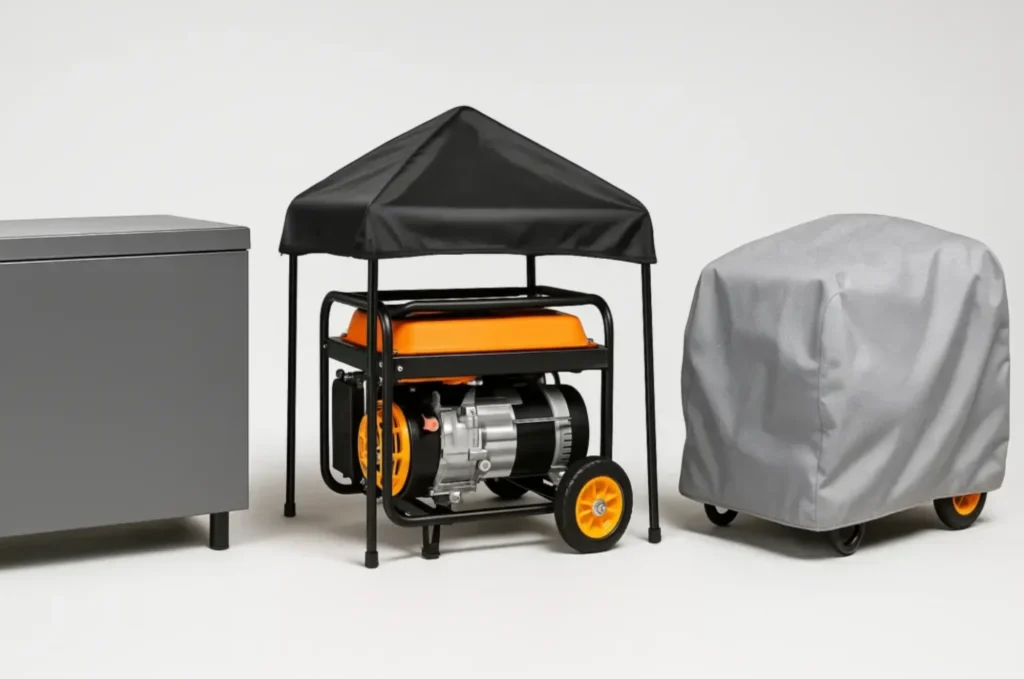
Yes, every time. Use a canopy-style running cover rated for generator operation – it protects the engine and outlets while keeping airflow open around the exhaust.
Never drape a standard storage cover over a running unit. It blocks ventilation, traps heat, and creates a fire hazard.
Running covers, sometimes called generator tents, are built with open sides for airflow. A sealed storage cover must come off completely before you start the engine.
Where to Put a Generator During a Storm?
Place the generator outside on flat, dry ground at least 20 feet from your home, clear of all doors, windows, and vents. If water is pooling nearby, elevate the unit on dry boards or solid blocks.
Confirm it is properly grounded before storm season starts. Bobby Mulholland recommends having a licensed electrician verify the grounding setup rather than relying solely on the owner’s manual.
Generator Safety Checklist for Wet Conditions
- Position the generator at least 20 feet from the house
- Set it on flat, dry, elevated ground
- Install a canopy-style running cover before starting
- Inspect all power cords for cuts or fraying
- Wear rubber-soled shoes during operation
- Never refuel while the engine is running
- Keep a carbon monoxide detector active inside the house
What to Do If Your Generator Gets Wet
Shut it off immediately and do not restart it until it has been fully dried out and inspected. Wipe all exterior surfaces with a dry cloth, remove the spark plug, and check the cylinder for water.
Let the unit air dry for a minimum of 24 hours. Once dry, check the oil – a milky or cloudy appearance means water entered the crankcase. Change the oil before running the engine again.
If the oil looks contaminated, drain and refill it before restarting. Running an engine with water in the crankcase causes rapid damage and is a common reason a Generac generator starts then dies shortly after startup.
Check for visible corrosion on terminals, outlets, and wiring before reconnecting anything. Rust or white oxidation on electrical contacts means the unit needs a professional inspection before it’s safe to operate.
If the generator ran while wet, produced sparks, or tripped breakers, call a licensed electrician before using it. Barret Abramow, Project Manager and Co-Owner at Grounded Electric, coordinates generator inspections for Bergen County homeowners who need a professional assessment after a weather event.
Generator Safety Tips for Storm Season in Bergen County
Bergen County faces nor’easters, tropical systems, and ice storms that knock out power for days. Getting your generator ready before the season starts – not during it – is what separates a smooth outage from a dangerous one.
In New Jersey, permanent generator installations require a permit and a licensed electrical inspection. Transfer switches, which prevent backfeed onto the utility grid, are required by code and must be installed by a licensed electrician.
Grounded Electric is Generac Certified and manages permits, installations, and inspections for Bergen County homeowners. All work is performed under Bobby Mulholland’s license, ensuring every installation meets state and local requirements.