


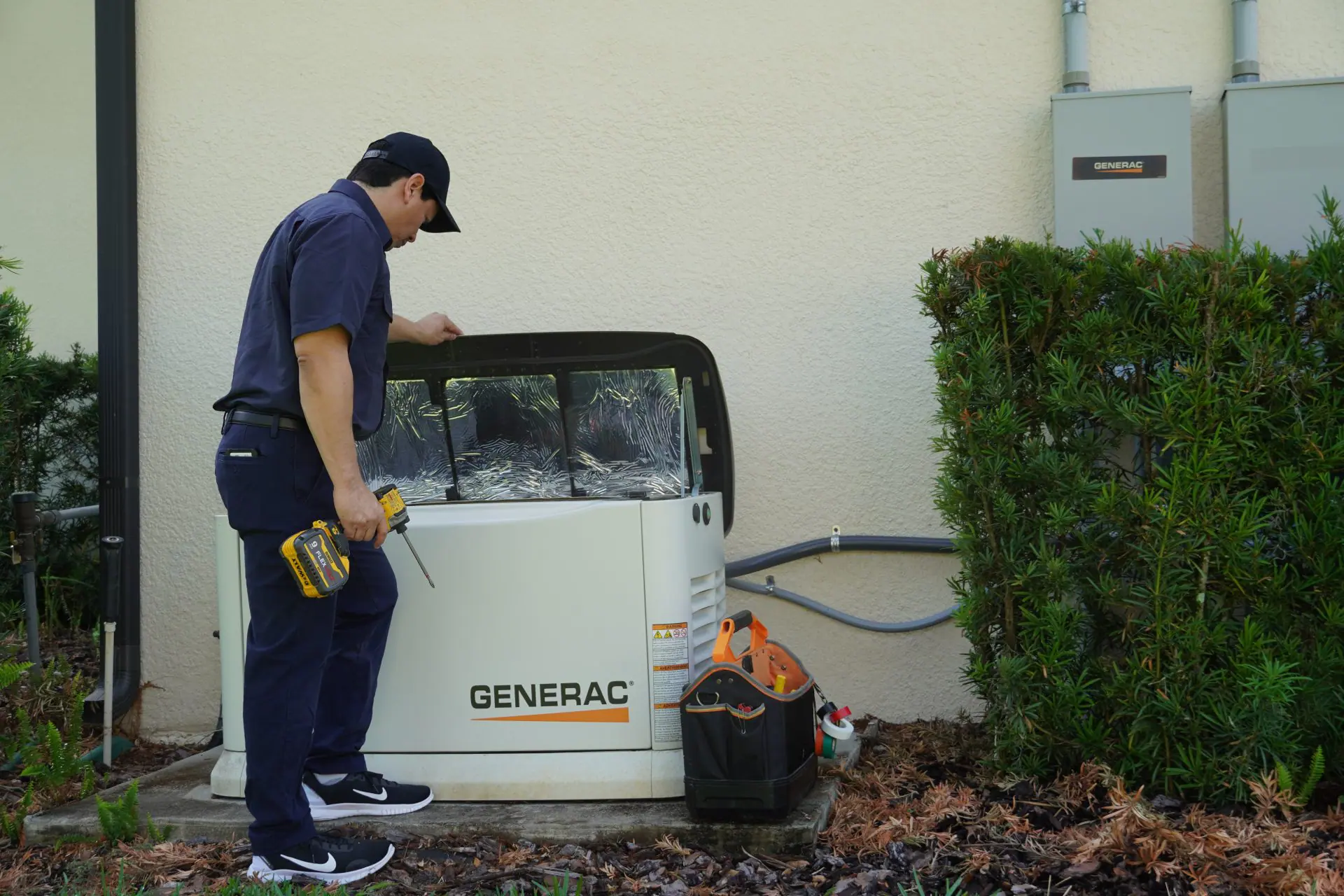
A generator won’t stay running when something interrupts fuel, air, oil pressure, or electrical flow. The usual causes are low oil, a clogged carburetor, or loose wiring, and most of them take only minutes to check.
Knowing what to inspect when the generator will not start saves time. Catching small faults early prevents bigger engine damage and keeps your power reliable.
At Grounded Electric, our licensed electricians repair these faults for homes and businesses. Led by Robert “Bobby” Mulholland and Barret Abramow, the team delivers safe, code-compliant fixes that keep the machine running the way it should.
Key Takeaways
- Most stalls trace back to oil, gas, or sensor faults.
- Check oil, gas, and wiring on a regular schedule to stop shutdowns.
- Portable, standby, and RV units each fail in different ways.
- Replacing spark plugs, filters, or regulators clears most stalls.
- A professional inspection prevents repeat failures.
- Stay safe. If you smell gas or see sparks, stop and call a licensed pro.
Understanding the “Generator Won’t Stay Running” Problem
The engine quits when something blocks the flow of gas, air, or power. Thick oil, moisture in the lines, or clogged vents will all force a shutdown within seconds or minutes.
Barret from our team recommends confirming three things before you call for help: clean oil at the right level, fresh gas in the tank, and tight wiring at every connection. Those three account for the large majority of no-run complaints.
Step-by-Step Diagnostic Process
If the machine starts but keeps cutting out, work through these steps in order:
- Drain any old gas and refill with fresh. Stale gasoline is the number-one cause of stalling.
- Check the oil level and the low-oil safety switch.
- Clean or swap the air filter.
- Inspect the spark plug for corrosion, fouling, or a loose boot.
- Restart with nothing plugged in.
These five checks resolve most minor faults in under half an hour.
Why Generators Start Then Shut Off
An engine that fires up and then dies a few seconds later is almost always starving for gas or tripping a safety sensor. The common triggers are:
- Low oil or an empty tank
- A varnished or clogged carburetor
- A fouled spark plug or loose ignition wire
This is the pattern behind searches like “my generator will start but won’t stay running” and “the generator turns on then off.” In each case the machine gets just enough to catch, then loses the supply it needs to keep going. Confirm the tank valve is fully open and the choke is set correctly before you dig deeper.
Generator Shuts Off After 20 Minutes
When a unit runs for a while, then quits, the problem is usually heat or restricted flow rather than ignition. As the engine warms up, clogged cooling fins or a partially blocked line can reach a point where the machine protects itself by shutting down.
If the generator runs for a few minutes and then stops, check for a closed gas cap vent first. A sealed vent creates a vacuum in the tank that slowly chokes the carburetor. Clean the cooling vents, open the vent screw, and inspect the line from tank to carburetor for kinks or debris.
Generator Runs for 30 Seconds Then Stops
A clogged carburetor or a bad low-oil switch is the classic cause of short cycling. If the engine catches on a shot of starting fluid but dies the instant that fluid burns off, the carburetor’s main jet is starved and needs cleaning or replacement.
Whether the generator runs for a few seconds and dies or quits after half a minute, the fix path is the same: clean the jets, verify the float moves freely, and rule out a sticky oil sensor. Sometimes a Generac generator starts, then dies due to a faulty sensor or a bad air-to-fuel mix. Have it looked at quickly to avoid engine damage.
For a closer look at this exact failure pattern, see our full breakdown of a generator that runs for 30 seconds then stops.
Generator Keeps Shutting Off After 10 Minutes
A ten-minute shutdown sits between the fast stall and the slow overheat, and it usually points to a low-oil sensor tripping early. On many portable units, the float-style switch drops as oil circulates and coats the engine, and if the level started even slightly low, the switch cuts power once it settles.
Set the machine on level ground, top the oil to the full mark, and try again. If it still quits near the ten-minute mark, a marginal oil-pressure switch or an early-stage thermal cutout is the next thing to test.
Generator Turns Over But Won’t Stay Running
If the engine cranks or turns over strongly but never settles into a steady idle, treat it as an ignition or compression issue rather than a gas problem. A weak spark, a failing ignition coil, or an intake gasket leaking air will all let the engine fire briefly, then quit.
Check the spark plug gap and the coil connection first, since these are cheap and quick to check. A loose intake manifold is a common hidden culprit; tightening the manifold bolts or replacing a cracked gasket has fixed many machines that seemed to have a carburetor fault.
Diagnosing Generator Issues by Model Type
These common generator problems usually need only small repairs, but the likely cause shifts with the type of unit:
- Portable models fail most often from dirty or stale gas.
- Standby systems tend to stop due to sensor or control-board faults; our guide to standby generator maintenance covers the full inspection schedule these units require.
- RV units frequently suffer vapor lock or a clogged filter.
Bobby Mulholland recommends running the machine once a month for ten minutes under a light load. This keeps the lines clear and the engine smooth. As Barret puts it, “Most shutdowns happen because owners skip maintenance.”
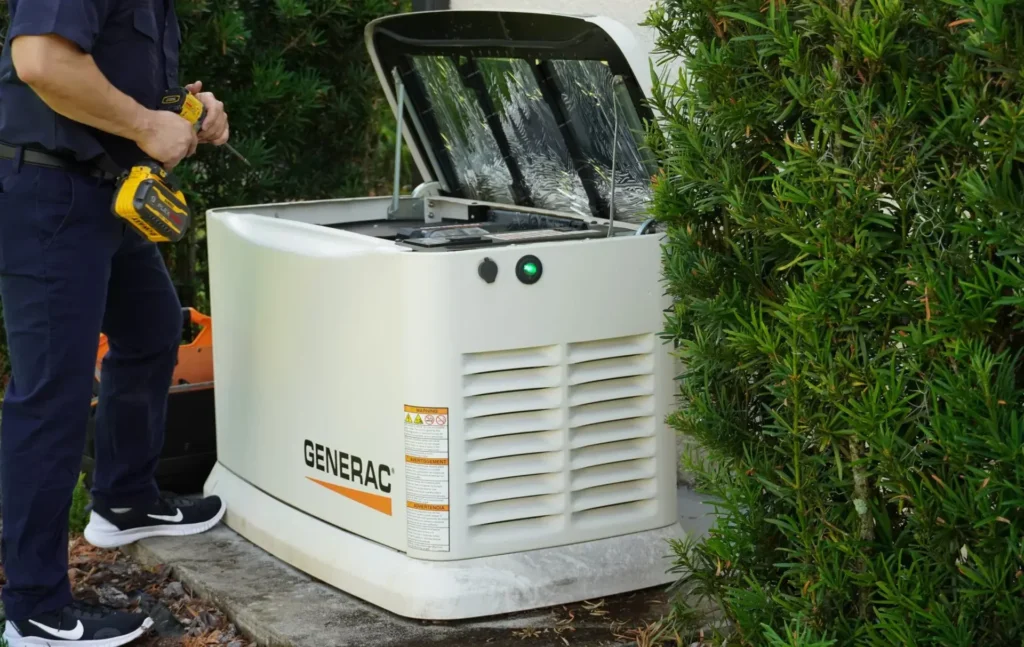
Generac Generator Won’t Stay Running
Because standby units run on natural gas or propane, a Generac generator won’t remain running if gas pressure drops or the controller detects a fault. Start by confirming the gas supply valve is open and the regulator is delivering steady pressure, then check the controller screen for an error code.
As a Generac Certified installer, our crew sees repeat stalls tied to a weak battery that can’t hold the controller through startup (our Generac battery life and replacement guide covers the signs it needs testing or swapping), or a transfer switch that signals the engine to stop.
Staying current with your Generac oil change schedule also helps the low-oil sensor read correctly and prevents nuisance shutdowns. If the code points to sensors or the control board, that repair belongs with a professional.
Champion Generator Shuts Off After 20 Minutes
A Champion generator that quits around the twenty-minute mark often has a float valve or carburetor bowl issue that surfaces only once the machine has warmed and run for a stretch. Debris in the bowl restricts flow just enough to stall a hot engine.
Drain and clean the bowl, confirm the float seats properly, and use fresh gas with a stabilizer if the unit sits between uses.
How Fuel Type Affects Generator Performance
Each energy source brings its own failure pattern:
- Gasoline goes stale fast and gums up small passages.
- Propane needs a clean regulator to avoid misfires and hard starts.
- Diesel relies on clean filters and strong compression.
Knowing which one your machine burns helps you narrow the cause faster. Learn more about what a Generac generator runs off of to maintain performance and avoid shutdowns.
Fuel and Air Issues (Choke or Starting Fluid Problems)
Old gas or trapped dirt blocks both airflow and gas flow. If the generator starts but won’t stay on, open the choke slightly and clean the air filter and carburetor.
Tighten all wiring twice a year as part of this same check; see the maintenance schedule below for oil, filter, and plug intervals.
Routine upkeep costs far less than a major repair.
When a Generator Shuts Down Under Load
If the engine runs fine until you connect devices, it may be overloaded. This is the answer to “why does my generator keep turning off” when everything looks normal at idle.
- Unplug everything and restart.
- Add one device at a time.
- If it still cuts out, the voltage regulator may be weak.
A watt meter helps you test safe load levels and prevent future stalls.
Common Safety Mistakes to Avoid
- Never run the machine indoors or near open windows; carbon monoxide is one of the most common causes of generator-related deaths every year.
- Let the engine cool before adding gas.
- Don’t force repeated restarts after multiple shutdowns.
- Avoid worn cords and overloaded outlets.
Following these four habits is the easiest way to avoid a carbon monoxide incident.
Professional Insight from Grounded Electric
Barret recommends running the unit monthly under a small load. “It keeps everything lubricated and prevents hard starts,” he says.
Bobby adds, “The large majority of shutdowns come from skipped maintenance, not broken parts.”
What Generator Repairs Typically Cost
Costs vary by brand, by portable versus standby design, and by region, but these ranges give you a realistic starting point:
- Spark plug: about $5 to $15 for the part.
- Carburetor cleaning or rebuild kit: roughly $20 to $60 for parts; $75 to $200 for a professional service.
- Low-oil sensor or switch: around $15 to $40 for the part; $100 to $200 installed.
- Voltage regulator: about $25 to $90 for the part; $150 to $350 installed on a standby system.
- Professional diagnostic visit: commonly $80 to $200.
- Standby control board: $200 to $600 or more installed.
If a repair on an older portable machine approaches the price of a new one, replacement is often the smarter call; our guide to generator life expectancy and maintenance hours can help you judge where your unit stands.
Troubleshooting Guide
If you’ve worked through the diagnostic steps above and the machine still won’t hold a steady run, don’t keep repeating the same checks. Repeated hard restarts can strain the starter or further flood the carburetor.
At this point, the fault is usually something that needs a meter or a trained eye: a weak voltage regulator, a failing ignition coil, or a control board issue on a standby system. That’s the point to bring in a professional rather than keep guessing.
When to Call a Licensed Electrician
If the generator won’t stay on after you’ve worked through these steps, contact Grounded Electric. Barret and the team can trace electrical faults safely and restore performance without guesswork.
Quick Parts Reference
- Carburetor kit, fixes stalling
- Oil switch, stops false shutdowns
- Spark plug, improves ignition
- Voltage regulator, stabilizes power
Preventive Maintenance Tips
- Store the unit in a dry, ventilated space.
- Use a fuel stabilizer for long-term storage to keep gas from breaking down between uses.
- Test the auto-start once a month.
- Schedule a yearly professional check.
These habits are what keep the system ready the moment the power goes out.
Preventive Maintenance and Long-Term Care
- Change the oil every 50 hours to prevent wear.
- Clean the air filter every three months to maintain airflow.
- Replace the gas filter every six months to maintain steady performance.
- Inspect the spark plug every 100 hours to protect ignition.
Maintaining this care and keeping the unit dry prevent stalls and extend its working life.
