



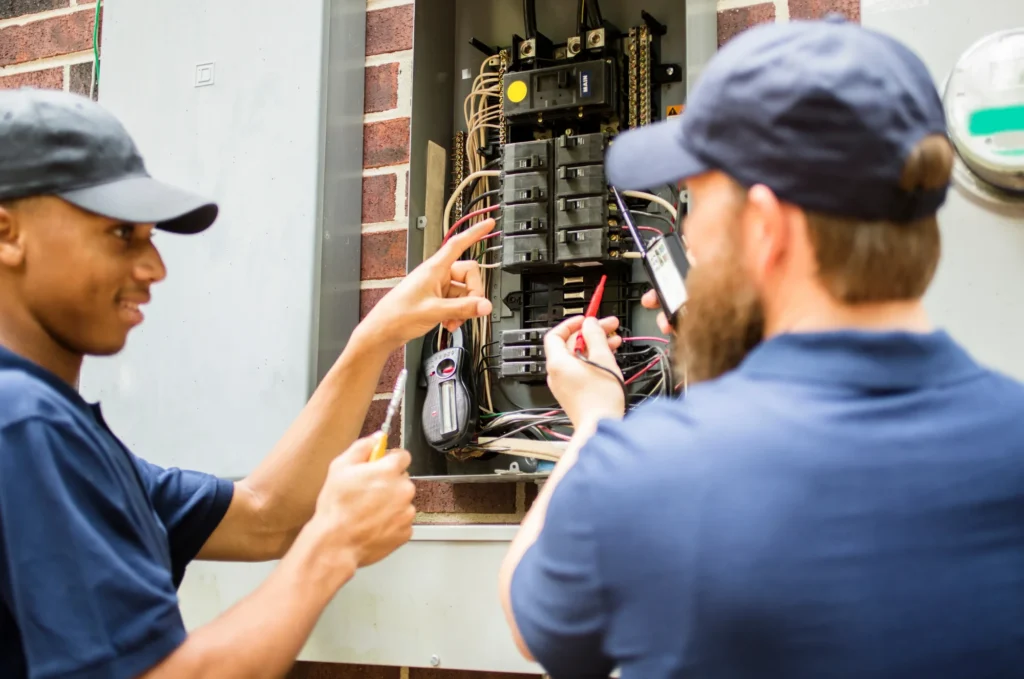
An electrician apprentice’s pay usually ranges from about $16 to $24 per hour in many markets. However, the exact rate depends on location, union status, experience level, and the type of electrical work involved. In annual terms, an electrician apprentice’s salary often falls around $39,000 to $54,000 in mid-range markets, while some metro areas pay more.
Grounded Electric works on residential and commercial electrical systems, so this topic matters because apprentice wages often reflect safety demands, code requirements, and job complexity.
Salary estimates also vary because some sources use active job postings. In contrast, others use broader market averages, so readers should treat electrician apprentice pay as a range rather than a single fixed number.
Key Takeaways
- Electrician apprentice pay often starts around $15 to $20 per hour and can rise into the low-to-mid $20s in many markets, with higher rates possible in union roles or high-cost areas.
- Apprentice electrician wages usually increase in steps as training hours, classroom milestones, and field experience are built through the electrician apprenticeship.
- The average pay for electrician apprentice roles can vary widely because location, union status, project type, and experience level all affect earnings.
- Compensation may include more than hourly wages, since some apprenticeship programs also include benefits such as health coverage, paid training, retirement contributions, and overtime pay.
- Long-term growth matters as much as starting pay, because apprentices who gain experience and move toward journeyman electrician status often take on more technical electrical work and earn higher wages.
How Much Do Apprentice Electricians Make?
Electrician Apprentice Pay Rate
How much do apprentice electricians make? In many markets, an electrician apprentice’s pay starts around $16 per hour and can move into the low-to-mid $20s, depending on location, union status, and experience.
IEC (Independent Electrical Contractors) explains that starting apprentice electrician wages often begin at about 50% of a journeyman electrician’s rate, and gives an example of about $16 per hour when the journeyman electrician rate is $32 per hour. At the same time, ZipRecruiter lists a Chicago average of $23.50 per hour.
Electrician Apprentice Salary Range
The average pay for electrician apprentice roles also varies annually. ZipRecruiter lists a Chicago average salary of $48,880 per year, with most electrician apprentice salary results ranging from about $39,100 at the 25th percentile to $54,100 at the 75th percentile.
Higher-cost markets can trend above that, which is why electrician apprentice pay is best described as a salary range shaped by city, project type, and skill progression rather than a single fixed number.
How Electrician Apprentices Get Paid
Hourly Pay, Raises, and Overtime
Most apprentices are paid hourly, with electrician apprentice pay often starting around $16 to $20 per hour and increasing into the $20 to $30 range as experience grows.
Raises usually follow completed hours, training milestones, or structured apprenticeship programs, which define clear wage steps throughout the electrician apprenticeship.
Overtime can increase total earnings, especially on larger job sites or time-sensitive electrical work, and SkillCat notes that overtime can add meaningful income in some markets.
Benefits and Training Value
Compensation may include more than wages. Benefits can include health coverage, retirement contributions, paid time off, and paid training, depending on the employer or union agreement.
Robert “Bobby” Mulholland, a licensed electrician and subject-matter expert at Grounded Electric, fits this point because safe electrical work depends on steady training, not pay alone.
IEC also notes that an electrician apprenticeship commonly involves four years, at least 8,000 hours of on-the-job training, and 576 classroom hours before licensing eligibility, which can later support advancement toward roles tied to a master electrician salary.
What Affects Apprentice Electrician Wages?
Location, Industry, and Experience
Several factors can change apprentice electrician wages from one job or market to another.
Key factors that affect electrician apprentice pay include:
- Location and local labor demand
- Union status
- Experience level and apprenticeship year
- Project type and job complexity
- Residential, commercial, or industrial electrical work
- Overtime, benefits, and pay structure
SkillCat also notes that industry type and specialized skills in electrical systems can raise earnings, which is why the average pay for electrician apprentice roles is best viewed as a range rather than one fixed number.
That is also why apprentices often look at the highest-paying electrician jobs when comparing long-term career paths.

Union vs. Non-Union Pay
Union roles may offer clearer pay scales, overtime rules, and benefits. Non-union work can still pay well, but the structure often varies across contractors and project types.
Barret Abramow, Project Manager and Co-Owner, is relevant here because labor planning and job scope can directly affect apprentice labor pricing on real projects. At the same time, SkillCat notes that union representation can boost wages and benefits in some markets.
Apprentice Electrician Salary in NJ
Apprentice Electrician Salary in NJ
Apprentice electrician salary figures in NJ are often higher than national starting estimates. The exact pay still depends on union status, city, project type, and experience level.
Recent salary pages place New Jersey averages at about $22 to $23 per hour on Indeed and ZipRecruiter, or about $48,172 per year. At the same time, Salary.com reports a higher statewide average of $60,300 per year with a typical range of $53,700 to $66,900.
That spread shows why local market conditions, benefits, and the type of electrical work being performed matter when readers compare apprentice electrician wages in New Jersey.