


Generator Placement and Clearance Rules
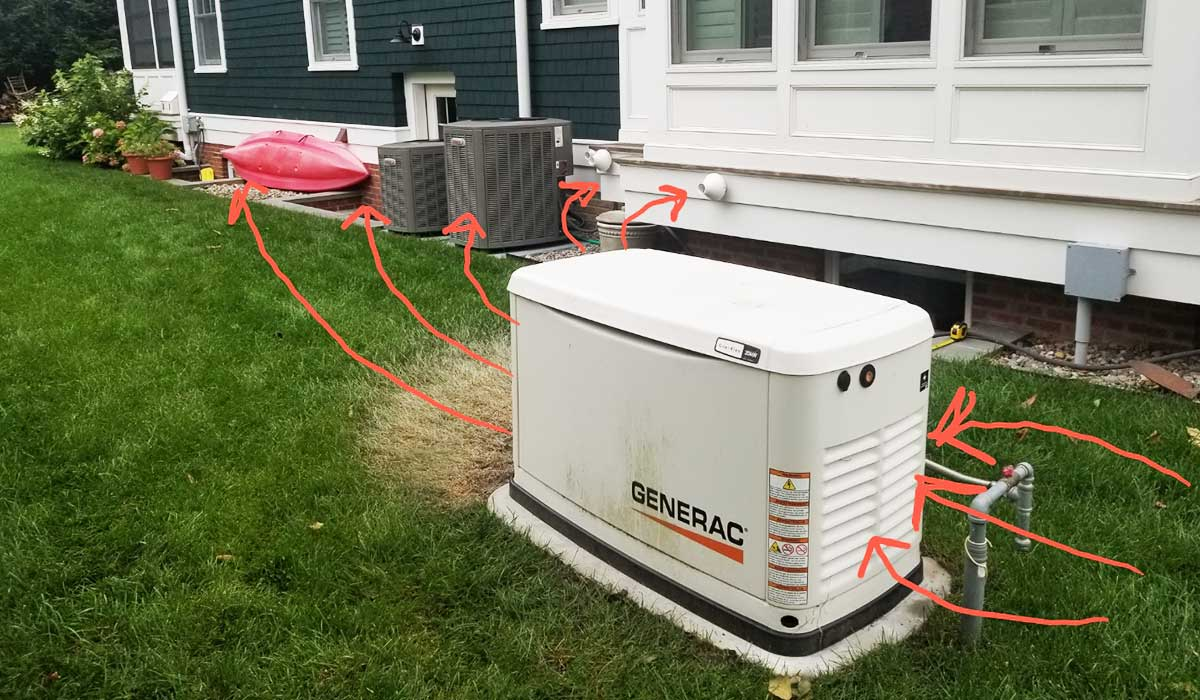
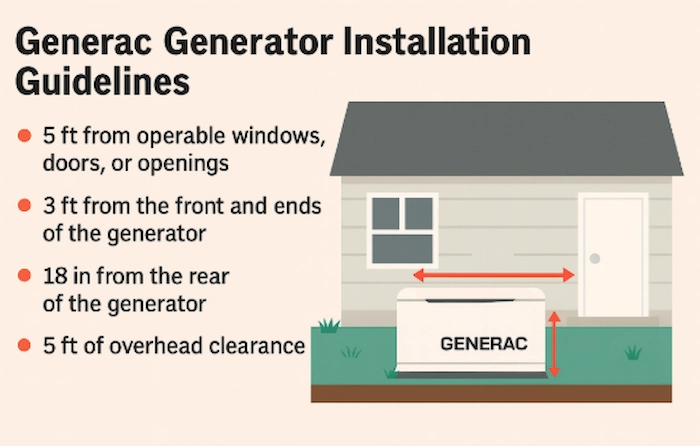
The generator should sit in an open area with room for service. Good placement prevents heat buildup and supports safe operation. These steps follow the Generac installation guidelines.
NFPA 37 Compliance Overview
NFPA 37 sets national rules for distance and safe surroundings. Local inspectors use these standards during review. Meeting them supports safe operation. It lists safe distances and allowed materials. Meeting them helps pass inspection.
Hazard Zones and Unsafe Placement Locations
Avoid tight or blocked areas that trap heat or exhaust. Do not install units near vents or under decks. These locations limit airflow.
How Far the Generator Must Be From the House
A Generac generator must be placed at least 5 feet away from the house, including doors, windows, and wall openings. Proper distance improves airflow and safety. It also supports easier inspection.
Ground and Concrete Pad Requirements
A level pad keeps the generator steady. Concrete works well for stability, although composite pads may also be permitted. Barret Abramow checks each site before installation.
Key Information from the Generac Installation Manual
Safety Instructions
The manual lists grounding, mounting, and spacing rules. Bobby Mulholland follows these steps to support safe installation. These rules also support warranty protection.
Setup and Operation Essentials
The manual explains how to connect fuel lines, wire the unit, and test the system. These steps help prevent early issues. Following them supports long-term reliability.
Generac Generator Installation Instructions
Site Prep and Location Setup
Site prep includes leveling and clearing the area. Good drainage protects the generator from water. Barret Abramow checks these conditions before work begins.
Manufacturer Guidance and Technical Notes
Generac provides rules for pipe size, regulator placement, and grounding. These prevent leaks and electrical strain. Installers rely on this guidance.
- Pipe size
- Service amperage
- Voltage checks
Safety Warning for Transfer Switch Work
Wrong wiring can create serious risks. Only trained electricians should install the switch. Following diagrams supports safe work.
System Testing and Startup Steps
Startup checks confirm fuel flow, voltage, and power transfer. These steps prove the generator is ready for outages. Testing supports long-term performance.
Codes, Permits, and Safety Compliance
Local Regulation Variations
Local codes may require extra grounding or added inspections. Grounded Electric reviews these rules to avoid delays. This supports smooth approval.
Local Code Requirements
Installations must follow building and electrical codes. These rules guide wiring and placement. Permit coordination helps complete the project.
What Inspectors Look For
Inspectors check spacing, venting, grounding, and wiring. They confirm transfer switch safety. Passing these checks completes the project.
Professional Installation vs DIY
Common Installation Mistakes to Avoid
Mistakes often include wrong spacing, poor site choice, or pipe sizing errors. These issues reduce safety and performance. Professional installers help prevent them.
When a Licensed Electrician Is Required
Licensed electricians handle complex wiring and code steps. Their work protects the home. Grounded Electric follows these standards.
Preparing Your Property Before Installation
Homeowners can clear the work area and confirm fuel supply. This helps avoid delays. Grounded Electric explains what to prepare.
Risks of DIY Installations
DIY work may cause wiring or fuel hazards. These mistakes often void warranties. Professional help protects both the home and the unit.
Generator Sizing and Cost Basics
How to Choose the Right Size
Size depends on the circuits you want powered. A load review prevents overloads. If you are unsure about sizing, you can check “what size Generac do I need” for a simple breakdown. Choosing the right capacity supports safe operation and reliable performance.
Typical Installation Costs
Costs depend on size, wiring, and permits. In the US, a home Generac generator costs $12,000-$20,000, depending on the house’s size.
Fuel work may also add to the price. You can also review the cost to run a Generac generator to understand long-term expenses. Grounded Electric offers clear estimates to help you plan. This supports informed installation decisions.
Maintenance and Support
Early Troubleshooting Tips After Installation
Early alerts like low battery or fuel issues are common. Homeowners also wonder how long a Generac stay on when the power goes out, and this depends on fuel supply and load; some can last for a few hours, while others can run for weeks. Simple checks often fix early problems and help the generator run longer. Barret Abramow helps homeowners understand safe steps to take.
Routine Service Tasks
Oil changes, filter updates, and test runs support reliability. These tasks help prevent problems. Service plans keep maintenance simple. Grounded Electric also offers generator maintenance in Upper Saddle River NJ for homeowners who want scheduled service. Service plans keep the system ready for use.
Homeowner Maintenance Checklist
Homeowners should check oil, remove debris, and confirm weekly tests. Keeping the pad clean helps airflow. These steps support long-term performance. For homeowners planning a backup generator for homes in NJ, these guidelines also make sure the system is placed at a safe distance from the home and follows local code rules. This helps keep the installation safe and reliable.
Warranty and Dealer Support
Following the rules protects warranty coverage. Grounded Electric provides the necessary documents as a Generac-certified installer. This ensures access to proper service.
If you are ready to install a Generac system or want help reviewing your setup, Grounded Electric can walk you through each step. Contact us today to schedule an installation or request a full site review.
