


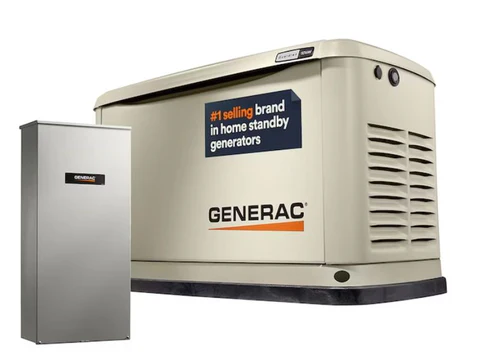
A Generac home standby unit costs $2,800 to $8,500 for the equipment alone in most single-family homes, with larger liquid-cooled models running higher.
Fully installed, most single-family homes cost between $8,000 and $16,000 nationally, with large homes and liquid-cooled systems running higher. In higher-labor markets like Northern New Jersey, the typical range runs $12,000 to $20,000, detailed further in our generator installation cost in NJ guide.
The spread comes down to three things: how much power your home needs, the condition of your existing service panel, and how far the unit sits from your gas line and meter.
Labor, permits, and any required upgrades also move the final number. Grounded Electric evaluates these factors before quoting so the estimate reflects actual site conditions. Homeowners can review our complete generator guide for a deeper overview of system planning.
Key Takeaways
- The unit alone runs $2,800 to $8,500 for most homes; equipment accounts for roughly a third of a typical project’s total.
- The average Generac generator installation cost is $8,000 to $16,000 nationally and $12,000 to $20,000 in North Jersey.
- Panel upgrades, permits, and gas line work push totals toward the high end.
- A load check prevents you from buying a unit too small to power your home during an outage.
- Service and fuel add ongoing expense beyond the purchase price.
Generac Generator Prices by Size
Air-cooled models cover most single-family homes. Liquid-cooled units handle large properties with high air-conditioning loads.
| Size | Typical Home | Unit Only | Installed (US Average) | Installed (North NJ) |
|---|---|---|---|---|
| 10 kW | Under 1,500 sq ft, essential circuits | $2,800 – $3,800 | $8,000 – $11,000 | $12,000 – $14,000 |
| 14 kW | 1,500 – 2,500 sq ft, one AC unit | $4,000 – $5,000 | $9,500 – $13,000 | $13,000 – $16,000 |
| 18 kW | 2,500 – 3,500 sq ft, two AC units | $4,800 – $5,800 | $11,000 – $14,500 | $14,500 – $17,500 |
| 22 – 24 kW | 3,500 – 5,000 sq ft, whole home | $5,500 – $7,000 | $12,500 – $16,000 | $16,000 – $20,000 |
| 26 kW+ | Over 5,000 sq ft, heavy loads | $7,000 – $8,500 | $14,000 – $18,000 | $18,000 – $22,000+ |
| 32 kW+ (liquid-cooled) | Large estates, light commercial | $12,000 – $20,000 | $22,000 – $40,000 | $25,000 – $45,000 |
Ranges reflect typical residential projects. Site conditions, panel capacity, and permit fees shift final pricing.
Sizing is not guesswork, and your home’s service amperage is part of the equation, as covered in our guide to sizing a standby generator for a 200-amp service. A licensed contractor runs a load calculation before recommending a model, since an undersized unit will trip under real conditions.
Unit Price vs Total Installed Price
Homeowners searching for how much do Generac generators cost often find the sticker price of the equipment is only part of what they pay. Across the industry, the machine itself typically accounts for roughly a third of the cost of a finished project, according to Generac’s own installation data. Labor, the automatic transfer switch, wiring, permits, and site work make up the rest.
That gap surprises homeowners who price a 22 kW model online at around $6,000, only to receive a $16,000 quote. The difference is not markup; it is the work required to safely integrate a backup power system into your home.
Smaller houses with adequate service capacity land near the low end. Homes needing a service upgrade, a gas line extension, or added circuits land higher.
What Drives the Price Up
Several items raise the total:
- Upgrading the electrical panel for a generator
- Extending or resizing a natural gas line for a generator
- Permit and inspection fees
- Trenching or concrete pad work
- Long distance between the unit, the meter, and the fuel supply
Placement affects cost directly. The closer the pad sits to your gas line and meter, the less trenching and conduit the crew has to run.
Portable vs Standby: How Prices Compare
Portable models range from $500 to $2,000 and appeal to buyers seeking a more affordable entry point. They require manual setup, refueling every few hours, and outdoor placement away from the house.
Standby systems start higher but operate automatically. They sense an outage, start on their own, and switch the house over without anyone touching them.
The tradeoff is coverage. A portable can keep a fridge and a few lights running. Only a permanently wired standby system carries HVAC, well pumps, and full circuits.
Grounded Electric installs and services only permanently wired standby systems.
What Is Included in a Standard Install?
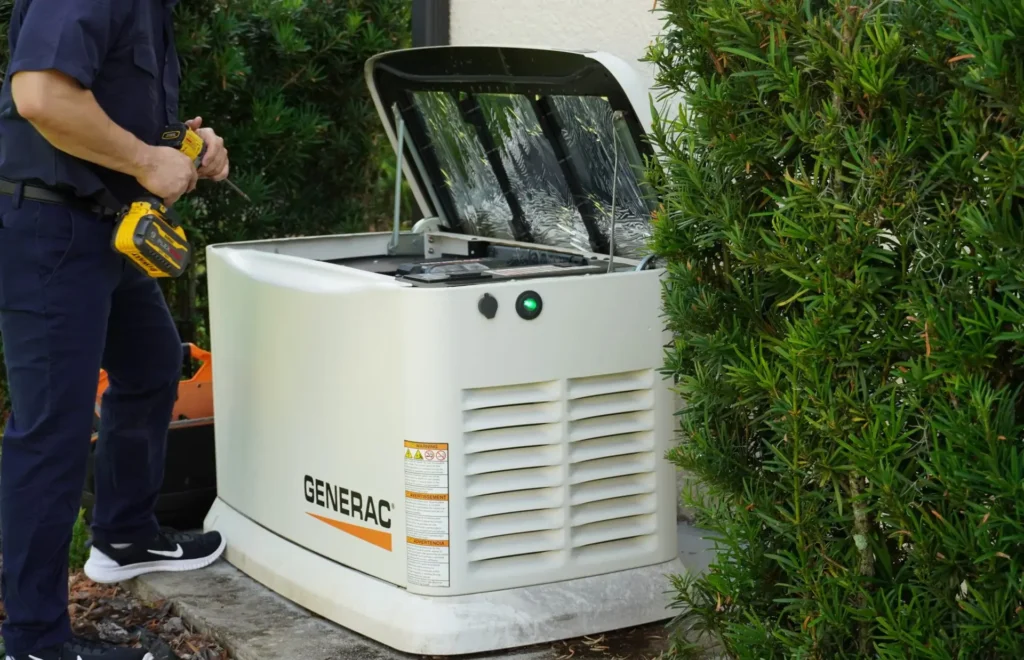
A standby system connects to your service panel and fuel line. The scope includes setting the unit, mounting the transfer switch, running conductors, grounding the system, and testing it under simulated outage conditions.
Grounded Electric is Generac Certified and follows the manufacturer’s generator installation guidelines. This keeps the system operating as designed and compliant with code.
Code and Safety Compliance
Standby systems must meet the National Electrical Code. Those rules govern the placement of grounding, bonding, and transfer switches at the main panel. Proper bonding prevents backfeed onto utility lines during an outage.
Fuel supply must meet pressure requirements, and homes on older service lines sometimes need to upgrade the gas meter to accommodate a generator, which matters most on natural gas systems that feed larger units. Robert “Bobby” Mulholland verifies both the wiring and the gas side before inspection.
Code compliance protects the home and keeps the warranty intact. It is also the step most likely to expose an unexpected panel or fuel issue mid-project.
Whole House Generator Cost Calculator
A whole-house sizing tool estimates how much power your home draws, and homeowners can use our generator wattage calculator for a quick starting estimate. You add loads such as HVAC, refrigeration, lighting, and sump pumps.
Each appliance has starting and running watt requirements, which can be reviewed in a detailed generator wattage chart to better estimate total power needs.
Online tools give rough numbers. A licensed contractor confirms service capacity and gas supply before final sizing. Barret Abramow, Project Manager and Co-Owner, coordinates these checks during planning.
How Long Does the Install Take?
Most projects take one to three days of on-site work once permits clear. That covers setting the unit, mounting the transfer switch, tying into the panel, and completing wiring and fuel connections. Final testing and inspection often happen on a separate day.
Permit approval is the long pole. It can take several weeks depending on the municipality. Weather, utility coordination, and panel upgrades further stretch the timeline.
Longer projects mean more labor hours, which raises the total. Planning, preparing the site, and confirming panel readiness keep the schedule tight and the price predictable.
Long-Term Ownership Costs
A standby system carries ongoing service and fuel expenses. Regular maintenance keeps it ready to run and prevents failures that show up at the worst possible moment.
Annual service plans average around $425 per year, as detailed in our annual maintenance cost guide for a Generac generator, and cover oil changes, filter replacement, battery inspection, and full system testing. Routine service extends equipment life and protects safe operation.
Fuel expense depends on size, runtime, and fuel type. Most whole-house systems run on natural gas piped directly to the home, so there is no refueling. Extended outages increase total consumption.
Generac rates most air-cooled units for a service life of roughly 20 years with proper maintenance. Over that span, maintenance plans alone add roughly $8,500 to the total cost of ownership.
Is a Generac Generator Worth It?
A standby system restores power automatically within moments of an outage. Homes in storm-prone regions or with medical equipment benefit most, especially during severe weather, as discussed in our guide to the best generator for hurricane season. Value tracks closely with how often your area experiences power outages.
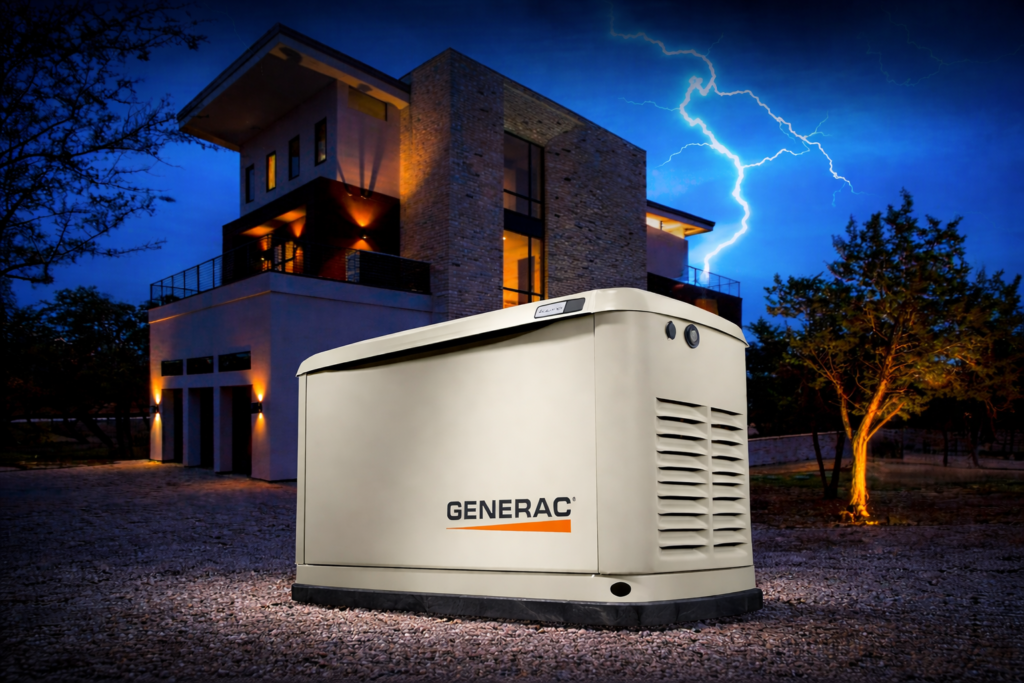
Beyond outage protection, homeowners weigh safety, automatic operation, and resale value, and may also explore whether the investment makes sense in our article, “Are Generac generators worth it?”
Working with licensed contractors and authorized dealers protects both installation quality and the system’s long-term reliability.
How to Get an Accurate Quote
What does a Generac generator cost once your site is factored in? A contractor walks the site, checks the panel, and confirms fuel supply before quoting. Load testing confirms the correct unit size and prevents overload. These steps produce a number that holds up once work begins.
Online estimates and phone quotes miss site-specific conditions. A full site visit is what separates a real number from a range.
If you are considering a standby system, a professional evaluation is the first step. A licensed contractor can review your panel, fuel supply, and power needs to determine correct sizing and a workable plan. Scheduling an on-site assessment clarifies your true price and ensures safe, code-compliant backup power.
Frequently Asked Questions
What is the average cost of a Generac generator?
The average unit price is roughly $5,500 for a mid-size air-cooled model. Installed, the national average sits near $12,000, with most projects falling between $8,000 and $16,000.
How much is a Generac generator for a 2,000 square foot home?
A 14 kW model typically covers a 2,000-square-foot house with one air conditioning unit. Expect $4,000 to $5,000 for the equipment and $9,500 to $13,000 installed nationally.
Do Generac prices include installation?
Advertised prices from retailers usually cover only the unit. Transfer switch, labor, permits, and site work are separate and typically double or triple the equipment price.
Why do quotes vary so much between contractors?
Site conditions drive most of the variance. Panel capacity, gas line size, trenching distance, and local permit fees differ house to house, even on the same street.
How much does a Generac generator cost to maintain?
Annual service plans run around $425 per year. That covers oil and filter changes, battery inspection, and a full operational test.
