



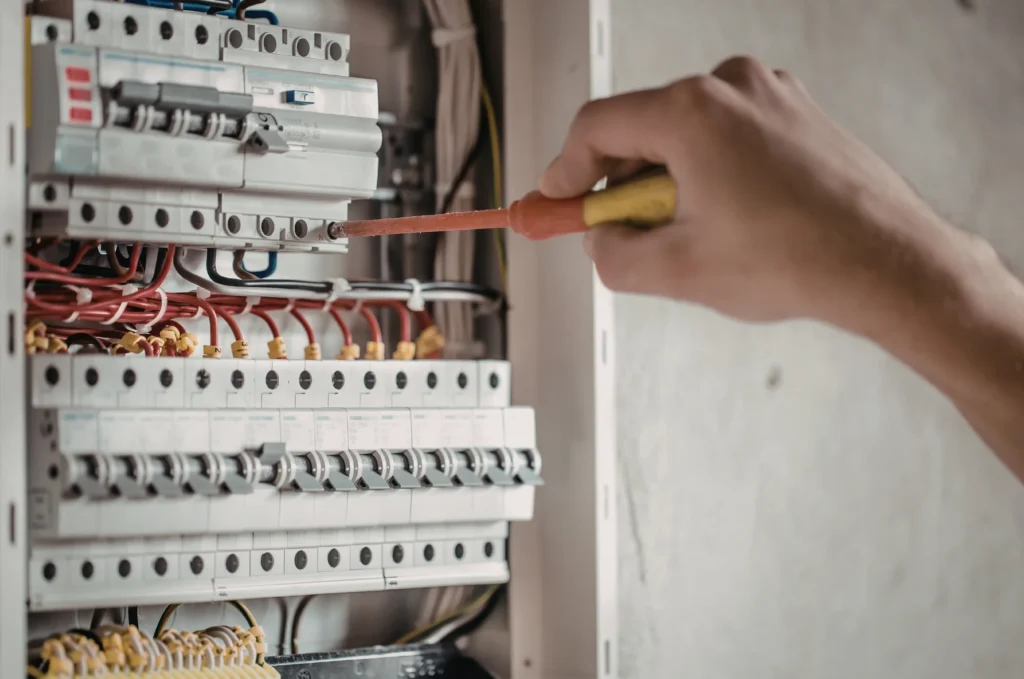
Knowing how much to replace an electrical panel helps homeowners plan accurately before the first call to a contractor. The total cost depends on panel size, local labor rates, permit requirements, and the condition of existing wiring.
These factors can vary a lot from one home to the next. For most homes, replacing an breaker panel costs $1,200 to $4,500. The national average is about $1,300 to $1,600 for a standard replacement.
Grounded Electric, a licensed electrical contractor serving residential and commercial clients in Bergen County, NJ, handles panel replacements regularly and prepares written estimates based on an in-person assessment of each home’s specific conditions.
Key Takeaways
- Most homeowners pay $1,300 to $3,000 to replace an electrical panel, with labor, permits, and wiring condition accounting for the largest share of the total cost, not the panel hardware itself.
- Panel size determines the base price: a 100-amp replacement typically runs $800 to $1,500 installed, a 200-amp upgrade ranges from $1,300 to $2,500, and a full-service upgrade can reach $4,500 or more.
- breaker panels last 25 to 40 years, but Federal Pacific Electric panels and fuse boxes should be replaced regardless of age due to documented safety risks.
- Panel replacement requires a permit in virtually every U.S. jurisdiction, and unpermitted work can void homeowners’ insurance coverage and create liability during a home sale.
- Standard homeowners’ insurance does not cover panel replacement due to age or wear. However, some insurers will decline to write coverage on homes with known hazardous panel types without proof of replacement.
Electrical Panel Replacement Cost: What Most Homeowners Pay
The breaker panel replacement cost includes three components: the panel hardware, the electrician’s labor, and permit and inspection fees. Together, these factors put a typical home project in the $1,200 to $2,500 range.
This applies to a simple swap at the same amperage. Projects involving rewiring, panel relocation, or a significant increase in amperage push costs closer to $3,000 to $4,500.
Robert “Bobby” Mulholland, a licensed electrician with over 30 years of experience, says hardware is rarely the most expensive component. Labor and job-site conditions, like access, wiring age, and code compliance, make up a large part of each estimate.
Cost by Amperage: 100, 150, 200, and 400 Amp
Panel amperage is the primary driver of both hardware and installed cost. Larger panels require more materials, more labor, and in many cases coordination with the utility company to upgrade the service entrance.
- 100 Amp: Hardware $100 – $150 | Installed $800 – $1,500
- 150 Amp: Hardware $150 – $250 | Installed $1,000 – $1,800
- 200 Amp: Hardware $200 – $400 | Installed $1,300 – $2,500
- 400 Amp: Hardware $400 – $700 | Installed $2,000 – $4,500
Most older homes were built with 100-amp service capacity. With EV chargers, central air systems, and smart home technology now standard in residential properties, upgrading to higher amperage at the time of replacement is frequently the more cost-effective long-term decision, since labor costs remain largely the same regardless of panel size.
Cost by Panel Type and Brand
Residential panels from manufacturers such as Square D, Siemens, Eaton, and Leviton range from $100 to $500 for the unit alone. Subpanel installations – secondary boxes that distribute power to a detached garage, finished basement, or home addition – cost $500 to $1,500 installed.
A main panel replacement costs more because it requires shutting off service at the electrical meter box and reconnecting every circuit in the home.
What Drives the Cost of an Electrical Panel Replacement?
Labor, permits, and site-specific conditions routinely exceed the hardware cost on most residential jobs. Here is what actually moves the number.
How Much Do Electricians Charge to Install a Panel?
A licensed electrician typically charges $50 to $150 per hour for panel work, depending on location and project complexity. A standard panel swap takes four to eight hours to complete.
Jobs that include a service upgrade, partial rewiring, or panel relocation can take 15 hours or more. Labor alone can reach $2,000 in higher-cost markets like northern New Jersey.
Barret Abramow, Project Manager and Co-Owner at Grounded Electric, says accurate labor estimates need an on-site review. Access conditions and wiring complexity are unclear over a phone call. They are not clear from a photo.
Permits, Inspections, and Local Code Requirements
Breaker panel work requires a permit in virtually every jurisdiction, with fees ranging from $100 to $500. After installation, a licensed inspector verifies that the work meets local codes before power is restored.
Unpermitted electrical work creates liability exposure, can void insurance coverage, and frequently surfaces as a problem during home sales. A qualified electrician handles the permit application as part of the job.
Panel Location, Access, and Wiring Condition
A panel on an accessible wall costs less to replace than one on a crawl-space ceiling or a finished-basement ceiling. Relocating a panel adds $1,000 to $2,000 due to the rerouting involved. Wiring condition is the most unpredictable cost variable.
If an electrician discovers knob-and-tube or aluminum branch circuit wiring, addressing it is a safety and code requirement that adds to the project scope.
Average Cost to Replace a Breaker Box: Panel and Wiring Together
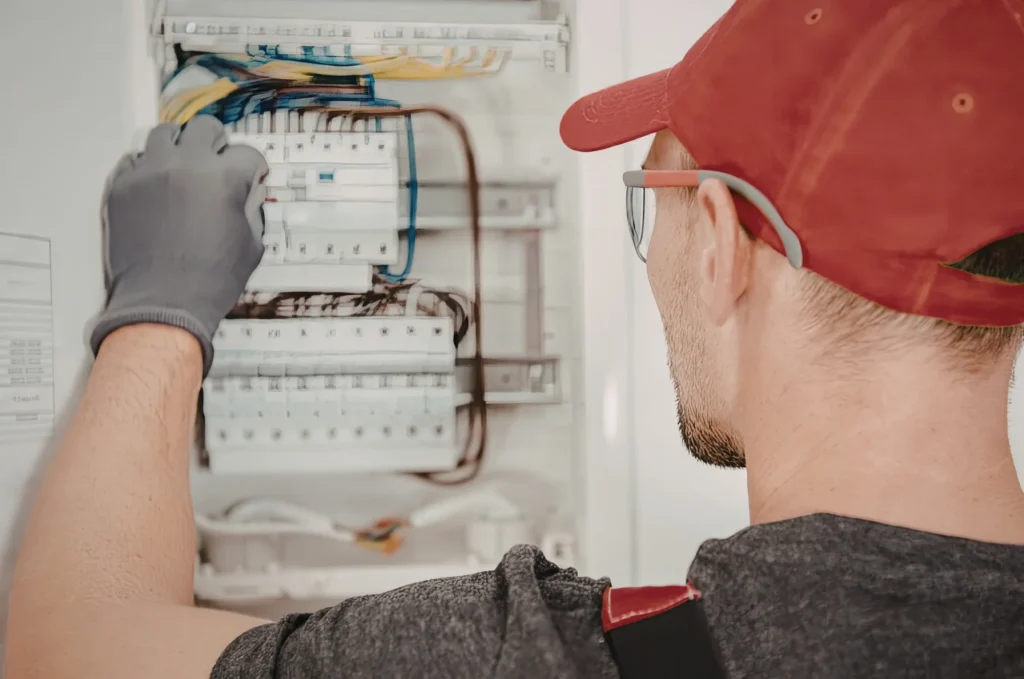
The terms breaker box and electrical panel refer to the same piece of equipment. The average cost to replace a breaker box in a residential setting ranges from $1,200 to $2,500 for a standard project.
Breaker Box Replacement Cost by Amperage
The breaker box replacement cost follows the same amperage-based scale above. A 100-amp box replacement typically runs $800 to $1,500 installed, while a 200-amp replacement costs $1,300 to $2,500.
Individual circuit breakers run $100 to $200 each, and some replacements include several breaker upgrades as part of the scope.
Cost to Replace a Breaker Panel and Wiring
Replacing the panel and connected wiring is the most extensive version of this project. Full home rewiring costs $6,000 to $12,000 or more, depending on square footage, while partial rewiring adds $1,000 to $3,000 to the base replacement price.
Bobby Mulholland recommends addressing aluminum branch-circuit wiring during a panel replacement when possible, since combining the two jobs reduces total labor costs.
Cost to Upgrade an Electrical Panel to 200 Amps
Upgrading your electrical panel to 200-amp service is the most common electrical upgrade in older homes throughout Bergen County.
Homes built before 1990 were typically wired for 100 amps of service capacity, which is insufficient for today’s electrical loads. A full 200-amp upgrade ranges from $1,300 to $3,000, including labor, hardware, and permits.
Cost to Upgrade from 150 to 200 Amps
Upgrading a breaker panel from 150 to 200 amps costs less than starting from 100 amps because the existing service entrance cable may already be close to the required conductor gauge.
Most homeowners pay $1,200 to $2,200 for this upgrade, including permits and inspections – a practical investment for homes adding an EV charger, a heat pump, or a significant addition.
Full Service Upgrade vs. Breaker Box Swap
A breaker box swap replaces the current panel with a new one of the same amperage. It leaves the circuits and service entrance unchanged.
A full-service upgrade increases amperage and often requires replacing the meter base and service entrance cable. It may also require a new main disconnect. You may need to coordinate a temporary shutoff with the utility company. Service upgrades cost $1,500 to $4,500, depending on scope.
Signs Your Electrical Panel Needs to Be Replaced
Electrical panels are built to last 25 to 40 years under normal operating conditions. Wear and tear, outdated technology, and capacity limitations all create situations in which replacement is the safer option than continued repairs.
Tripping Breakers, Flickering Lights, and Burning Smells
Breakers that trip regularly indicate the electrical system is handling more load than the panel was rated for. Lights that flicker when large appliances start up point to the same issue.
A burning smell near the panel or visible scorch marks on breakers or bus bars indicate heat damage and require immediate attention from a licensed electrician to ensure the system is safe.

What to Expect During the Replacement Process
How Long Does a Panel Replacement Take?
A standard swap takes 4 to 8hours. Jobs involving a service upgrade, panel relocation, or partial rewiring run one to two full days, with power off for most of that time.
Do You Need a Permit to Replace a Breaker panel?
Yes. Permits are required in virtually every U.S. jurisdiction, including all municipalities in Bergen County. The electrician applies for the permit before work begins and schedules the post-installation inspection with the local building department. Permit fees typically run $100 to $500.
Can You Replace an Electrical Panel Yourself?
No. The main service line remains energized even when all breakers are off. This is not a project for an unlicensed DIYer – it requires a professional electrician with the credentials and tools to work safely at the service entrance. Unpermitted, unlicensed panel work also voids homeowners’ insurance coverage for any damage connected to the electrical system.
Does Homeowners Insurance Cover Electrical Panels?
Standard homeowners insurance does not cover panel replacement due to age, wear and tear, or gradual deterioration. If a panel failure causes a fire, the policy may cover the resulting structural damage but not include the panel itself in the claim.
Some insurers will decline coverage on homes with Federal Pacific or Zinsco panels without proof of replacement – a practical consideration for anyone purchasing a home with known panel issues.
Is It Worth Replacing an Breaker Panel?
For most homeowners, an electrical panel upgrade is a sound investment. A new panel reduces fire risk, creates capacity for future electrical loads, and removes a common flag from home inspection reports.
The average cost to replace a panel – $1,500 to $2,500 for most residential jobs – is a measurable expense against clear benefits: improved safety, expanded capacity, and protection of the home’s resale value.
How to Get an Accurate Quote for Panel Replacement
Online cost ranges give useful context, but the only accurate number comes from an in-person assessment. When comparing quotes, verify that each one itemizes labor, hardware, permits, and inspection fees separately.
A detailed, written estimate with no vague line items is a reliable sign that the contractor understands the full scope. Bobby Mulholland and the team at Grounded Electric provide on-site evaluations and written estimates for panel replacements throughout Bergen County and the surrounding service area.