



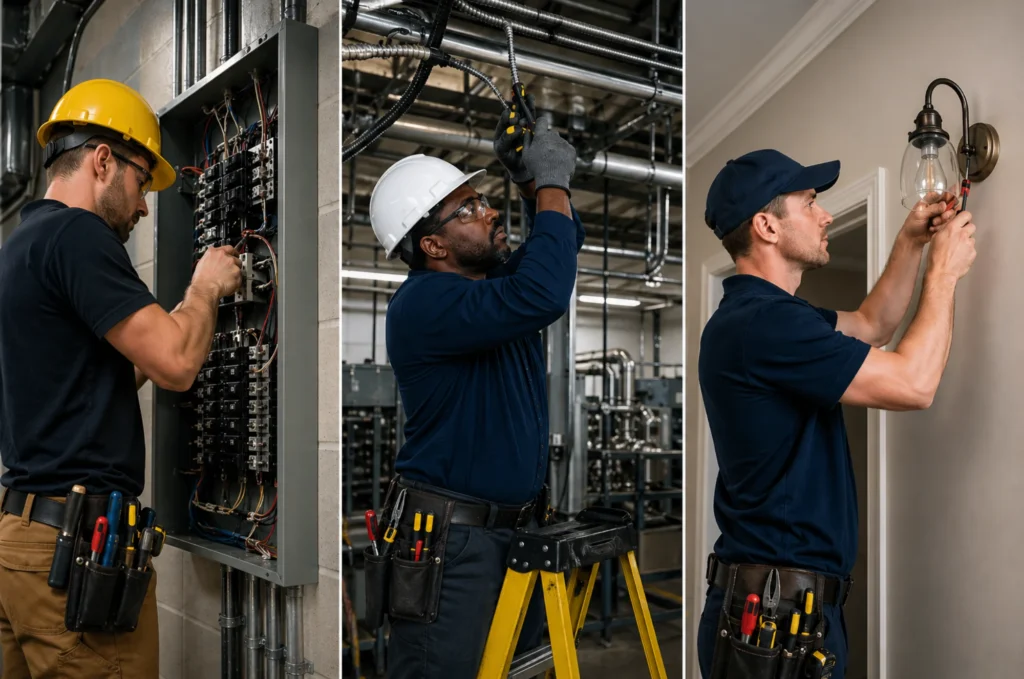
There are several types of electricians, each trained for a specific type of work. Hiring the wrong type can lead to failed inspections or work that needs to be redone.
Knowing the difference helps you make the right call. Grounded Electric serves clients throughout Bergen County with licensed electricians specializing in many areas.
Key Takeaways
- Electricians are classified as either linemen (high-voltage, exterior systems) or wiremen (interior wiring), and break down further by work environment: residential, commercial, or industrial.
- Licensing runs through three levels: apprentice, journeyman, and master, each with a different legal scope for what work they can perform, permit, and supervise.
- The right electrician for your project depends on the permit requirements, system type, and complexity of the work, not just availability or price.
- Specialty installations like standby generators, EV chargers, and smart home systems require an electrician with direct experience in that specific system, beyond a general license.
- Certifications like Generac authorization add a layer of manufacturer-recognized competency on top of state licensing and are worth verifying before hiring for specialized work.
Types of Electrician Licenses, Certifications, and Career Paths
Every licensed electrician follows a set training path before they can work independently. License level controls what work they can do, whether they can pull permits, and whether they can supervise others.
Apprentice Electrician
An apprentice electrician trains under a licensed journeyman or master electrician. A standard apprenticeship takes about four years.
It includes 144 hours of classroom work per year and approximately 2,000 hours of fieldwork. Apprentices learn to read electrical plans, handle electrical components, and apply electrical codes on real jobs.
Journeyman Electrician
A journeyman electrician has passed a state licensing exam. They can work independently on most residential and commercial projects. This license covers most standard electrical work. That includes panel upgrades, circuit work, and the installation of electrical outlets, switches, and lighting fixtures.
Master Electrician
A master electrician holds the highest license in the trade. They can design electrical systems, pull permits, and oversee other electricians. Robert “Bobby” Mulholland, head electrician at Grounded Electric, holds a master electrician license. He has over 30 years of field experience across Bergen County.
Types of Electrician Certifications and What They Cover
A license sets the legal baseline to practice. A certification shows proven skill in a specific area. This can include safety compliance, low-voltage systems, or types of electrical equipment.
Some states require certain certifications before an electrician can run an electrical contractor business. Grounded Electric holds a Generac certification for standby generator installations.
Types of Electrician Jobs and Work Environments
The work setting shapes the skills and electrical codes an electrician needs. Residential, commercial, and industrial settings each have different voltage levels, safety rules, and system complexity. Experienced electricians tend to build deep knowledge in one primary setting before expanding into others.
Residential Electricians
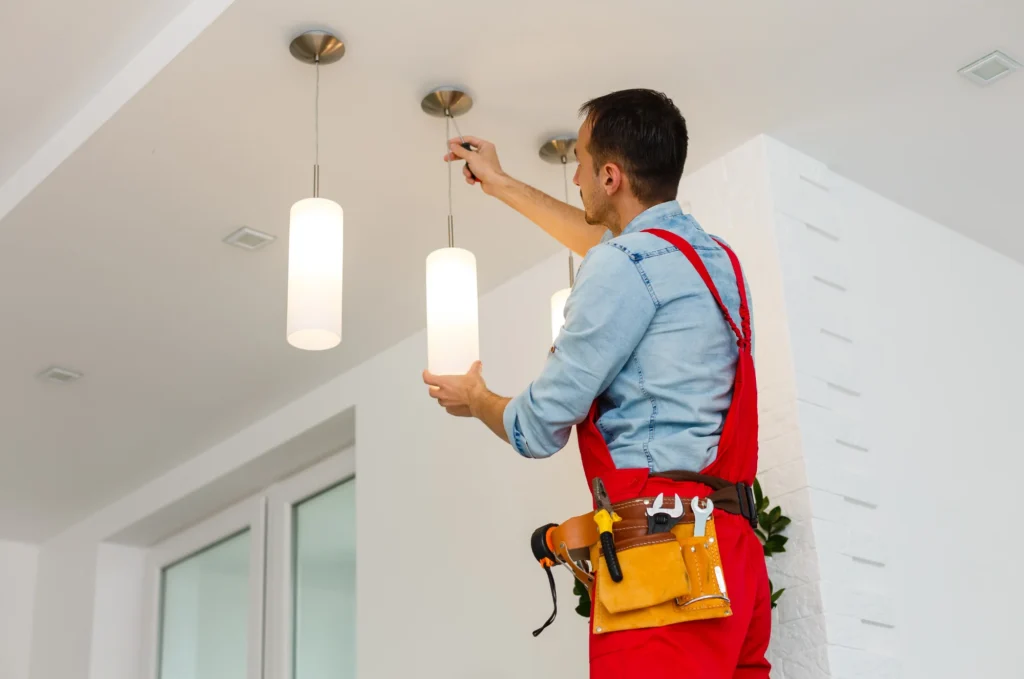
Residential electricians work in homes, apartments, and condos. Their work covers wiring, panel upgrades, outlet and switch installation, and lighting fixtures. They must know local residential electrical codes and how home systems hold up under daily use.
Commercial Electricians
Commercial electricians work in offices, schools, restaurants, and medical facilities. These jobs carry higher electrical loads and stricter safety codes than residential work. In commercial buildings, electrical systems also need to be maintained without disrupting daily operations.
Industrial Electricians
Industrial electricians work in factories, plants, and warehouses. They handle motors, control panels, and high-voltage electrical equipment. This is the most technical work setting in the trade. It calls for advanced training and strict safety habits.
Different Electrician Jobs by Specialty
Many different kinds of electricians focus on one specific system or type of installation. These different electrician jobs often require additional certifications beyond a standard license. Hands-on experience with the specific system matters just as much as the license itself.
Generator Installation Electricians
Generator electricians install and service standby and portable generator systems. They connect transfer switches, perform load calculations, and integrate fuel systems — and the standby generator installation cost varies with system size and transfer switch type. This prevents backfeeding into the utility grid during an outage.
EV Charger Installation Electricians
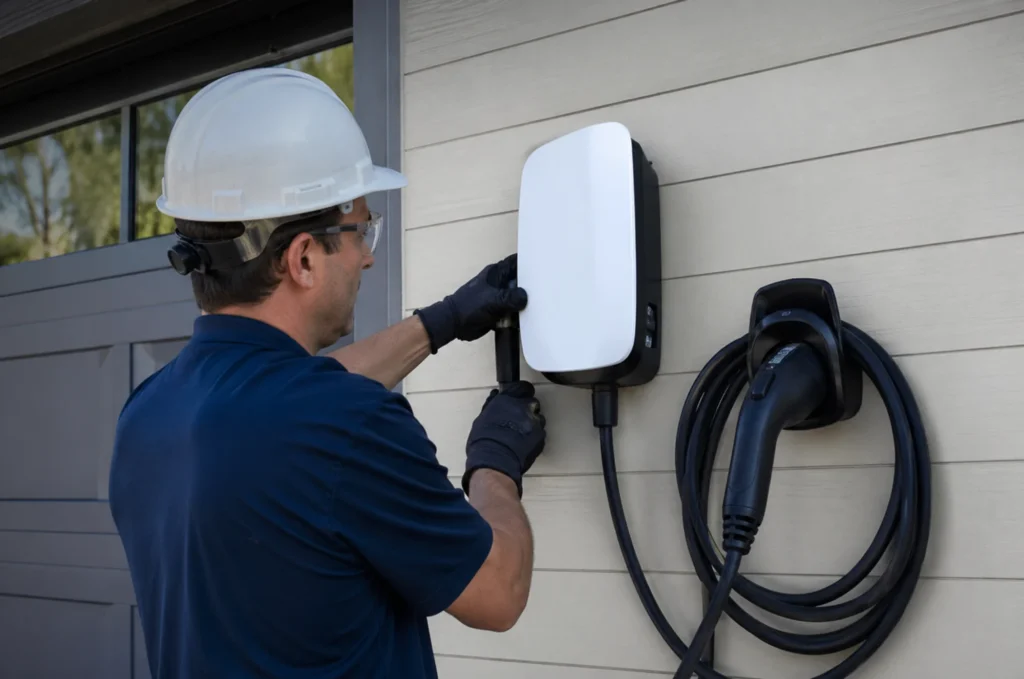
EV charger electricians install Level 2 and commercial charging stations. The work involves checking panel capacity and running dedicated circuits, and a qualified residential EV charger installer will confirm your setup meets local code before any work begins. All work must meet local code for both homes and commercial parking facilities.
Smart Home and Low-Voltage Electricians
Low-voltage electricians install and maintain electrical systems operating at less than 50 volts. This includes smart home automation, security systems, and structured data cabling. The focus is on signal quality and cable management.
New Construction Electricians
New construction electricians wire buildings before walls are closed. Errors at this stage are costly to fix once the walls and ceilings are finished. Accuracy is critical from the start.
Maintenance Electricians
Maintenance electricians keep existing systems running safely. They conduct inspections, identify issues early, and make repairs before small problems turn into major failures.
Landscape and Security Lighting Electricians
These electricians install outdoor lighting. This includes security flood lights, pathway fixtures, and landscape lighting. The work requires weatherproof wiring, proper grounding, and knowledge of low-voltage outdoor electrical codes.
What Is the Highest Type of Electrician and What Do They Earn?
The master electrician is the top level in the trade. They are legally responsible for code compliance and can design and approve electrical systems.
Master electricians usually earn more than apprentice and journeyman electricians because they can supervise work, pull permits, and approve electrical systems.
Exact pay varies by state, license level, years of experience, union status, overtime, and specialty. For stronger accuracy, this section should cite current salary data from the Bureau of Labor Statistics or another updated wage source.
Understanding types of electrician careers helps job seekers plan. Entry-level roles start with an apprenticeship. Passing the journeyman exam opens the door to independent work.
Reaching the master level takes more field time and a harder exam, but it comes with the highest pay and the widest legal authority.
How to Choose and Hire the Right Electrician for Your Project
Match the electrician’s license and specialty to the job at hand. Here’s a simple way to narrow it down:
- Standard repairs or outlet installs – a journeyman electrician is the right call
- Permits, system design, or new construction – you need a master electrician who can legally sign off
- Specialty installs like generators or EV chargers – confirm the electrician has direct experience with that system, not just a general license.
- Any hire – verify they carry insurance and can provide local references
Barret Abramow, project manager and co-owner of Grounded Electric, oversees each project alongside experienced electricians. He ensures that all work is completed in accordance with regulations and within the agreed timeframe.