


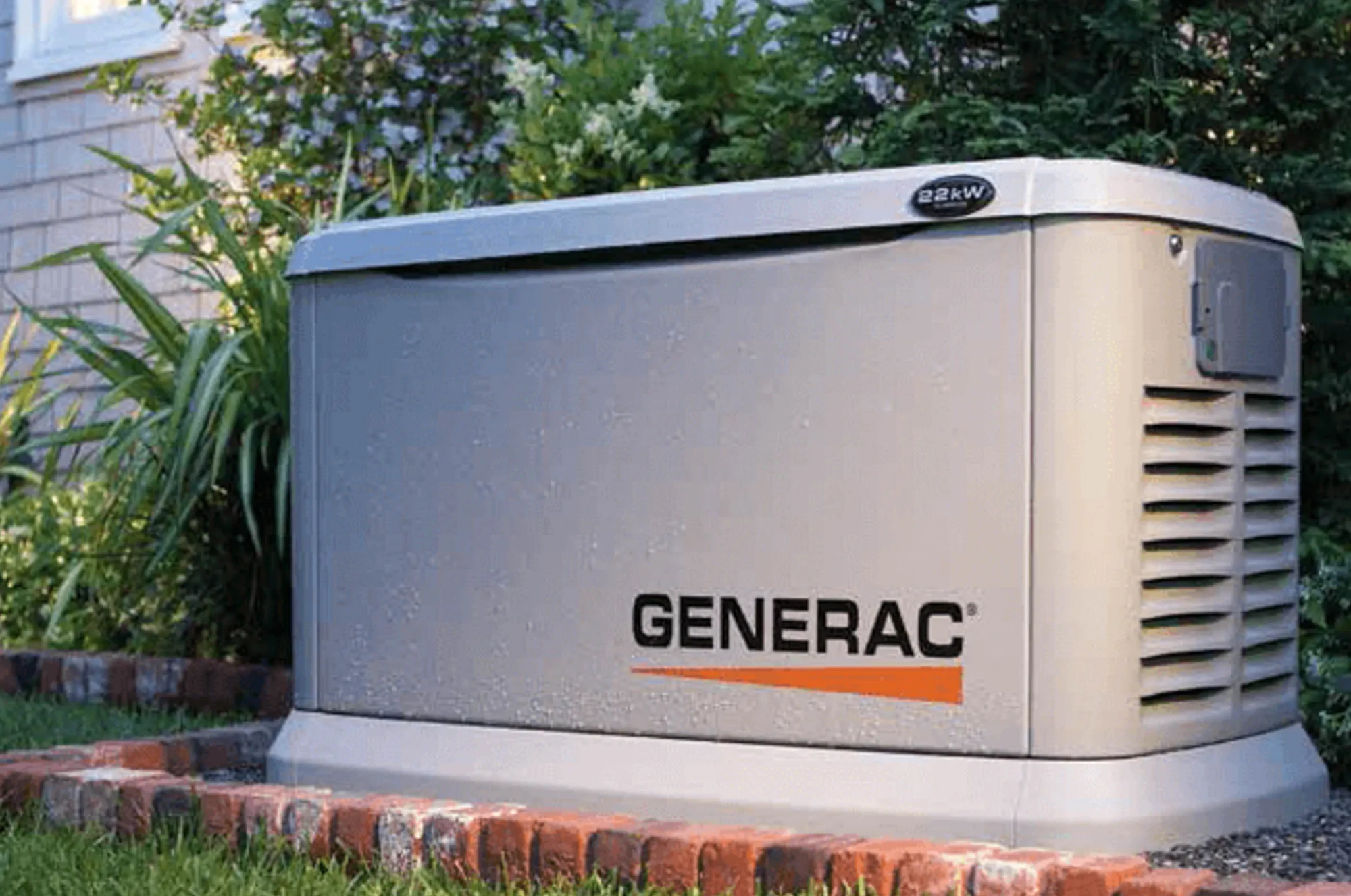
Standby units make sound when they run, so homeowners often ask whether Generac models are louder than other equipment around the house. Most produce about 60 to 70 decibels during normal use, close to a central AC unit or ordinary conversation. So the short answer is no.
Placement matters as much as the machine itself. Grounded Electric explains these levels during planning so owners know what to expect before the unit ever fires up.
Key Takeaways
- Most Generac home standby units produce about 61 to 68 decibels at 23 feet, depending on size, close to a central air conditioner or normal conversation.
- Portable models typically run 70 to 80 decibels because their engines sit exposed rather than inside a cabinet.
- A standby unit seems louder at night because background sound drops, not because the machine changes.
- Distance, nearby surfaces, and landscaping all shape how much you actually hear on a given property.
- Enclosed cabinets and mufflers keep standby equipment quiet while delivering full backup power.
How Loud Are Generac Generators?
Most Generac home standby units produce about 61 to 68 decibels during normal operation, measured at 23 feet, the standard testing distance manufacturers use. So how loud are Generac whole house generators in practice? Whether you call it a whole house generator or a Generac home generator, that range holds steady across the residential lineup. At that distance, it sounds like a central air conditioner or two people talking in a yard.
The exact figure shifts slightly by model and by how much power your house draws. Engine speed stays constant while the system supplies electricity, so the audible output stays consistent rather than surging up and down.
Sound is measured in decibels (dB), a scale describing the pressure your ear detects. Small increases can feel noticeable in practice, but residential standby equipment is engineered to stay within levels appropriate for neighborhoods.
Manufacturers work hard to keep this number down. The steel enclosure and muffler do most of that work.
How Many dB Is a Generator?
Portable units typically reach 70 to 80 decibels, while standby models stay closer to 61 to 68 depending on size. Full spec-by-model figures are in the chart below.
These ratings are worth comparing when selecting a generator for your home.
Are Generac Generators Loud When Running?
While the unit runs, the output remains steady because the engine speed stays constant, supplying power. You may hear a slight increase in noise when demand increases, which is normal, as the engine works harder to meet the load.
That variation is small. Most homeowners describe it as a consistent hum rather than something that fluctuates.
Are Generac Generators Loud at Night?
They are no louder at night, but they often seem that way. Streets and yards go quiet after dark, and with less competing background sound, your ear picks up the hum more clearly.
The equipment itself does not change. Only your perception does.
Generac Generator Noise Level Chart
The table below uses Generac’s own published ratings for its air-cooled home standby lineup, measured at 23 feet under normal load. Reference sounds are included for context.
| Equipment | Size | dB(A) at 23 ft | Sounds Roughly Like |
|---|---|---|---|
| Small home standby | 10 kW | 61 dB | A quiet background hum |
| Mid-size home standby | 14 to 18 kW | 65 dB | Normal conversation |
| Popular home standby | 20 to 22 kW | 67 dB | A central air conditioner |
| Large home standby | 24 to 26 kW | 67 to 68 dB | A dishwasher mid-cycle |
| Portable generator | 3 to 8 kW | 70 to 80 dB* | A vacuum cleaner nearby |
| Gas lawn mower | Reference point | 85 to 90 dB | Loud enough to raise your voice over |
*Generac does not publish an official dB(A) rating for portable units; this range reflects independent testing. Standby figures sourced from Generac's decibel ratings support page. Lawn mower reference per CDC/NIOSH noise exposure data.
Larger units run slightly louder because larger engines move more air, but even the largest residential models stay well below a lawn mower’s noise level.
How Loud Is a Generac 22kW Generator?
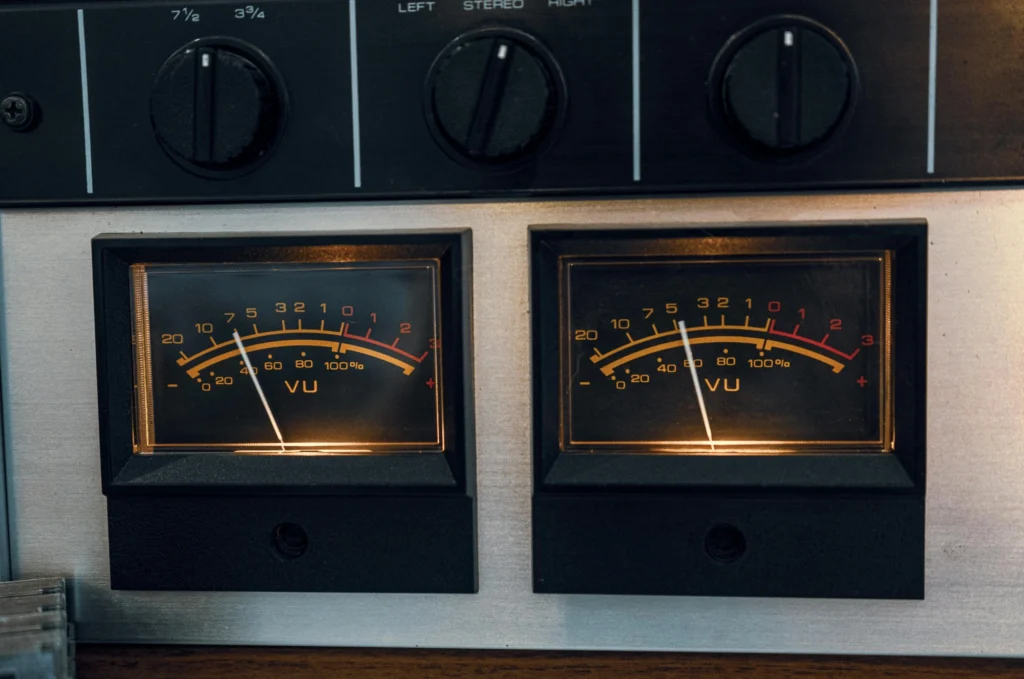
The 22 kW model, one of the most common residential sizes, runs at 67 decibels at 23 feet, per Generac’s published spec.
How loud is 67 decibels for a generator? To put it in context, that sits between a dishwasher and a normal conversation. It is loud enough to notice if you stand beside the unit, quiet enough to fade into background hum from inside your house with the windows closed. Because the decibel scale is logarithmic, roughly every 10 dB increase doubles perceived loudness, so a portable unit at 78 dB sounds about twice as loud as the 22 kW standby, not several times louder.
Generator Noise Compared to Household Sounds
In most homes, a running standby unit sounds like an HVAC condenser cycling on. You hear it clearly outdoors near the pad, and it blends with other equipment once you step away.
Neighbors rarely register it as distinct from the air conditioners already running on the block.
Why Do Generac Generators Make Noise?
People often ask, ‘why are Generac generators so loud?’ The answer is mechanical: every unit burns fuel to spin an engine, which creates vibration, airflow, and exhaust. All three produce audible output.
Engine Operation and Power Output
The engine accounts for most of what you hear. Combustion drives motion and vibration, which travel outward as pressure waves.
When the system carries your house, the engine adjusts to match demand. Heavier loads push output up slightly.
Cooling Fans and Airflow
Fans pull air through the cabinet to keep the engine within safe operating temperature. That moving air adds its own layer to the total.
Restricting airflow to quiet the unit poses an overheating hazard, so ventilation remains fixed regardless of noise goals.
Factors That Affect Generator Noise Levels
Two units with identical decibel ratings can sound completely different on two properties. Distance, surrounding surfaces, and local ordinances shape the real-world result more than the spec sheet does.
Distance From the Generator
Sound weakens as it travels, which is exactly why manufacturers measure at 23 feet. That fixed distance gives buyers a fair basis for comparison.
Double the distance and perceived volume drops noticeably. Placement away from bedroom windows does more than any accessory you can buy.
Installation Location and Surfaces
Hard surfaces reflect. A unit tucked against a brick wall or between two structures bounces sound back toward the house, raising what you hear.
Soft ground, mulch, and dense planting absorb instead. The same equipment can measure differently on two sides of the same property.
Local Noise Rules for Home Generators
Many towns cap equipment output in residential zones, often with stricter limits after dark. These rules also govern setback distance from property lines.
Licensed electrician Robert “Bobby” Mulholland notes that these ordinances should be reviewed before choosing a location, not after the pad is poured.
How to Reduce Generac Generator Noise?
You can lower what you hear through placement, partial barriers, and landscaping, but you cannot enclose the unit. Ventilation is a safety requirement, not a preference.
Can You Soundproof a Generac Generator
Full soundproofing is unsafe. These units need continuous airflow to stay within their operating temperature range, and sealing the cabinet risks overheating, which can build up around the unit and affect warranty coverage.
Work with placement and barriers instead. Both reduce perceived volume without touching ventilation.
Generator Enclosures and Sound Barriers
Partial barriers and acoustic panels redirect pressure waves away from doors and windows. A three-sided screen with open airflow is the common approach.
Robert “Bobby” Mulholland explains that any barrier must respect the manufacturer’s clearance requirements on every side.
Landscaping for Noise Reduction
Dense shrubs and solid fencing absorb and scatter sound before it reaches the house. Project Manager and Co-Owner Barret Abramow notes that evergreens tend to work better than deciduous plantings in his experience, since they hold coverage through winter, when outages are most likely.
Landscaping is often the practical option when lot size limits how far the pad can sit from the house.
Quiet-Test and Weekly Exercise Cycles
Every standby unit runs a short self-test on a weekly schedule, and that’s when most neighbors actually notice it, not during outages. Generac’s Quiet Test Mode runs the cycle at a lower RPM, resulting in quieter operation compared to a standard full-load exercise run.
You can also schedule the test window with your installer. Setting it for a weekday mid-morning rather than an early weekend hour keeps it from being what wakes the block on a Saturday.
Are Generators Loud?
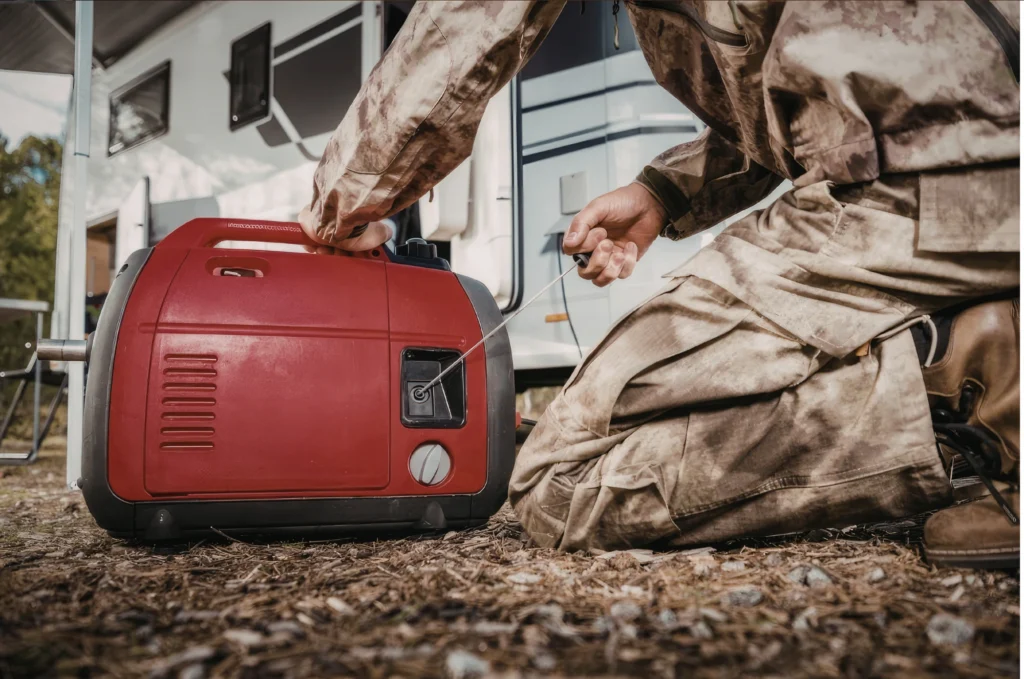
It depends entirely on the type. Portable models run 70 to 80 decibels because their engines sit exposed on an open frame, while standby systems use insulated cabinets and mufflers to bring output down into the 60s.
Portable vs Standby Generator Noise
Are standby generators louder than portables? No, and placement compounds the gap. Portables sit close to the house for cord access. At the same time, standby units install at a fixed setback from the wall, and homeowners comparing smaller options may also review the best-rated 4000-watt generator before deciding.
Inverter models are the quiet exception among portables, though they deliver a fraction of the output, which rules them out for whole-house backup.
Are Generac Generators Good?
Yes, for most homes, provided the unit is sized correctly and installed by a licensed electrician. Generac is one of the most recognized names in residential standby power, and many homeowners research who makes Generac generators before committing to a purchase.
These systems monitor the utility line and start automatically within seconds of an outage. The range of available sizes lets you match capacity to your actual load rather than overbuying.
Performance and Reliability for Home Backup
Standby systems watch the utility feed continuously and transfer over without anyone touching a switch. That matters most during outages that start at 3 a.m.
These units are built to run for days at a time, holding steady output and consistent operating volume throughout.
What Are the Disadvantages of a Generac Generator?
The tradeoffs are space, fuel access, and ongoing service. You need a level pad with clearance on all sides, a natural gas or propane connection, and annual maintenance to keep the system running reliably.
Annual Generac maintenance runs roughly $425 for a plan covering routine checks and support. Factor that in before buying, not after.
Overall, these systems perform well, though results depend heavily on correct sizing and professional placement, points we cover in more depth in our full breakdown of whether Generac generators are good investments.
Who Makes the Quietest Whole House Generator?
Generac, Kohler, Briggs & Stratton, and Champion all build residential standby equipment in a similar decibel band, so no single brand holds a decisive quiet advantage at comparable sizes.
Placement affects the outcome more than brand choice does.
Generac vs Kohler Generator Noise
Both brands publish similar ratings, typically within a few decibels of each other at equivalent sizes. Kohler markets certain models as quieter, and the spec sheets support a small edge on some units.
That margin disappears once installation variables come into play. A Kohler pressed against a brick wall will sound louder than a Generac sitting in open landscaping.
How Much Does a Generac Cost for a 2,000-Square-Foot House?
A 2,000-square-foot house typically needs an 18-22 kW system. We break down in detail how big a generator you need for a 2,000 sq ft house, and the total installed Generac generator cost generally ranges from $12,000 to $20,000. That figure covers the unit, transfer switch, pad, and labor. See our full standby generator installation cost breakdown for a size-by-size comparison.
Pricing shifts with regional labor rates, fuel line distance, and whether your electrical service needs work first.
| Cost Component | Typical Range | What Drives the Number |
|---|---|---|
| Complete installed system | $12,000 to $20,000 | House size and required kW capacity |
| Diagnostic or assessment visit | $150 to $300 | Varies by contractor; often credited toward the project |
| Electrical panel or meter upgrade | $1,000 to $2,500 labor | Utility coordination and service line work |
| Annual maintenance plan | About $425 per year | Routine inspections and support coverage |
Not every project needs an electrical panel upgrade. An electrician reviews your existing service capacity during a site assessment and flags it before work begins.
Generator Size and Power Requirements
Capacity is measured in kilowatts, and our generator size chart shows how correct sizing keeps the engine from straining under load. An undersized unit runs at full output constantly, which raises both operating volume and wear.
For most 2,000-square-foot homes, 18-22 kW is sufficient to power the HVAC, kitchen appliances, well pump, and lighting simultaneously. An electrician calculates your actual load using tools such as our generator sizing guide, rather than estimating it from square footage alone.
