



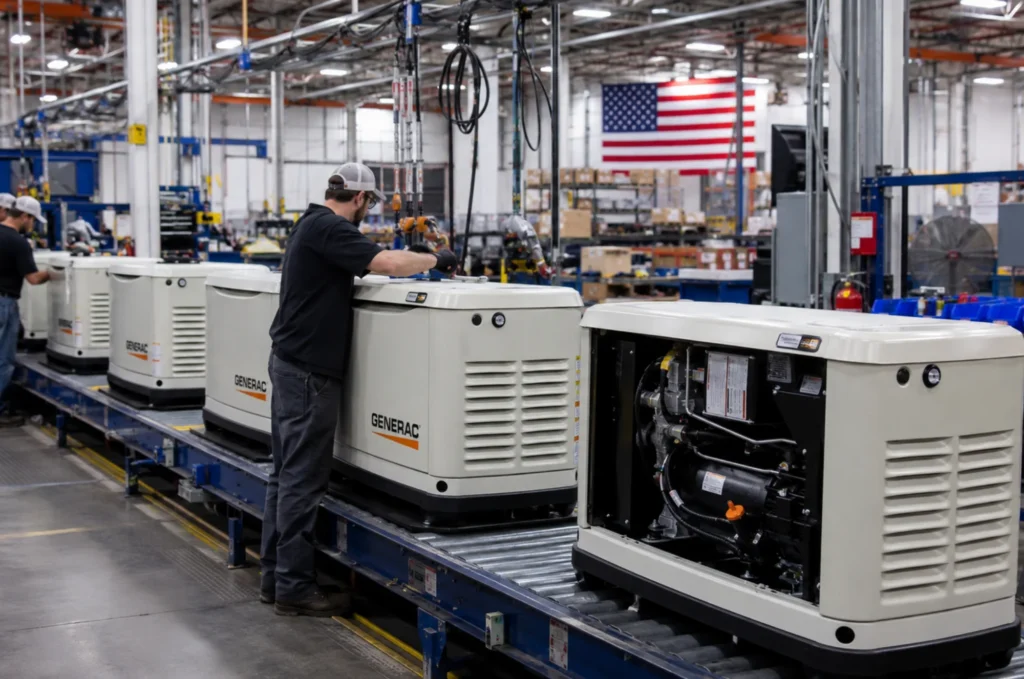
Generac generators are manufactured in the U.S. and around the world. Generac has major manufacturing facilities in Wisconsin, but some engines and parts come from other countries.
Generac says it makes G-FORCE and OHVI engines in Wisconsin, while OHV engines are made in Vietnam. Grounded Electric works with generators for homes and businesses, so product origin can help you compare installation, service, and long-term use.
Key Takeaways
- Generac generators are manufactured in the U.S. and around the world, with major manufacturing facilities in Wisconsin.
- The answer depends on the model because standby generators, portable generators, engines, and parts may have different origins.
- Generac says G-FORCE and OHVI engines are made in Wisconsin, while OHV engines are made in Vietnam.
- “Made in USA” and “assembled in the USA” are not the same, so buyers should check the label, owner’s manual, and model documents.
- Manufacturing location matters, but sizing, installation quality, maintenance, warranty, and service access also affect long-term performance.
Are Generac Generators Made in the USA?
Yes, Generac is a U.S.-based power systems company with a large presence in Wisconsin. Its U.S. sites support residential, commercial, and industrial generator work. Still, the supply chain is not limited to the United States.
Some standby generators and larger home backup generators may be built or assembled in the U.S. A home standby generator can include U.S. assembly, Generac engines, and parts from different suppliers. The exact answer depends on the model, size, product line, and label.
Key points:
- “Made in USA” is not the same as “assembled in the USA.”
- Some parts may come from global suppliers.
- Check each model to see where Generac manufactures or assembles that generator.
- Buyers should check the label, owner’s manual, and model documents.
Which Generac Models Should Buyers Check?
Buyers should check the product label and model documents because Generac products do not all share the same origin.
For example, some GP Series portable generators use Generac OHV engines, while others may use different engine families or parts sources. Larger home backup and standby generators may be assembled in the U.S., but parts can still come from domestic and foreign suppliers.
Are Generac Made in China?
No, not every Generac generator is made in China. Some Generac parts may come from overseas suppliers, including China or other countries. A generator includes many parts, such as an engine, an alternator, a control board, a fuel system, wiring, and an automatic transfer switch. This is why buyers should separate the assembly location from the parts’ origin.
Where Are Generac Generators Built?
Generac generators are built at company plants, assembly sites, and through supplier networks, which is why it helps to understand who makes them before comparing models. Wisconsin is the primary U.S. location for Generac generator and engine work. These sites support home backup power, standby generators, and larger systems in the generator market.
Portable generators can differ from standby generators. The engine source, part source, and assembly path may vary by model. This is common across the power equipment industry, including brands such as Briggs & Stratton and other generator makers.

Where Are Generac Engines Made?
Generac engines are not all made in one place. Generac says G-FORCE and OHVI engines are made by Generac Power Systems in Wisconsin, while OHV engines are made in Vietnam. This helps answer who builds Generac engines with more detail than a broad brand answer.
The phrase generac generator engine manufacturer depends on the engine family. G-FORCE and OHVI engines are manufactured by Generac in Wisconsin. OHV engines have a different origin, so buyers should not lump all Generac engines together.
Engine Families to Compare by Model
Not all Generac engines share the same manufacturing origin, so buyers should compare engine families before making a purchase. Generac states that G-FORCE and OHVI engines are made by Generac Power Systems in Wisconsin, while OHV engines are made in Vietnam. This is why the engine label matters as much as the generator brand.
Quick checks include:
- Look for G-FORCE, OHVI, or OHV on the model details.
- Compare the engine family with the generator type.
- Confirm whether the product is portable, standby, or commercial.
- Review the owner’s manual before assuming the country of origin.
Does Manufacturing Location Affect Quality?
Manufacturing location can matter, but it is not the only factor. Quality also depends on sizing, setup, upkeep, parts support, and how the unit is used. Robert “Bobby” Mulholland, Grounded Electric’s licensed electrician, can review these points in light of the home’s power needs and code rules.
Before choosing a system, check:
- Total watt needs
- Essential circuits
- Fuel source
- Transfer switch needs
- Permit and inspection rules
- Warranty and service access
- Monitoring system features
A generator may run for hours a day during long power outages, so maintenance matters, especially when comparing how long a Generac stays on during extended backup use. Service may include oil changes, battery checks, filter changes, load tests, and monitoring system checks.
Generac offers different features by model, so owners should read the manual before relying on Generac power for peace of mind.
Grounded Electric’s Generator Guidance
A generator choice should start with the home’s load, not just the brand name. Barret Abramow, Project Manager and Co-Owner at Grounded Electric, helps review site needs, service needs, and setup plans. Generac dealers and authorized dealers can also help confirm model details, warranty terms, and service needs.
Installed systems need code-aware planning because they connect to the home’s electrical system, and homeowners can review basic Generac generator installation guidelines before planning the project.
The automatic transfer switch must isolate the home from utility power when the generator is running. A licensed electrician should check the panel, grounding, clearances, load needs, and inspection rules before installation.