



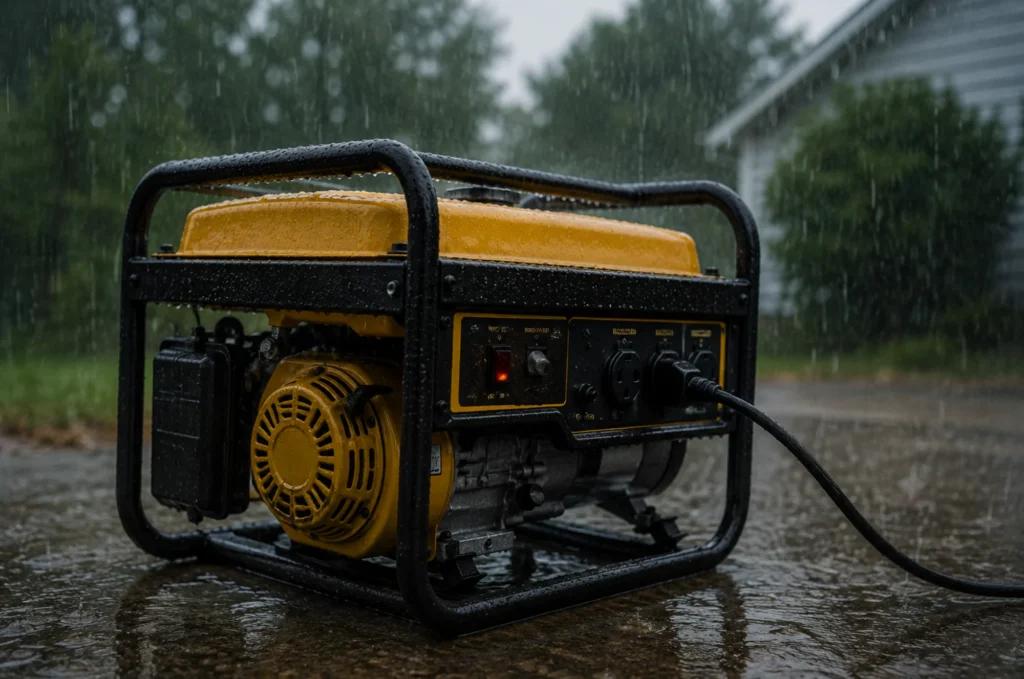
Most portable generators are not waterproof. They should not be left in rain, standing water, or severe wet weather. If you are asking, “Are portable generators waterproof?” the answer is usually no. Water can damage outlets, wiring, fuel parts, and engine parts.
Grounded Electric is a full-service electrical contractor. It treats generator safety as both an equipment issue and a home electrical safety issue. During power outages, a portable unit can help, but it must stay protected, ventilated, grounded, and properly connected.
Key Takeaways
- Most portable generators are not waterproof, so they should not sit exposed to rain, snow, standing water, or severe wet weather.
- A generator can run outdoors during power outages only if it remains dry, well-ventilated, grounded, and protected with an approved running cover.
- Water exposure can damage outlets, wiring, controls, fuel, and engine components, and increase the risk of electric shock.
- Never move a generator into a garage, shed, enclosed patio, or other enclosed space to protect it from rain because carbon monoxide can build up.
- Call a licensed electrician when connecting a generator to home circuits, transfer switches, panels, or major loads.
Are Portable Generators Waterproof or Rainproof?
Portable generators are usually not waterproof or fully rainproof. Some models may resist light moisture, but water-resistant does not mean safe in direct rain or a rain-snow mix.
A waterproof generator would need sealed protection around sensitive electrical and engine parts. Most portable units do not offer that level of protection, so the goal is to follow safe steps to protect your generator from rain and excess moisture, allowing airflow.
Can Portable Generators Run in the Rain?
The question “can portable generators run in the rain” depends on the model, cover, setup, and weather conditions. A generator in the rain should not be exposed to falling water unless the manual allows it and an approved running cover is in place.
You may also search, “Is it ok to run a generator in the rain?” The safer answer is only with proper outdoor placement, dry plugs, open ventilation, and protection from water damage.
When Rain Use May Be Possible
Rain use may be possible when the generator sits outdoors on a dry, stable surface under a rated cover made for operation. The cover must protect outlets and controls without trapping heat or exhaust.
Robert “Bobby” Mulholland, Grounded Electric’s licensed electrician and license holder, would treat this as a safety setup, not just a weather issue. You still need outdoor-rated cords, dry connections, and working GFCI protection where required.
When You Should Not Run It
Do not run your generator during extreme weather, flooding, heavy wind-driven rain, or unsafe wet conditions. Water can quickly reach outlets, cords, controls, and internal parts.
You should not run a generator if it is soaked, damaged, or sitting near pooled water. These conditions increase the risk of electric shock, short circuits, and equipment failure.
Can a Portable Generator Get Wet?
A portable generator can get wet if rain, runoff, or moisture reaches the unit. That does not mean you should start it right away, because water can affect outlets, controls, engine parts, and fuel components.
If you typed “can a portable generator get wet,” the corrected question is usually “can a portable generator get wet.” If a generator gets wet, moisture can cause corrosion, starting problems, unstable power, and common generator problems that may not be visible right away.
Can Gas Generators Get Wet?
The question “Can gas generators get wet?” matters because gas units pose both electrical and fuel-related risks. Water can enter the air filter area, fuel cap, spark plug area, outlets, and control panel.
Gas generators also produce carbon monoxide. Never move one into an enclosed space, such as a garage, shed, or covered patio, to keep it dry.
Can a Generator Stay Outside in Rain?
A generator can stay outside in the rain only with proper protection and ventilation. Keeping a generator outdoors is required because exhaust must stay away from people, but outdoor placement does not mean it’s safe from rain.
Place the generator outdoors and keep it a safe distance from doors, windows, vents, and occupied areas. Follow the owner’s manual and recognized generator safety guidance before operating it near a home.
What to Check After Overnight Rain
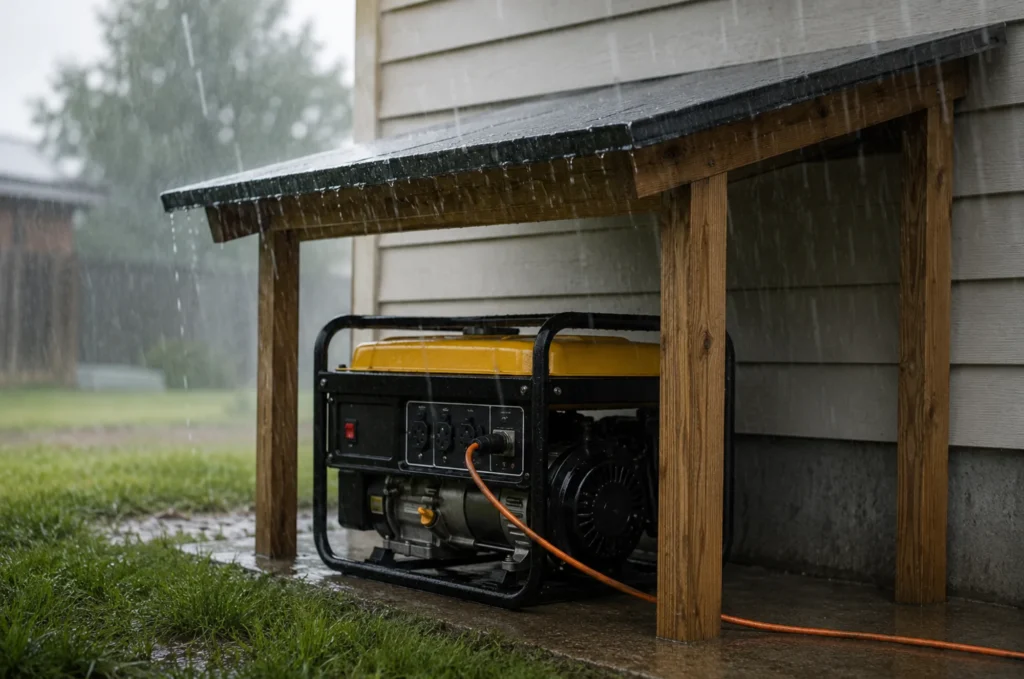
If the unit sat outside overnight, do not assume the generator is safe because it starts. Rain can reach outlets, cords, controls, and engine areas, even when the damage is not immediately visible. Before using it again, check the following areas:
- Wet outlets, plugs, or control panels
- Standing water under or around the generator
- Damaged cords or loose connections
- Rust, corrosion, or moisture near metal parts
- Water near the air filter, fuel cap, or engine components
- Signs of unusual smells, sparking, tripped breakers, or rough operation
Let the unit dry, inspect visible parts, and review the owner’s manual before use. If water reaches the panel, outlets, or engine parts, do not start it until it has been inspected. This section improves the article by providing readers with a clear list of actions to take after rain exposure.
Do Generators Need Rain Covers?
Generators need rain protection when used or stored outside. The right generator cover depends on whether the unit is running or turned off.
A storage cover protects a cool, non-running generator. A running cover must protect the unit while leaving room for cooling, airflow, and exhaust.
Portable Generator Rain Cover Options
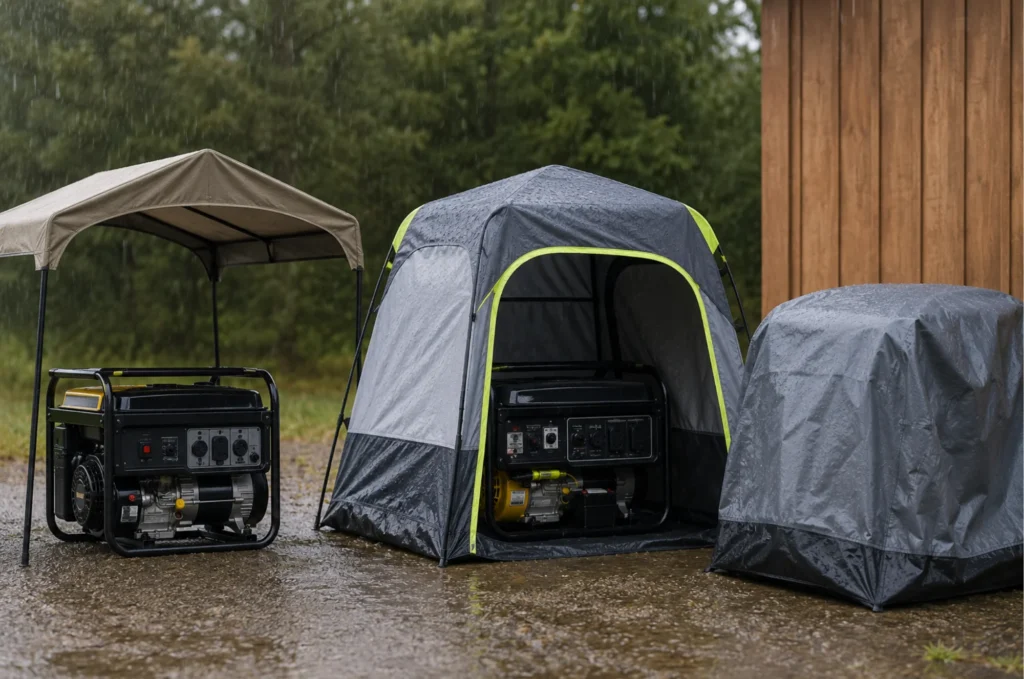
Portable generator rain cover options include manufacturer-approved canopies, rated tents, and covers designed for active use. A portable generator cover should fit the unit and comply with the owner’s manual.
DIY covering can be unsafe if it traps heat, blocks ventilation, or comes into contact with hot parts. If the cover cannot remain stable, open, and dry, do not use it while the generator is running.
How to Cover a Generator in Rain
If you need to know how to cover a generator in rain, start with the manufacturer’s instructions and review a basic generator guide for planning context. The safest option is a cover made for your unit and rated for operation.
Never run generators in garages, sheds, enclosed patios, or near open windows, as carbon monoxide deaths from generators pose a serious safety risk. Keeping generators safe means protecting the unit from rain while keeping the exhaust fully outside.
Waterproof Generator vs Standby Generator
A waterproof generator is not the same as a standby generator. Most portable units are temporary power sources and need added weather protection.
Standby generators have fixed outdoor housing and planned electrical connections. Grounded Electric is Generac Certified, which is relevant when discussing permanent backup systems and code-aware installation planning.
Wet Weather Generator Safety
Wet weather generator safety starts with dry cords, stable placement, proper grounding, and safe load planning. Keep cords and plugs off wet ground and away from puddles.
Place the generator above standing water and away from runoff. Barret Abramow, Grounded Electric’s Project Manager and Co-Owner, helps coordinate projects where safe layout and code-aware planning affect generator setup.
When to Call a Licensed Electrician
Call a licensed electrician when the generator connects to home circuits, panels, transfer switches, or major loads. Portable generator mistakes can damage appliances, overload wiring, or create backfeed risks.
A safe home backup setup includes the right generator size, safe placement, proper cords or transfer equipment, and clear operating steps. The goal is simple: run your generator safely, keep exhaust outside, and keep the generator dry.