


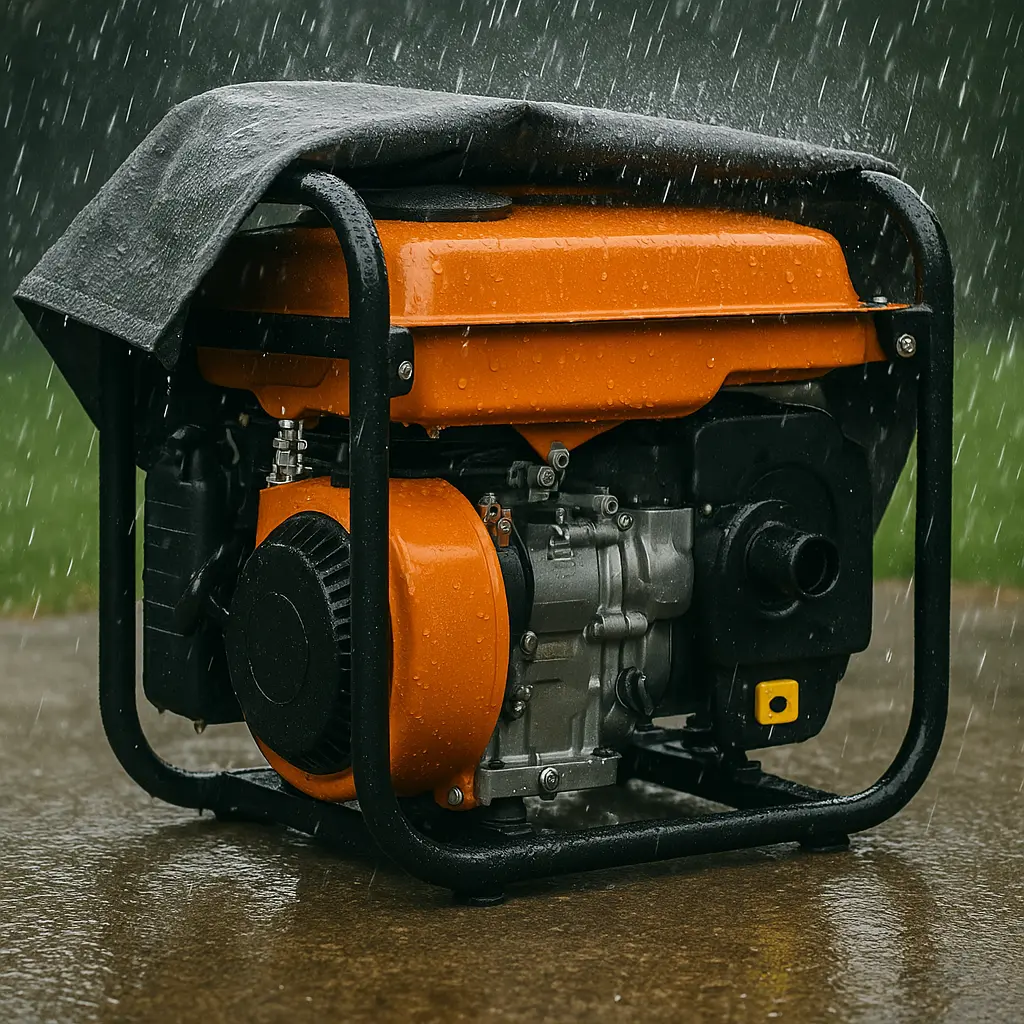
To keep your equipment safe in wet weather, run it only under a purpose-built cover or a vented enclosure, set it on elevated, dry ground, and keep it well away from the house so that exhaust can escape. Standing water, soaked outlets, and blocked airflow cause the damage, not a passing drizzle over a sheltered unit.
Grounded Electric has spent decades keeping backup power safe during outages. Head electrician Robert “Bobby” Mulholland brings 30-plus years of field experience, and co-owner Barret Abramow runs installs in storm-prone areas, so this guidance comes from real service calls, not theory.
Key Takeaways
- Portable units are not waterproof; operating one in wet weather without cover risks electric shock, short circuits, or engine damage.
- Purpose-built covers and enclosures that vent exhaust are the safest way to keep power flowing during a storm.
- Carbon monoxide, not water, is the deadliest risk; never run a unit in a garage, shed, or any enclosed space.
- Smart placement, raised platforms, and partial shelter protect a portable model as long as airflow stays clear.
- Skip tarps and makeshift covers; they trap heat, block ventilation, and can catch fire.
- Inspect for moisture damage after every storm, and confirm your insurance or warranty covers weather-related failures. If you are preparing for storm season, choosing the best generator for hurricane season can provide reliable backup power when you need it most.
Can You Run a Generator in the Rain?
Risks When a Generator Gets Wet
Water and live electrical parts are a dangerous pairing, and here is what happens if a generator gets wet: moisture reaching the outlets or engine can trigger a shock, short the circuitry, or corrode components until the machine fails for good. Heavy downpours and blowing snow cause the most damage, since wind drives water directly into exposed receptacles.
Safe Use Guidelines for Wet Weather
So, can you run a generator in the rain? Yes, but only with proper protection. Do you need to cover your generator in the rain? Absolutely; a vented cover keeps moisture out while letting the engine breathe. Set the machine on stable, elevated ground, clear of puddles and runoff.
Carbon Monoxide: The Bigger Danger
Water damage is costly, but carbon monoxide is what kills. Every portable unit emits this odorless gas, and a storm tempts people to move equipment into a garage or under a tight cover, where fumes collect.
The CPSC recommends keeping the machine outdoors, at least 20 feet from the home, with the exhaust aimed away from windows and doors. Review the agency’s full carbon monoxide safety guidance full carbon monoxide safety guidance</a> before your next storm.
Running the unit outside reduces the danger but does not eliminate it. See how carbon monoxide from a generator outside can still reach a home under the wrong wind conditions.
Best Ways to Cover and Protect a Generator
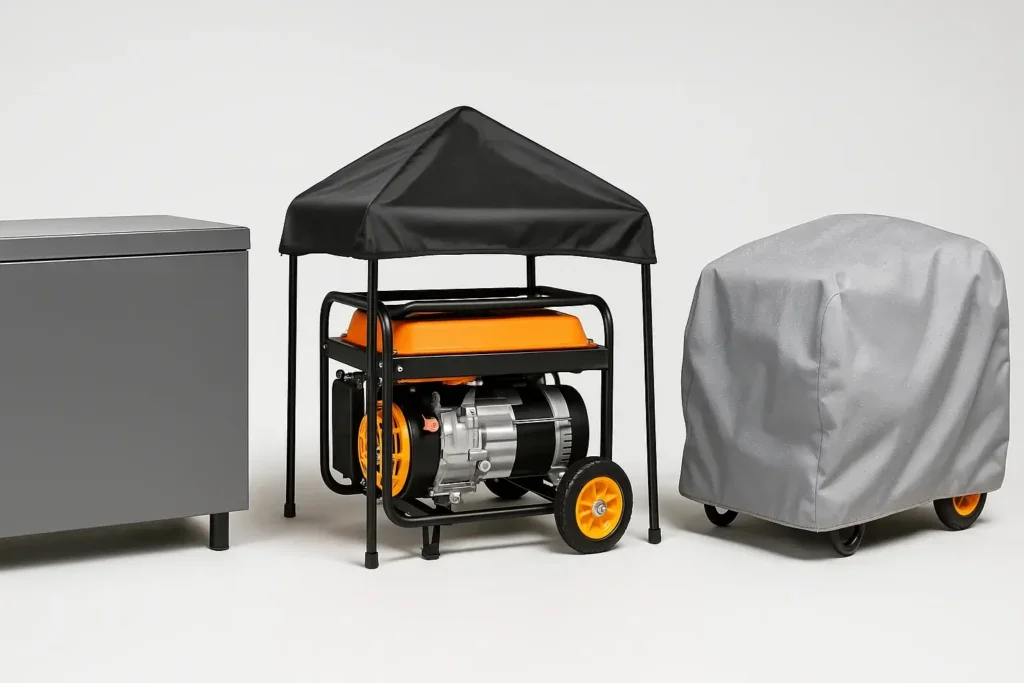
The right cover depends on your climate and how often you lose power. Rigid enclosures last the longest, running covers handle active storms, and light fabric covers are only suitable for dry storage. The table below helps you match protection to your situation.
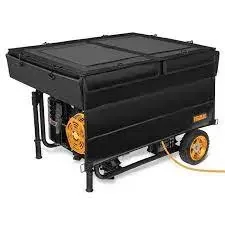
Weatherproof Covers and Enclosures
Knowing how to cover a generator in the rain starts with matching the cover to the weather you actually get. Standby systems often use permanent enclosures to stay operational year-round, while portable owners need something that blocks rain without choking airflow.
Can a Generac generator get wet just like any other brand? Yes, the electronics are just as exposed. Generac standby models already ship in weatherproof aluminum enclosures, so no extra cover is needed there.
If you still want the added protection a running cover provides, treat it as a third-party accessory rather than a Generac-endorsed one.
Once the storm passes, standby owners should fold this check into their regular standby generator maintenance routine rather than treating it as a one-time task.
Placement Tips for Wet Conditions
Even the best cover fails in a bad spot. Set the unit on a flat, raised surface under partial shelter, like a roof overhang, and never inside an enclosed space.
Snow can smother air intakes, and driving wind forces water into the receptacles, so clear the area and angle the machine away from the prevailing gusts.
Running a Generator in Wet Conditions
Are Generators Waterproof by Design?
A common question is: are generators waterproof? No. Are they weatherproof? Also no. The outlets, wiring, and engine are exposed, so any factory unit will need additional protection to survive a storm.
Portable models raise the same question on a smaller scale: are portable generators waterproof? No, and their lighter housings expose the outlets even more directly than a standby cabinet does.
Waterproof would mean sealed against water, and weatherproof would mean sealed against wind, snow, and ice. Standard equipment is neither, which is why the cover you choose matters so much.
Can Generators Be Used in the Rain Safely?
Yes, with the right setup. Certified covers and clear ventilation make the difference. Bobby Mulholland puts it plainly: the failures he sees on service calls almost always trace back to a soaked outlet or a cover that choked off airflow, not to the storm itself.
On one call after a nor’easter, a homeowner’s unit had quit because a tarp funneled water straight into the receptacle panel.
Using a Portable Enclosure While Running
A running enclosure only works if it breathes. Purpose-built models leave the top and sides open enough to vent exhaust and shed heat while blocking rain from above. The details of a proper generator‘s operation are worth reading in full if you plan to power a home during a multi-day outage.
Never seal it inside a box or shed while it operates, for the same reason covered above. If your cover has no dedicated vents, it is built for storage, not operation.
Camping and Outdoor Protection Tips
Off the grid, a lightweight generator tent or pop-up enclosure is the easiest way to stay powered while showering. Place the unit downwind, well clear of tents and RVs so exhaust drifts away from where people sleep.
Common Mistakes to Avoid
Why Tarps and Other Makeshift Covers Fail
Draping a tarp over a running unit looks practical, but it is one of the most dangerous shortcuts you can take. Tarps, cardboard, and loose plastic sag into the hot engine, trap heat, and block the airflow the machine needs while it runs, and that combination can ignite once the exhaust warms up.
Skip the improvised fixes entirely. Reach for one of the purpose-built options in the table above instead, since a vented cover or enclosure handles the same job without the fire risk.
Quick rules to operate safely:
- Never use tarps or plastic sheeting as a cover.
- Keep airflow clear whenever the engine is running.
- Set the unit on elevated, dry ground.
- Use certified covers rated for wet weather and snow.
Maintenance After Exposure to Rain
Inspecting for Water Damage
Once the storm passes, check the unit over before your next start. Look at the outlets, plugs, and frame for corrosion, condensation, or standing moisture. Let everything dry fully so you never power up a damp circuit.
Can a Generator Get Wet When Not in Use?
Yes, and idle equipment is easy to forget. This sits alongside the broader question of whether a generator can get wet at all; active use gets most of the attention, but storage is when slow, unnoticed damage actually happens.
Store it dry, under a breathable storage cover, and confirm there is no trapped condensation before you put it away. A quick wipe-down after damp weather keeps rust from setting in.
Keeping Electrical Connections Dry
Fit protective covers over plugs and cord ends, and keep extension cords in a sealed, dry container. Bobby Mulholland recommends checking every connection before startup, since a single wet contact can undo all your other precautions.
Generator Rain Protection
Shielding your equipment from wet weather protects both its lifespan and your family’s safety. Use a proper cover, skip the makeshift fixes, keep exhaust well away from the house, and inspect for moisture after every storm to cut your risk and extend the unit’s service life.
With guidance from Grounded Electric and pros like Barret Abramow and Bobby Mulholland, homeowners and businesses stay ready whatever the forecast. Call Grounded Electric today for expert assistance.

Barret our Project manager and co-owner is a skilled electrician with a strong foundation in both hands-on electrical work and business operations. A graduate of Hofstra University with a degree in Management, he combines technical expertise with a sharp understanding of project planning, customer service, and efficient business practices. As co-owner of Grounded Electric, Barret is dedicated to delivering high-quality electrical solutions while ensuring the company operates with integrity, professionalism, and a customer-first mindset.