



You should run your refrigerator’s generator for about 1–2 hours every 4–6 hours during a power outage. This keeps food cold without wasting fuel or overworking the engine.
How long you power it depends on temperature, fridge size, and how often you open the door. Short, regular cycles keep your fridge cold and your equipment in good condition.
At Grounded Electric, we know how much steady power matters during an outage. Our licensed electricians, led by Robert “Bobby” Mulholland and Barret Abramow, explain how to safely and efficiently power your fridge and freezer.
Key Takeaways
- Cycle your unit for 1–2 hours every 4–6 hours to keep food cold and safe.
- Keep your fridge below 40°F (4°C) and your freezer below 0°F (–18°C) for food safety.
- Use a 3,000–5,000-watt model, and let it rest every 8–12 hours to prevent damage.
- Change the oil every 50–60 hours and follow NEC Article 702 for maintenance.
- Check food temperatures often, open doors less often, and use short power cycles to save fuel.
Understanding Generator Runtime Basics
During an outage, many people ask how long to run the generator to power the refrigerator. The answer depends on your fridge type, temperature, and unit size.
If you’re wondering how many watts a refrigerator uses, most models draw 700–800 watts while running. At startup, the compressor can briefly draw 2–3 times that amount.
You don’t need to power a fridge nonstop. It cycles on and off to hold the cold. On backup power, short bursts work best. They save fuel and reduce wear. For more setup advice, visit our generator guide.
Reference Standards and Food Safety Ranges
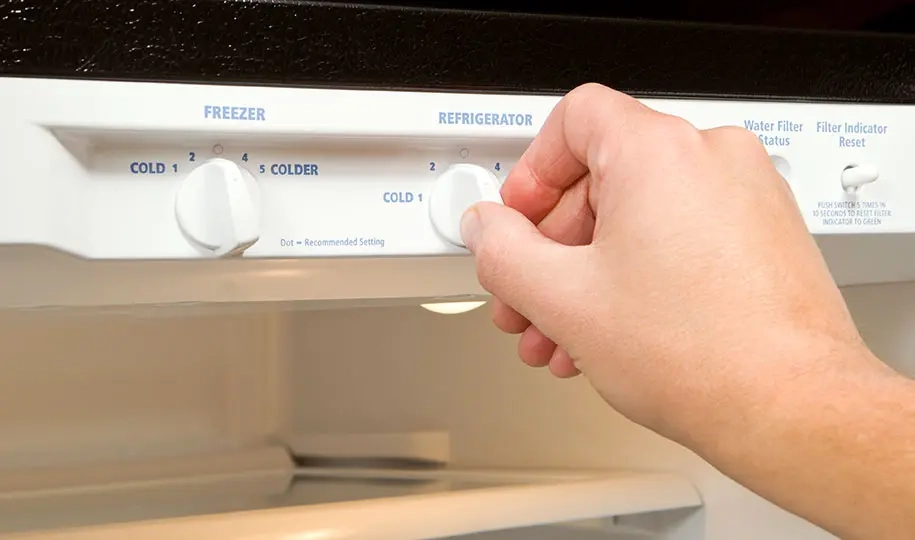
Follow trusted advice from Energy Star and the U.S. Department of Energy. Keep your refrigerator at 40°F (4°C) or below, and your freezer at 0°F (–18°C) or below. These temperatures stop bacteria and keep food safe.
Place a small thermometer inside your fridge and freezer. If the reading climbs, switch your unit back on.
How Long to Run a Generator to Keep Food Cold
A closed fridge holds a safe temperature for about 4 hours without power. Once the interior warms past 40°F (4°C), bacteria multiply quickly. The cycle schedule is built around that window: get internal temps back down before food enters the danger zone.
The timing shifts with ambient temperature, fridge size, and how often you open the door. Hot weather tightens the window; a well-insulated unit buys more time. Use a thermometer to confirm the fridge is back below 40°F before switching the unit off again.
How Long Can a Generator Run a Refrigerator Safely
You can power freezers and refrigerators for 12–24 hours during a long outage. The limiting factor is the engine, not the appliance. Monitor your fuel level and keep a spare supply on hand if the outage looks like it will last longer than a day. For how long a full tank lasts at this load, see the fuel section below.
Mostrar imagen
How to Power and Maintain Your Fridge or Freezer
Running a refrigerator on a generator safely means using the right setup. Plug your refrigerator directly into the unit or use a transfer switch installed by a licensed electrician. Never feed it through your home outlets directly.
How to Run a Fridge Off a Generator
Start the engine and let it stabilize before plugging in your fridge. Use a short, heavy-duty extension cord rated for your running wattage. Avoid feeding several big appliances through one outlet.
An inverter model works best. It gives clean, steady power that protects sensitive electronics and saves fuel by adjusting engine speed automatically.
How Long to Run a Generator for a Freezer Each Day
For a freezer, use short bursts. A full freezer stays frozen for 24 hours if unopened. Power it for 1–1.5 hours every 8 hours. Half-full freezers may need more frequent cycles. Always keep the temperature below 0°F (–18°C).
The cycle length also depends on your freezer’s actual draw. See our guide on how many watts a freezer uses to check what your specific model pulls.
Quick Restart Plan During an Outage
Here’s the right approach for how long to run your refrigerator during a power outage on a generator:
- Restart the unit when the fridge thermometer reads above 38°F (3°C).
- Check fridge and freezer thermometers every 8 hours.
- Rest the engine for 30 minutes every 12 hours.
- Keep fridge and freezer doors closed.
Choosing the Right Generator Size and Type
Pick a size that matches your needs. If unsure, read our guide on how to choose a generator for your home. Small fridges may need 500–700 watts, while large ones can pull over 1,200 watts. Always check your wattage before buying.
The table below shows typical running and startup loads by appliance, plus the size that comfortably covers each one.
| Appliance | Running Watts | Startup Surge Watts | Suggested Size |
|---|---|---|---|
| Compact / mini fridge | 500–700 | 1,000–2,100 | 2,000W or larger |
| Standard refrigerator | 700–800 | 1,400–2,400 | 3,000W or larger |
| Large / double-door fridge | 1,000–1,200 | 2,000–3,600 | 3,500W or larger |
| Chest or upright freezer | 150–400 | 450–1,200 | 2,000W or larger |
| Fridge and freezer together | 1,000–1,600 | 2,500–4,000 | 3,000–5,000W |
Startup surge is the brief spike when the compressor kicks on. Size for the surge, not just the running number, so the motor has room to start cleanly. For a full appliance load comparison across your home, see our generator wattage chart covering over 50 common household items.
How Big of a Generator Do I Need for a Refrigerator and Freezer
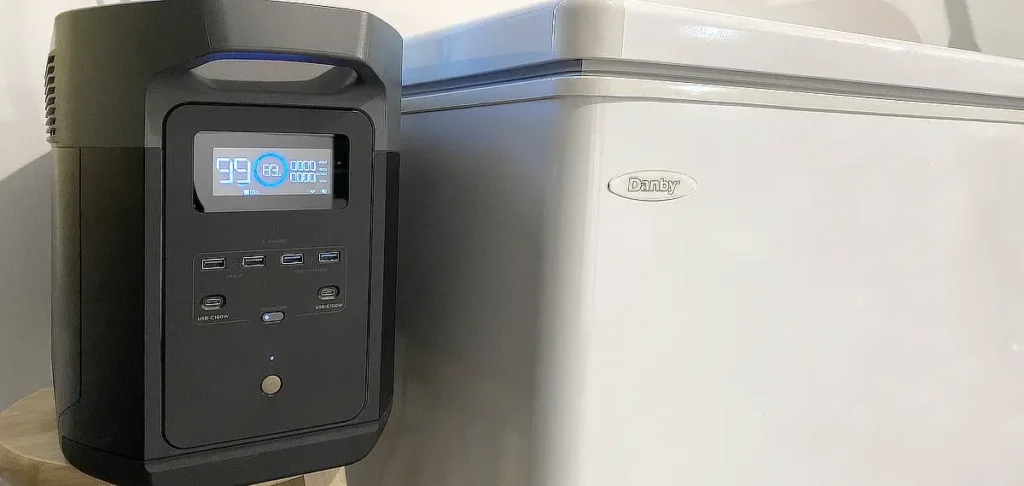
A common question is: what size generator do I need to run a refrigerator? For a standard fridge, 3,000 watts covers most scenarios. Our refrigerator generator sizing guide breaks it down by appliance type and fridge size.
If you need to power a generator for a fridge and freezer at the same time, plan for 3,000–5,000 watts to handle both loads and their combined startup surge.
If you plan to power other appliances at the same time, add about 25% extra wattage. A slightly larger size reduces strain and holds steady performance.
Portable vs. Standby Generators
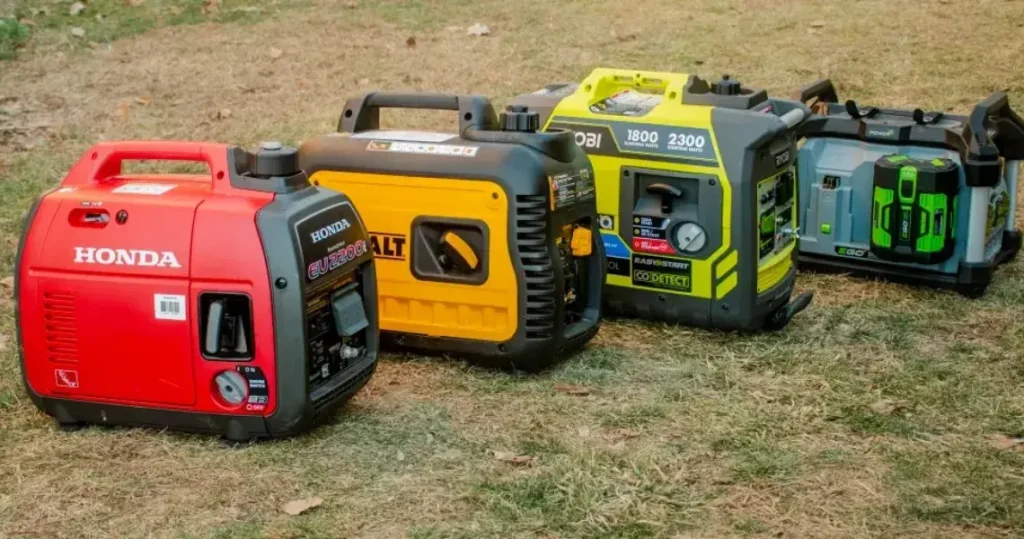
When choosing a portable generator for a refrigerator, look for a unit delivering at least 2,000 watts continuously, enough to handle both the running load and startup surge. Portable models work well for short outages and lower power needs, but require manual setup and refueling.
A backup generator for a refrigerator and whole home usually means a standby unit that starts automatically. Grounded Electric installs both safely and to code.
Understanding Wattage and Cycles
Refrigerators with compressors pull more power at startup, measured as starting watts. Once cooling, they drop to lower running wattage.
Here is a real-world example. On a recent Bergen County install, Bobby metered a standard top-freezer fridge drawing about 750 watts while the compressor cycled, with a startup spike close to 1,800 watts for a second or two. That short spike is why a 2,000-watt portable can struggle with a fridge even though the running load looks small.
One safety habit ties it together: never load a portable past about 80% of its rated output. A 3,000-watt unit should carry no more than roughly 2,400 watts of steady load. That leaves headroom for the compressor surge and keeps the engine from overheating.
Fridge compressors cycle every 15–30 minutes. On backup power, these cycles may come more often. Keep doors closed to help hold stable cooling.
How Long Can a 1,800-Watt Generator Run a Refrigerator?
An 1,800-watt unit sits at the lower edge of what can reliably power a standard refrigerator. The running load is manageable – most fridges draw 700–800 watts while the compressor is on. The challenge is startup surge, which can briefly reach 1,400–2,400 watts. An 1,800-watt unit may struggle to handle that spike cleanly, especially in hot weather when the compressor cycles more often.
If you have a compact or mini fridge drawing under 700 running watts, an 1,800-watt unit can work. For a full-size refrigerator, a 2,000–3,000-watt model is more reliable. Size for the surge, not the running load, and check the starting watt rating before connecting.
Refrigerator Runs Every 20 Minutes – Is That Normal?
Yes. Most fridges cycle every 20–30 minutes. If yours kicks on more often, check the voltage output. An undersized unit can cause frequent restarts. Make sure your power source meets the wattage needs of your fridge and freezer.
Fuel Efficiency, Continuous Use, and Safety
Using your unit correctly saves fuel and keeps it safe. Store extra fuel in approved containers. Refuel on level ground, away from open windows. To learn about costs, read our guide on the cost to run a Generac generator.
A mid-size 3,000–5,000-watt portable powering a fridge and freezer burns roughly 0.5 to 0.75 gallons of gasoline per hour at moderate load, based on published specs for common portable models (add rel=”nofollow” in CMS). Left going nonstop, a 5-gallon tank lasts about 7 to 10 hours. Switch to short cycles instead, and that same tank can stretch across a full day or more.
To calculate your specific burn rate based on your exact load, use our generator fuel consumption calculator.
Tips for Better Fuel Efficiency
- Cycle the engine instead of leaving it on all day.
- Refuel and check oil regularly.
Is It Okay to Run a Generator 24 Hours a Day?
Yes, but only if it’s built for it. Most portable models are not. Long stretches use more oil and cause wear. Bobby Mulholland, head electrician at Grounded Electric, suggests resting the engine for 30 minutes every 8–12 hours.
How Long Will a Jackery 1500 Run a Full-Size Refrigerator?
A battery-powered Jackery 1500 can power a full-size fridge for about 3–7 hours, according to Jackery’s published specs (add rel=”nofollow” in CMS). It’s quiet and great for short outages, but not for long-term backup. Pair it with a solar power station to recharge during the day.
How to Extend Runtime Without Wasting Fuel
- Start the engine only when the fridge temperature rises.
- Group appliances to power together.
- Use ice packs or frozen water bottles to hold cold.
Together, these habits can meaningfully reduce how much fuel you burn across a long outage.
Should You Hear Your Fridge Running All the Time?
No. If your fridge never stops, the power source may be too weak or the fridge too warm. Check voltage and airflow. If the compressor sound is constant, call a technician to inspect it.
Safe Operation and Maintenance
Always operate your equipment safely. Grounded Electric recommends keeping it outdoors, dry, and away from windows.
Proper Setup
Place the unit on level ground, at least 15 feet from your home. Carbon monoxide from generator exhaust is deadly in enclosed spaces, so never operate it indoors or in a garage, even with the door open.
Extension Cord and Load Safety
Use heavy-duty cords rated for outdoor use. Never overload them. For permanent setups, a licensed electrician should install a transfer switch to prevent backfeeding. Our guide on how to hook up a generator to your house walks through the full connection process safely.
Maintenance Checklist
Follow the National Electrical Code (NEC) Article 702 and your manufacturer’s guide.
- Change oil every 50–60 hours.
- Check air filters and spark plugs.
- Inspect cords and vents before each use.
Oil changes at the 50–60-hour mark are especially important during extended outages. See our guide on Generac generator oil change intervals for the right schedule and oil specifications.
Temperature and Generator Care
Use a thermometer to check fridge and freezer temperatures. Change oil and clean filters regularly. Keep air vents clear to prevent overheating.
Monitoring Temperatures
Keep a thermometer in both compartments. The FDA warns that food above 40°F (4°C) for more than 2 hours may be unsafe.
Power your equipment as needed to hold temperatures steady. If a reading climbs too high, start another cycle right away.
Professional Help from Grounded Electric
A reliable backup setup can protect your home year-round. The experts at Grounded Electric install and maintain systems for refrigerator generators, smart homes, and electrical upgrades.
When to Call a Licensed Electrician
If you’re unsure about running wattage, setup, or maintenance, call a pro. Electricians can match your load and recommend the right size for your appliances.
Barret Abramow, co-owner and project manager, makes sure every job meets local safety codes and works efficiently.
Why Homeowners Trust Grounded Electric
With over 30 years of experience, Bobby Mulholland leads Grounded Electric’s generator division. Together with Barret Abramow, they deliver Generac Certified installations across New Jersey, meeting manufacturer specs and qualifying customers for Generac’s extended warranty program.
Need expert help choosing or maintaining your home backup power? Call Grounded Electric today.
FAQs: Generator Runtime and Refrigerator Safety
How Often to Run a Generator During Power Outages?
Run your generator for 1–2 hours every 4–6 hours. Adjust based on temperature and load.
How Long Should You Run a Generator to Keep a Refrigerator Cold?
About 1–2 hours per session brings most fridges back to a safe temperature. Check the thermometer before switching off. If it’s still above 40°F (4°C), let it run another 15–20 minutes.
How Long Can a Generator Run a Refrigerator Continuously?
You can safely operate a portable unit for 8–12 hours at a time before resting it for 30 minutes. Check oil and fuel levels regularly to prevent overheating or damage.
Can You Run a Refrigerator on a Generator?
Yes. Most household refrigerators run safely on a 3,000–5,000-watt portable unit. The key is matching the output to both the running watts (700–800 for a standard fridge) and the startup surge (up to 2–3 times that). Running a refrigerator on a generator is safe when you use the right wattage, a proper extension cord or licensed transfer switch, and follow the cycle schedule above.
