




Running a portable generator outdoors without proper weather protection puts your equipment and connected devices at risk. A purpose-built generator cover while running keeps your unit operating safely in rain, snow, and wind while maintaining the ventilation it needs to run correctly – read Grounded Electric’s full guide on protecting your generator from rain for more details.
At Grounded Electric, licensed electricians with over 30 years of field experience help homeowners and contractors select and install the right generator cover while the generator is running. So your setup is safe, code-compliant, and ready before the next outage hits.
Key Takeaways
- A generator cover while running must be a purpose-built running cover or safety canopy – standard storage covers block airflow, trap heat, and create a fire and carbon monoxide hazard.
- The generator must sit outdoors on a stable surface, at least 20 feet from any door, window, or vent, with the exhaust side left open regardless of which cover type you use.
- Cover type depends on your generator – canopy-style tents fit open-frame generators, enclosure covers fit inverter generators, and steel-frame shed enclosures work best for permanent or frequent-use setups.
- A properly installed portable generator cover protects outlets, the control panel, and connected devices from rain and condensation, reducing the risk of surge damage or device failure.
- Installation involves more than selecting the right size – exhaust clearance, surface placement, and cord routing all affect safe operation, and a licensed electrician can verify the full setup before first use.
Can You Cover a Generator While It’s Running?
Yes, but only with the right cover and correct placement. A generator cover while running must allow heat and exhaust gases to escape freely. Tarps, plywood, and pop-up canopies cannot handle this. They trap heat, block airflow, and can melt or ignite on contact with hot exhaust components.
Safe Ventilation, CO Clearance, and Correct Placement
The generator must sit outdoors on a stable surface, at least 20 feet from any door, window, or vent. The cover must leave the exhaust side open and allow cooling air to circulate freely through the frame. Skipping this step creates a carbon monoxide risk that no cover can offset – carbon monoxide deaths from generators are more common than most homeowners realize.
Grounded Electric verifies placement and clearance on every installation before securing the cover.
Types of Generator Covers While Running
The right cover depends on your generator type and how you use it.
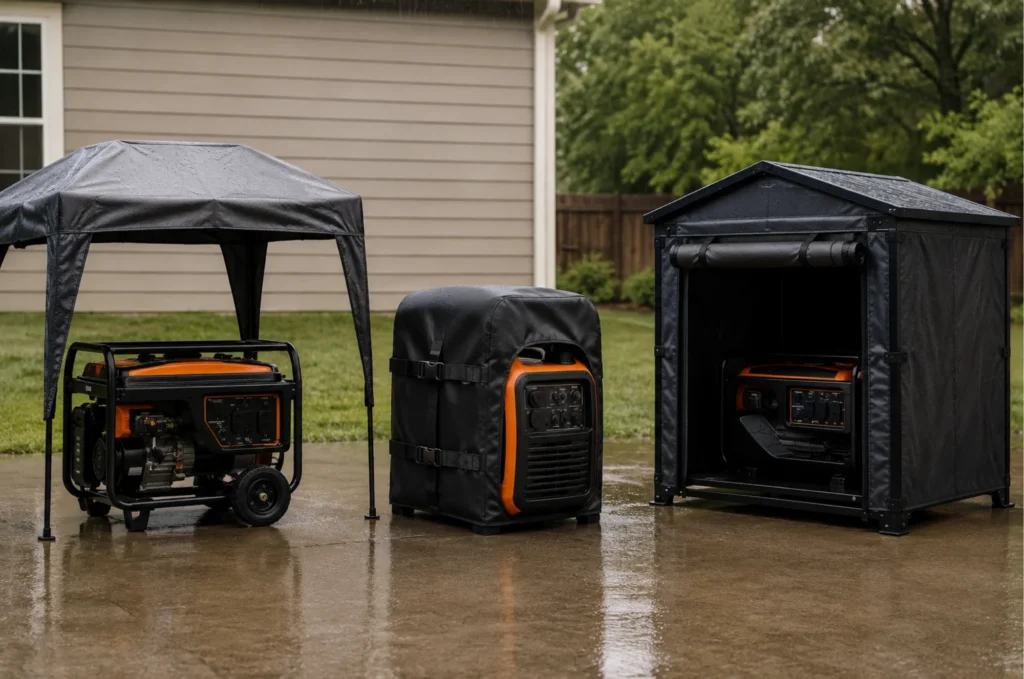
- Portable generator rain cover – canopy-style: A generator tent that clamps to open-frame generators with no drilling required. The waterproof canopy sheds rain and snow while keeping exhaust and heat clear of the unit. This is the most common option for homeowners who need weather protection during outages.
- Weatherproof generator cover – enclosure style: Built for inverter generators. Wraps around the outer shell with strap-based hardware. Protects against rain and wind without blocking built-in ventilation.
- Shed enclosure – noise reduction and storage: A steel-frame outdoor generator cover with adjustable fabric panels. Opens for ventilation while running, closes for storage. Practical for standby or frequent use.
How a Generator Cover Protects Your Electronics
Rain or condensation reaching the outlets or the control panel during operation can cause surge damage or device failure. A properly installed portable generator cover protects your generator’s electrical components and anything plugged into it while the unit is running.
Robert “Bobby” Mulholland, Head Electrician at Grounded Electric, recommends choosing a cover rated for your generator’s wattage and frame type to ensure it fully protects your generator under real operating conditions.
Why a Tarp or Makeshift Cover Creates More Risk
Makeshift covers shift in the wind, trap heat, and can contact hot engine surfaces. Purpose-built generator tents and running covers are independently tested, flame-rated, and designed specifically for generators running under load. A tarp gives the appearance of protection while creating new hazards.
What to Look For in an Outdoor Generator Cover
Not all outdoor generator covers are built the same. Before buying, check for:
- Waterproof material: Marine-grade vinyl or rip-stop construction that sheds water without absorbing it
- Flame resistance: Look for NFPA-701 rated materials designed for use near running engines
- Ventilation design: The cover must preserve the generator’s natural cooling airflow
- Secure mounting: Clamp or strap systems that stay fixed in high winds without drilling into the frame
- Compatibility: Most covers list supported generator perimeter ranges or model compatibility
As a Generac Certified Installer, Grounded Electric works with cover systems across all major generator brands and can confirm compatibility before any purchase is made.
Frequently Asked Questions
Can I run a portable generator in heavy rain with a cover? Yes. A purpose-built generator rain cover protects your generator’s outlets, control panel, and air intake while maintaining safe exhaust clearance. Running a generator exposed to heavy rain without proper protection risks electrical damage and safety hazards.
Does a generator cover affect airflow or performance? A correctly installed running cover does not restrict airflow or reduce generator output. An improperly fitted cover, or a makeshift alternative, can cause overheating and automatic shutoff.
What size weatherproof generator cover do I need? Open-frame generators are measured by frame perimeter. Exterior shell dimensions measure inverter generators. Most manufacturers list compatible generator sizes on the product page. Grounded Electric handles sizing and compatibility for every installation.
How much does a generator cover installation cost? Generator cover installation typically ranges from $150 to $500, depending on cover type, generator model, and site conditions. Here’s a general breakdown:
- Canopy-style generator tent: $150 – $250 installed
- Weatherproof enclosure cover: $200 – $350 installed
- Steel-frame shed enclosure: $350 – $500+ installed
Pricing varies based on your generator’s size, mounting requirements, and site-specific factors. Contact Grounded Electric for a straightforward quote with no hidden fees.
Generator Cover Installation – When to Call a Professional
Selecting and mounting the right generator cover involves more than picking a size. Exhaust clearance, surface placement, cord routing, and distance from your home all affect safe operation.
If you are also planning to connect your generator directly to your home’s electrical system, Grounded Electric’s guide on hooking up a generator to your house covers the full process.
Barret Abramow, Project Manager and Co-Owner at Grounded Electric, oversees each installation. He ensures the setup meets safety requirements and works well in harsh conditions.