


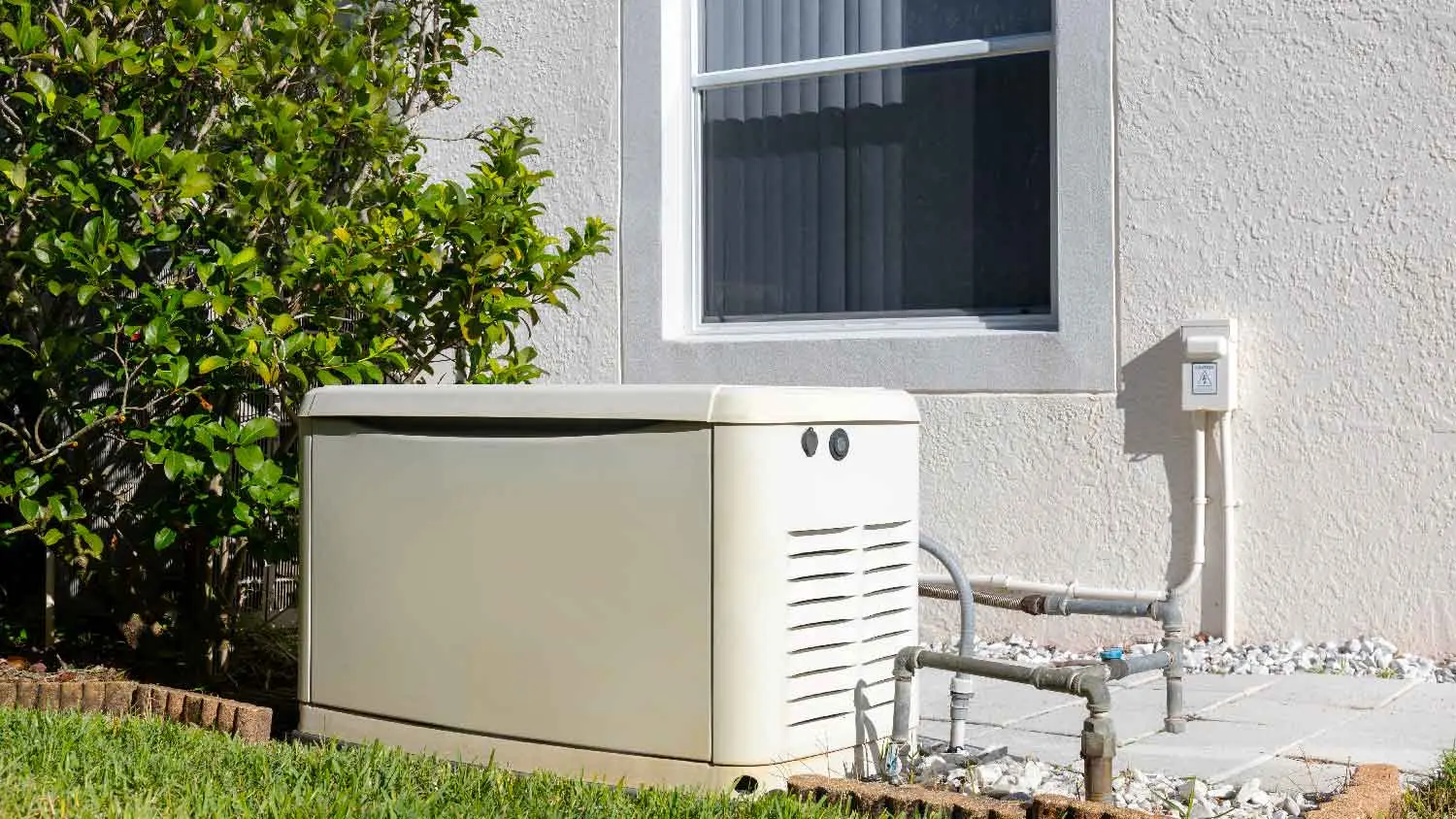
Adding a natural gas line for a generator means running a dedicated pipe from your utility meter directly to the equipment, sized to match the unit’s BTU demand, permitted through your municipality, and pressure-tested before commissioning. Natural gas for generator use provides continuous fuel through the utility pipeline, with no storage tanks to fill or maintain. The work is handled by a licensed plumber or gas fitter, coordinating with your electrician on the final hookup.
This guide covers the full process: planning, sizing, code requirements, installation steps, and cost.
Key Takeaways
- Standby units require a dedicated feed from the meter, not a shared tap off existing household appliances. Every major manufacturer specifies this.
- Total installed cost typically runs $600 to $1,200 for standard residential runs under 50 feet.
- Sizing follows the 2,500 BTU per 1 HP rule, with pipe diameter driven by the equipment’s rating and total run length.
- Residential system pressure is roughly 0.25 PSI (about 7 inches water column), with the demand regulator further reducing it at the unit inlet.
- Permits and pressure testing are required in every US jurisdiction. DIY work is illegal in all 50 states and voids manufacturer warranties.
Adding a Fuel Supply for Your Generator
The process starts with confirming your home has utility service and enough meter capacity to handle the added load. From there, a licensed installer runs pipe from the meter to the equipment pad, sizes it to the manufacturer’s BTU specification, and installs a demand regulator ahead of the unit’s fuel inlet.
Every US municipality requires a permit, pressure test, and final inspection before the system goes live. Skipping any of these creates safety hazards, insurance problems, and voids the equipment’s warranty.
How Hard Is It to Install?
For a licensed pro, a standard residential run takes 4 to 8 hours from meter to pad. Longer runs, difficult trenching conditions, or interior routing through finished space can push the job into a second day.
DIY is not an option. Fuel supply work requires a licensed plumber or gas fitter in every US state, and the utility company will not reconnect service if unlicensed work is discovered during inspection.
Install New or Extend Existing?
If your home already has utility service, extending from the meter is usually the cheaper option. Existing indoor branches serving furnaces, water heaters, or ranges are not the correct tap points.
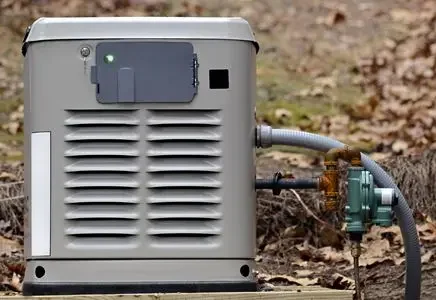
Manufacturers require the backup unit to run off its own feed direct from the meter, upstream of appliance branches. Sharing a branch with cooking equipment or a water heater can starve the unit during startup and extinguish pilot lights on other fixtures when the equipment draws hard.
Quick-Connect Options
Quick-connect fittings work well for portable units tied to an existing outdoor stub, letting you disconnect between uses without tools. For permanent standby installs, hard-piped connections with an approved flex connector at the unit are the code-required approach in most municipalities.
Connecting a Generator to Natural Gas
You can run either a portable or a standby unit on utility fuel, provided the equipment is rated or converted for it. If you want a full breakdown of the mechanics, see how a natural gas generator works before committing to a fuel type. Standby models are almost always fueled by NG or LP straight from the factory. Portables typically need a tri-fuel conversion kit or a factory dual-fuel option.
Can You Hook Up Any Generator?
No. Gasoline-only portables cannot run on utility fuel without a conversion kit. Standby models are designed for NG or LP from the start. Tri-fuel conversion kits are widely available for common portable engines, but converting changes power output: expect roughly a 10 to 15 percent derate on NG compared to gasoline, per most manufacturer specifications.
How to Connect a Portable Unit
- Confirm that the equipment is rated for or converted to utility fuel.
- Have a licensed plumber install an outdoor fuel outlet sized to match the portable’s BTU rating.
- Use an approved flexible connector between the outlet and the equipment.
- Pressure-test the outlet before first use, then verify there are no leaks by applying a soapy solution to every fitting.
The outdoor outlet should never be a repurposed BBQ tap. Standard BBQ outlets are 1/4-inch, which is too small for most portables—plan on a 3/8-inch minimum and 1/2-inch for anything over 3,000 watts.
Natural Gas vs Propane
Utility NG offers uninterrupted supply through the pipeline, no tank refills, and lower per-BTU cost in most US regions. Propane stores on-site in a tank, works during utility outages, and delivers more energy per cubic foot (roughly 2,500 BTU vs 1,000 BTU for NG).
Propane is the better choice above 5,000 feet in elevation, where thin air reduces engine output by about 4 percent for every 1,000 feet gained, according to most generator manufacturers’ specifications, including Generac. It’s also the more reliable option in cold-weather regions where peak winter demand can drop utility pressure at the meter below what a standby unit needs to fire.
If propane is the better fit for your setup, propane generator gas line installation follows similar steps but with different regulator requirements and on-site tank sizing.
Diesel-powered standby units are a third option for sites without utility access; see our guide to the best diesel generator options if that applies to your situation.
Planning the Fuel Supply Installation
Planning covers four items: utility service availability, meter capacity, pipe sizing, and permits. Each one feeds directly into what gets approved at inspection.
How Do You Get Natural Gas Service?
If your street has utility infrastructure, contact your local supplier to request a residential connection. New service typically takes 2 to 6 weeks and includes meter installation and an initial pressure test. The supplier owns everything up to and including the meter. Everything downstream is your contractor’s work.
Reliability of the Utility Supply
Residential NG service in the US is among the most reliable utility services, with outages rare outside severe weather events. The exception is peak winter demand in cold-climate regions, where extreme cold can reduce supply pressure at the meter to levels below those required by a standby unit.
If you live in a Zone 5 or colder area and rely on utility fuel for both heat and backup power, ask your installer whether a propane tank makes sense as a secondary source.
What Size Fuel Line Do I Need?
Sizing is determined by the equipment’s BTU rating and the total run length from the meter to the unit. Use the manufacturer’s spec sheet for exact BTU input, or the 2,500 BTU per 1 HP rule of thumb for portables without a listed rating. Generac generator gas line requirements follow the same BTU-based sizing standards used for all residential standby equipment, so the table below applies directly to Generac units.
To model your meter load before installation, see how much natural gas a Generac uses per hour by kW rating, which feeds directly into the pipe sizing calculation.
| Equipment Size | BTU Input | Steel Pipe Size | Max Run Length |
|---|---|---|---|
| 7 to 8 kW | 100,000 BTU | 3/4 in | 100 ft |
| 10 to 14 kW | 150,000 to 200,000 BTU | 1 in | 100 ft |
| 16 to 20 kW | 220,000 to 260,000 BTU | 1 in | 100 ft |
| 22 to 26 kW | 280,000 to 320,000 BTU | 1-1/4 in | 100 ft |
For runs over 100 feet, upsize one pipe diameter above what the table shows. Elbows, tees, and vertical rises each add equivalent length that must be factored into the sizing calculation.
How Long Can the Feed Be?
Practical limits sit around 150 feet for most residential setups without upsizing to commercial-grade pipe. Longer runs are possible but require larger diameters, which sharply raise material and trenching costs.
Requirements, Sizing, and Code
All residential fuel work in the US is governed by NFPA 54 (National Fuel Gas Code) and local amendments. Key requirements:
- Pipe sized to deliver full BTU demand at roughly 0.25 PSI system pressure
- Corrosion-resistant material for underground runs (polyethylene is the code-approved choice)
- Steel or copper for above-ground indoor runs where allowed by local code
- Approved manual shutoff within 6 feet of the equipment
- Sediment trap ahead of the demand regulator
- Bonding of metallic piping to the home’s ground system
Permits, Safety, and Professional Help
Every US municipality requires a permit for new fuel supply work. Expect $100 to $200 for the permit itself. The installer pulls the permit, schedules the pressure test, and coordinates the final inspection.
Installation Process, Step by Step
Natural gas generator installation covers the fuel supply side: running pipe, setting pressure, and connecting to the unit’s inlet. The electrical work, including the transfer switch, load wiring, and utility interconnection, runs in parallel but is a separate scope handled by your electrician.
1. Permit Application and Site Assessment
The installer files a permit application, meets with the inspector to confirm routing, and verifies meter capacity with the utility. Most jurisdictions turn permits around in 3 to 5 business days.
2. Trenching and Site Preparation
For underground runs, trenches go 18 to 24 inches deep depending on local frost line requirements. Above-ground routes need pipe supports every 6 to 8 feet and adequate clearance from electrical service.
3. Pipe Sizing and Material Selection
Polyethylene is the code-approved material for underground fuel runs and is the standard approach for underground gas lines for generator installations across most US jurisdictions. Steel or copper handles above-ground and interior runs. The installer confirms the diameter against the BTU demand and the total effective length.
4. Meter Connection
The utility handles the tap at the meter itself, or the installer connects downstream of the meter using an approved fitting. This is where the dedicated feed starts, upstream of any household appliance branches.
5. Regulator and Valve Installation
A demand regulator sits just ahead of the equipment’s fuel inlet, dropping system pressure to the operating range the unit requires (typically 3.5 to 7 inches water column, depending on the model). A sediment trap and manual shutoff valve are installed ahead of the regulator.
6. Final Hookup
To connect the generator to the natural gas line, the installer runs the flex connector from the manual shutoff to the equipment’s fuel inlet, torques all fittings to spec, and confirms the unit’s fuel selector is set correctly. NG vs LP is a physical setting on most standby models.
7. Pressure Testing
The completed run is pressurized to a minimum of 3 PSI and held for a set time, usually 10 to 15 minutes, with no measurable pressure drop. Any drop means a leak somewhere in the run and the test fails.
8. Inspection, Commissioning, and Maintenance
The municipal inspector reviews the pressure test result, checks routing and fittings, and signs off. The installer then commissions the equipment by starting it, verifying fuel pressure at idle and under load, and confirming the absence of leaks at every joint using a soap solution.
Annual maintenance covers a visual leak check, sediment trap inspection, and regulator vent screen cleaning. For what that service typically costs over time, see our breakdown of Generac annual maintenance costs.
Cost to Install a Natural Gas Line for Generator Use
Total installed cost runs $600 to $1,200 for a standard residential setup with a run under 50 feet. Longer runs, complex routing, or premium materials push the number higher.
| Cost Category | Typical Range | What's Included |
|---|---|---|
| Labor | $300 to $600 | Trenching, routing, fitting, hookup, and pressure test |
| Materials | $200 to $400 | Pipe, regulator, sediment trap, shutoff valves, flex connector |
| Permits and Inspection | $100 to $200 | Municipal permit plus final inspection fee |
| Total | $600 to $1,200 | Standard residential run under 50 feet |
For related pricing on the equipment side, see our full breakdown on gas generator cost. For the full installed price, including the unit, transfer switch, and electrical work, see what the total standby generator installation costs.
Portable Generators on Natural Gas
Portable equipment can run on utility fuel with a conversion kit or factory dual-fuel option. The tradeoffs are lower power output than gasoline, as covered in the conversion section above, and the need for a permanent outdoor fuel outlet at the connection point.
Benefits and Limitations
Benefits include no fuel storage, uninterrupted supply during long outages (assuming utility service holds), and lower per-BTU running cost. Limitations include reduced output compared to gasoline, dependency on the utility during severe weather, and the need for a permanent outdoor connection.
Portable Generator Hose Sizing by Run Length
Knowing what size natural gas line a portable generator needs starts with the run length between the outdoor outlet and the unit’s inlet. Portable equipment uses a flexible hose for this connection, and the hose size depends on the length of the run.
| Hose Run | Minimum Hose ID | Typical Application |
|---|---|---|
| Up to 10 ft | 3/8 in | Small portables under 3,000 W near the outlet |
| 10 to 50 ft | 1/2 in | Mid-size portables 3,000 to 7,000 W |
| 50 to 100 ft | 3/4 in | Large portables 7,000 to 12,000 W |
| Over 100 ft | 1 in | Rare residential setups; usually needs pipe, not hose |
An undersized hose starves the equipment at startup and causes it to run rough under load. Size up if you’re between ratings.
When to Use a Portable vs a Standby Unit
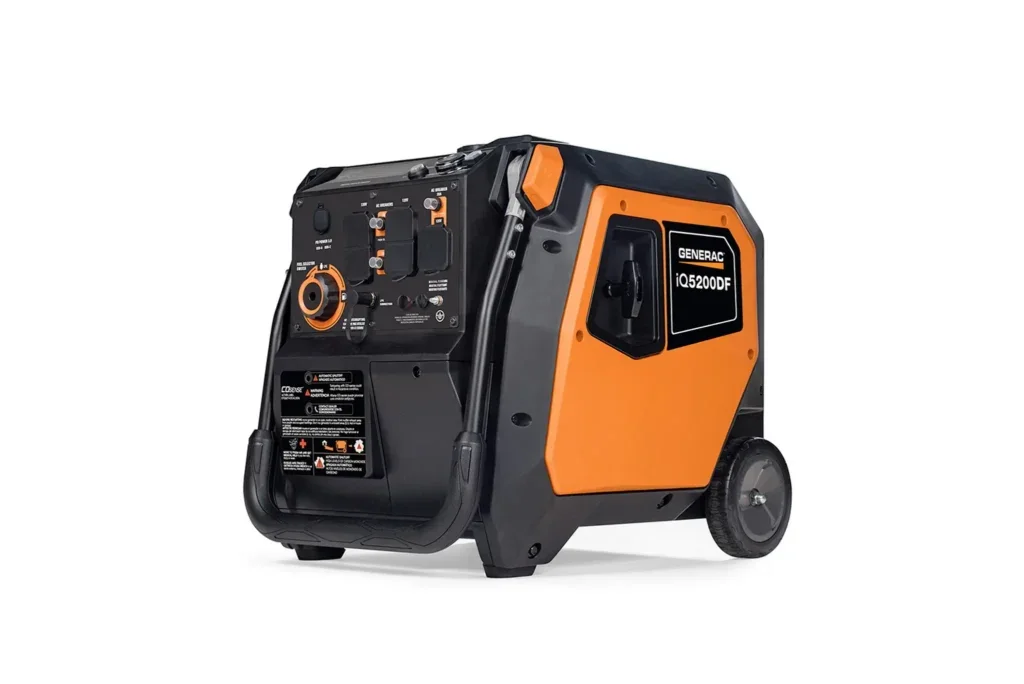
Portables work well for renters, weekend cabins, or homes without room for a permanent pad. Standby units, sometimes called whole house generators, offer automatic transfer, unattended startup, and higher continuous output on utility fuel.
If your outage tolerance is measured in hours rather than days, a portable makes sense. If you have a well pump, medical equipment, or a home office you cannot afford to lose, go standby.
Common Problems and Solutions
Won’t Start on Utility Fuel
Most no-start issues trace back to insufficient inlet pressure. Check the demand regulator setting (typically 3.5 to 7 inches water column at the equipment inlet, depending on the model), confirm the manual shutoff is fully open, and verify the sediment trap is not clogged.
If the inlet pressure is below spec with no obstruction, the issue is upstream: an undersized pipe, a partially closed valve, or a meter capacity issue.
If those checks come back clean and the unit still won’t fire, our generator won’t start guide covers causes beyond the fuel supply.
Equipment Runs Rough Under Load
Rough running under load almost always means the fuel supply cannot keep up with peak demand. This is a sizing problem: either the pipe is undersized for BTU rating, the run is too long for the diameter, or the meter itself is at capacity.
Portable Won’t Connect Cleanly
Portables connected to a BBQ-style outlet (1/4-inch) will not run reliably. Have the outlet resized to a minimum of 3/8 inch, and to 1/2 inch for units over 3,000 watts.
Choosing the Right Installer
For those installing natural gas generators, the answer is a two-trade coordination: a licensed plumber or gas fitter handles the fuel side, and a licensed electrician handles the transfer switch and load connection. Ask three questions before hiring:
- Are you a licensed plumber or gas fitter in this state?
- Have you installed equipment from this brand before?
- Do you pull permits and coordinate the pressure test and inspection?
If the answer to any of those is no, keep looking.
Disclaimer
Grounded Electric handles the electrical side of standby equipment installation: transfer switch wiring, load calculations, and utility interconnection. Licensed plumbers or gas fitters perform fuel supply work we coordinate with on the project. This article is educational and reflects general US installation practice, not a specific quote or scope of work.
For guidance on related equipment, see our breakdown of gas generator costs.
FAQs on Natural Gas Lines for Generators
Can I install a fuel supply to a generator myself?
No. Every US state requires a licensed plumber or gas fitter for this work. DIY installation is illegal, voids the manufacturer warranty, and creates real safety hazards.
How long does the installation take?
A standard residential run takes 4 to 8 hours of installer time. Add 3 to 5 business days for permit approval and another 1 to 2 days for the pressure test and inspection window.
What's the operating pressure at the equipment inlet?
Residential systems operate at roughly 0.25 PSI (about 7 inches water column) at the meter. The demand regulator drops this to 3.5-7 in. water column at the unit inlet, with the exact target set by the manufacturer’s spec sheet.
