



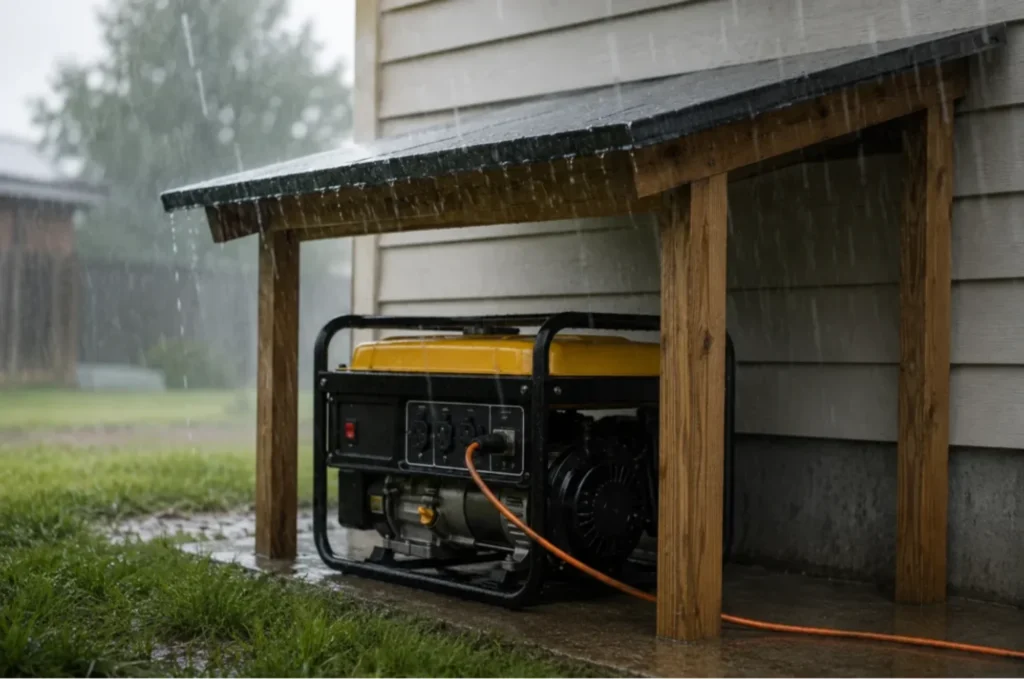
You should not run a portable generator directly in the rain unless it has proper protection, dry placement, outdoor setup, and proper ventilation.
Safe operation depends on keeping the generator dry while allowing exhaust gases and heat to disperse properly. A generator in wet conditions can pose risks of electric shock, fire, equipment damage, and carbon monoxide.
Grounded Electric, a Generac Certified electrical contractor, evaluates generator safety through code-aware wiring, placement, and transfer switch planning.
Key Takeaways
- Do not run a portable generator directly in the rain unless it has weather-rated protection, is dry-placed, and has proper ventilation.
- Water can cause electric shock, short circuits, fire risks, corrosion, and equipment damage when it comes into contact with outlets, cords, or internal parts.
- Never move a running generator into a garage, shed, porch, basement, or enclosed space because carbon monoxide can build up quickly.
- Use a generator cover made for active operation, not a tarp, plastic sheet, or DIY enclosure that blocks airflow or traps heat.
- Call a licensed electrician when using a generator involves a transfer switch, panel connection, load calculation, or permanent wiring.
Is It Safe to Run a Generator in the Rain
In most cases, it is not safe to run a generator in the rain without a weather-rated cover or shelter. Rain can reach outlets, plugs, wiring, and engine parts that should stay dry during operation.
If you ask, “Is it safe to run a generator in the rain?” the safer answer is no. It is only safe if the setup protects the unit from wet weather.
A portable generator must stay outside because it produces carbon monoxide. It also needs open airflow, so heat and exhaust do not build up around the engine.
Robert “Bobby” Mulholland, Grounded Electric’s licensed electrician and subject-matter expert, treats generator safety as both an electrical and placement issue.
What Happens If a Generator Gets Wet
Can a generator get wet? It depends on the type of generator, how much water reaches key parts, and whether the unit is waterproof or weather-resistant.
Light moisture on the outside is different from rain entering outlets, receptacles, vents, or the control panel. Water can lead to short circuits, corrosion, tripped breakers, damaged components, or unsafe current paths.
Wet equipment also raises the risk of shock, especially if you touch cords, plugs, or controls with wet hands. Fire risk can increase when water causes electrical faults or damages insulation. A generator in the rain should never sit in puddles or on soaked ground because water can move current in unsafe ways.
Carbon monoxide deaths from generators show why exhaust safety creates a separate danger. Never place a running generator in a garage, shed, basement, crawl space, porch, or enclosed space.
Even if a door or window is open, exhaust can collect and enter living areas. Working carbon monoxide detectors inside the home add another layer of safety during power outages.
Can You Run a Generator in the Rain With a Cover
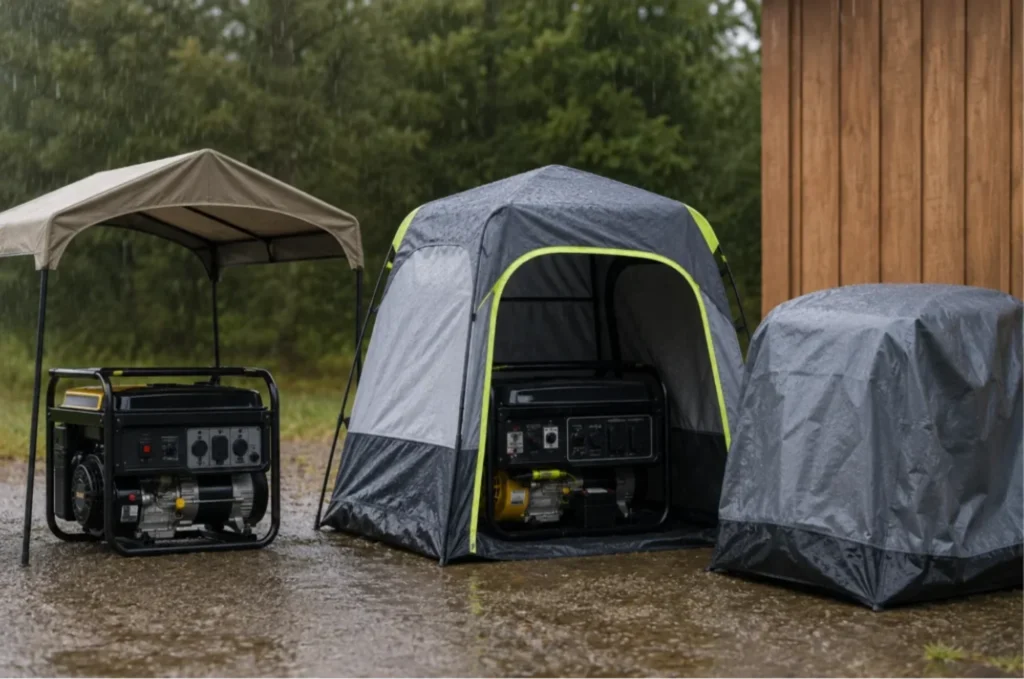
You may be able to run in the rain only with a generator cover designed for active operation. The cover must block rain while allowing airflow, heat release, and exhaust movement. A tarp, plastic sheet, or box can trap heat and fumes, so it is not proper protection for running generators.
Use these safety tips when choosing or placing a cover:
- Use a weather-rated generator cover made for operation.
- Check the owner’s manual before using any cover or shelter.
- Keep all vents and exhaust areas open.
- Keep cords and outlets dry.
- Place the unit on stable ground.
- Follow the generator manufacturer’s instructions.
A DIY cover can be unsafe if it restricts airflow or comes into contact with hot surfaces, so homeowners should understand how to protect their generator from rain before building a shelter.
It can also direct exhaust toward doors, windows, or people nearby. If you plan to build a shelter, the design must keep the generator dry while preserving proper ventilation.
Where to Put a Generator During a Storm
Place a portable generator outside, away from doors, windows, vents, and air intakes. A common safety guideline is to keep the generator at least 20 feet from the home, with exhaust pointed away from openings. The surface should be flat, dry, and stable enough to prevent tipping or water pooling.
During bad weather, the goal is to protect the unit from rain without moving it into an unsafe enclosed area. Distance matters because exhaust can drift toward the home. Keep the generator positioned so fumes move away from occupied spaces.
Barret Abramow, Grounded Electric’s Project Manager and Co-Owner, helps coordinate generator work. He reviews placement, wiring access, and site conditions together. This is important when the generator location affects cord routing, panel access, and safe maintenance.
Extension cords also affect generator safety. Use outdoor-rated cords with the correct gauge and capacity for the load. Damaged cords, undersized cords, and wet connections can overheat or fail during power outages.
Can You Start or Leave a Generator in the Rain
Do not start a generator while standing in water or touching the unit with wet hands. If the generator has been exposed to rain, turn it off if it is safe to do so and let it dry before further use. Starting a wet generator can increase the chance of shock, short circuits, or damage.
Leaving a generator outside after use can also cause problems. Long-term exposure can corrode parts, weaken connections, and shorten service life. If a generator gets wet, inspect visible parts, check the cords, and review the manual before trying to run your generator again.
If the generator trips breakers, smells like fuel, shows water inside the outlets, or runs poorly, stop using it. These signs may point to electrical or mechanical damage. A licensed electrician should evaluate the setup before the next storm.
Portable, Gasoline, and Standby Generators
Portable and gasoline generators require extra care because they are often moved, stored, and connected during storms. Fuel handling also becomes riskier in wet weather because spills, fumes, and ignition sources must be controlled. Never refuel a hot or running unit.
Standby generators are different because they sit on a fixed pad and connect through installed electrical equipment. They are built for outdoor weather conditions, but they still require installation, clearance, maintenance, and code-compliant wiring. A standby system should not be treated like a portable unit with extension cords.
Compare the basic differences:
- Portable generators need manual setup and weather protection.
- Gasoline generators need safe fuel storage and refueling practices.
- Standby generators need permanent installation and routine service.
When to Call an Electrician
Call an electrician when generator use involves a transfer switch, panel connection, load calculation, or permanent wiring. A generator should not power a home through a dryer outlet, a backfed cord, or an improvised connection.
Never backfeed power through an outlet because it can energize utility lines, injure workers, damage equipment, and violate electrical code.
Transfer switch installation helps separate generator power from utility power. It also lets selected circuits run during power outages without unsafe wiring methods. Bobby Mulholland reviews generator wiring with attention to grounding, load capacity, clearances, and safe operation.
An electrician can also check storm readiness before the next outage. This may include inspecting cords, inlet boxes, transfer equipment, grounding paths, and the generator location. Professional review matters when the setup must support heating, refrigeration, medical equipment, sump pumps, or business operations.

Generator Rain Safety FAQs
- Can you leave a generator in the rain? You should not leave a portable generator exposed to rain without proper protection. Water can damage components and create shock hazards.
- How do you cover a generator in the rain while running? Use a cover rated for active generator use. It must shield the generator from rain while keeping exhaust, airflow, and heat release open.
- Can you start a generator in the rain? Do not start it with wet hands, while standing in water, or when water has entered outlets or controls. Dry conditions and safe placement come first.
- Can you run a gasoline generator in the rain? Only with proper protection, dry connections, outdoor placement, and safe fuel handling. Gasoline adds fire and refueling risks during wet weather.