



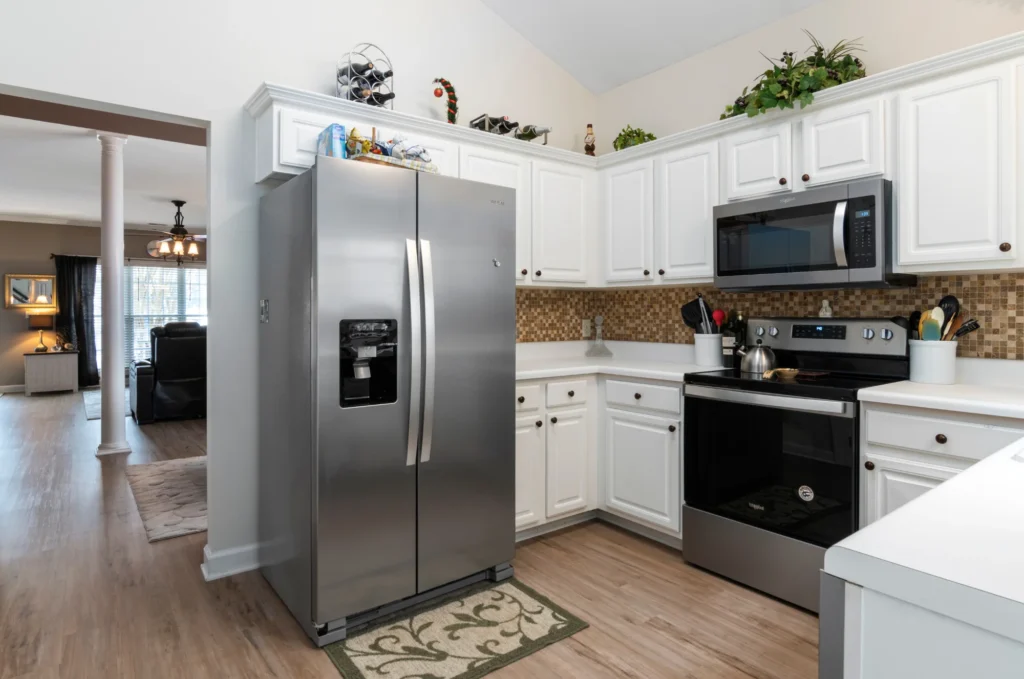
Choosing the right generator for a fridge comes down to two numbers: running watts and starting watts. Most standard refrigerators draw between 400 and 800 watts while running but require 1,200 to 1,600 watts to start the compressor. Any generator that can’t meet that starting demand will trip or fail to keep your food cold.
The right generator size for a refrigerator also depends on other appliances you run at the same time. It also depends on how long the power outage lasts.
Grounded Electric is a licensed electrical contractor serving Bergen County, NJ. They often help homeowners choose and install generators. The guidance below covers what most homeowners should know before making a decision.
Key Takeaways
- Sizing a generator for a fridge requires matching the generator’s peak output to the refrigerator’s starting watts, not its running watts. Most standard refrigerators require 1,200 to 1,600 starting watts, so a 2,000W to 2,400W inverter generator is a good baseline for fridge-only backup.
- Adding a freezer changes the math significantly because two compressors can surge simultaneously. A generator for a refrigerator and freezer should be rated at 3,500-4,500W to handle the combined startup load reliably.
- Inverter generators are the better choice for modern refrigerators because they produce cleaner, more stable power than conventional open-frame models, which protects sensitive electronic control boards from voltage fluctuations.
- Gas and propane generators must always run outdoors, at least 20 feet from any door or window. Carbon monoxide poisoning is the leading cause of generator-related deaths in the U.S., and battery generators are the only type safe for indoor use.
- A generator doesn’t need to run continuously during a power outage. Cycling it on for 30 to 45 minutes every 1 to 2 hours reduces fuel use by 40 to 50% while keeping food within safe temperature limits.
Running Watts vs. Starting Watts for a Refrigerator
Refrigerators don’t draw a fixed amount of power. They cycle on and off as the compressor keeps the temperature steady. Each time it starts, it draws a brief, heavy power surge, then settles into its normal running wattage.
Why Starting Watts Matter More Than Running Watts
Running wattage is the power a refrigerator draws while the compressor is running. Surge wattage, also called starting watts or surge watts, is the brief spike that occurs the moment the compressor turns on.
Most standard refrigerators need about 400 to 800 watts while running, but the starting surge can briefly reach about 1,200 to 1,600 watts. A generator sized only to run watts will trip the moment the compressor kicks in.
How to Read Your Refrigerator’s Power Label
Look for a nameplate on the interior wall or back of your refrigerator. It lists amperage and voltage. Multiply those two numbers to calculate running watts.
A refrigerator rated at 6.5 amps and running on 120 volts draws 780 running watts. Multiply that result by two to three to estimate starting wattage. That final number is your minimum generator size.
What Size Generator Do I Need to Run My Refrigerator?
For a single fridge, a 2,000-2,400W inverter generator covers most situations. The right generator size for a refrigerator also depends on the appliance’s age and what else you run at the same time.
Generator Size Chart: Fridge, Freezer, and Common Appliances
| Appliance Setup | Running Watts | Starting Watts | Recommended Generator |
|---|---|---|---|
| Mini fridge | 100–250W | 400–800W | 1,000W+ |
| Standard refrigerator | 400–800W | 1,200–1,600W | 2,000W–2,400W |
| Garage refrigerator | 500–900W | 1,400–1,800W | 2,400W |
| Chest or upright freezer | 300–600W | 1,000–1,500W | 2,000W–2,400W |
| Fridge and freezer | 700–1,400W | 2,500–3,100W | 3,500W–4,500W |
| Fridge, freezer, and air conditioner | 2,200–4,000W | 4,500–6,500W | 6,500W–8,000W |
Fridge Only vs. Fridge and Freezer Together
A 2,000W to 2,400W generator handles a fridge alone with room for a router, phone chargers, and LED lighting.
For a generator for refrigerator and freezer loads together, a 3,500W to 4,500W inverter generator is the practical starting point, because two compressors may start close together and stack their surges on the generator simultaneously.
Adding an air conditioner to that load pushes the requirement above 6,500W. Older appliances can use twice as much power as newer, energy-efficient models of the same size, so if your fridge is more than 10 years old or sits in a hot garage, add a 20% buffer to the nameplate wattage.

Can You Power a Fridge with a Generator?
Yes. Any generator sized correctly for the refrigerator’s starting watts will run it reliably. The question is whether it can also handle the other appliances you connect simultaneously.
A 2,000W generator can run many standard refrigerators if the refrigerator’s starting watts are within the generator’s peak rating and you don’t connect too many other loads simultaneously.
Step up to 2,400W if you want to run a small TV, a coffee maker briefly, or a laptop alongside the fridge.
A 2,400W inverter generator provides more breathing room for a compressor surge, phone charging, a Wi-Fi router, LED lights, and a small TV.
Which Generator Can Run a Fridge?
Generator type determines how cleanly and reliably power reaches your refrigerator. The types of generators available each carry different trade-offs in safety, portability, and installation requirements.
Inverter and Portable Generators
Inverter generators produce stable, clean power that protects your refrigerator’s electronic control boards. An inverter generator is a better fit for running a refrigerator than a rougher open-frame unit when sensitive electronics are part of the backup plan. When evaluating a portable generator for fridge backup, look for:
- A peak watt rating that exceeds your fridge’s starting watts by at least 20%
- An economy mode that reduces fuel consumption at partial load
- A runtime of at least 8 hours per tank at 50% load
- A GFCI-protected outlet for extension cord use
- A low-oil shutdown feature for engine protection
Gas generators in this category are widely available and cost-effective for short to medium outages. They require outdoor placement, a fuel supply, and proper ventilation at all times. It’s worth knowing whether portable generators are waterproof in rainy weather before your first outage.
Battery and Standby Generators
Battery-powered generators are the only option safe for indoor use. They produce no exhaust or carbon monoxide and operate silently. A battery generator can power your refrigerator for 4 to 15 hours, depending on battery capacity and the refrigerator’s power consumption.
For multi-day outages, pair a large-capacity battery unit with solar generators for recharging, or use a fuel-powered generator as the primary source.
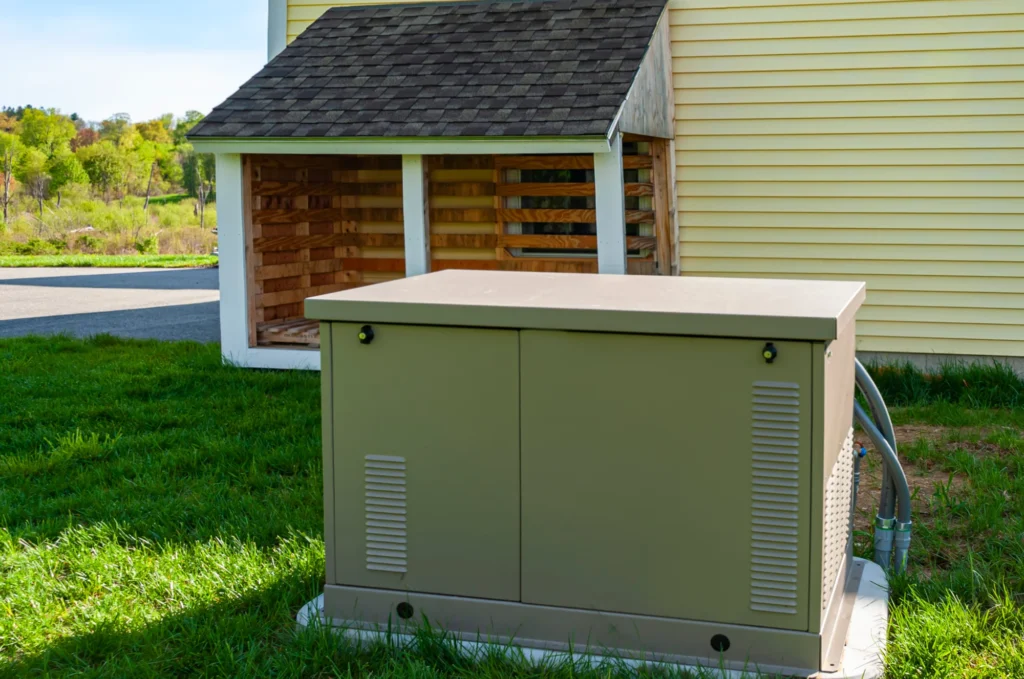
Natural gas and propane generators work best as permanent standby systems. They can power multiple appliances, including lighting and an air conditioner, not just a fridge.
Robert “Bobby” Mulholland is the head electrician at Grounded Electric. He has over 30 years of field experience.
He says standby generator installs need a licensed electrician. This is required for transfer switch wiring and local code compliance. This applies no matter the fuel type.
Grounded Electric is Generac Certified, meaning the team is trained and authorized to install and service Generac standby systems.
How to Safely Run a Refrigerator on a Generator
Getting the wattage right protects your fridge. Correct placement and connection protect your household. Both matter and neither should be treated as optional.
Connections and Transfer Switches
For a temporary setup, plug your fridge directly into a heavy-duty outdoor-rated extension cord running to the generator outside. For powering home circuits, learn how to hook up a generator to your house with a properly installed transfer switch or interlock system, and consult a licensed electrician.
Backfeeding power through a wall outlet is illegal in most jurisdictions and creates a lethal hazard for utility workers.
Barret Abramow, Project Manager and Co-Owner at Grounded Electric, notes that a properly installed transfer switch at the electrical panel is the only code-compliant method for connecting a generator to home wiring.
Carbon Monoxide Rules and Outdoor Placement
Carbon monoxide is colorless, odorless, and lethal at low concentrations. Key placement rules for any gas generator:
- Never operate indoors or in an attached garage
- Never run near open windows, doors, or ventilation intakes
- Position at least 20 feet from any door, window, or vent
- Direct exhaust away from the structure at all times
- Install battery-operated carbon monoxide detectors on every level of the home
Battery generators are the only exception to these placement rules since they produce zero emissions.
How Long Will a Generator Run a Refrigerator?
Knowing how long to run a generator for a refrigerator can save significant fuel. A generator doesn’t need to run continuously to keep food safe. A refrigerator keeps food safely cold for about 4 hours if the door stays closed, while a full freezer maintains a safe temperature for about 48 hours if it remains closed.
A practical cycling pattern is 30 to 45 minutes of generator run time followed by 60 to 90 minutes off. This cuts fuel use by 40 to 50% compared to running nonstop while keeping food within safe temperature limits. Discard any perishable food that has been held above 40°F for more than 4 hours.
Frequently Asked Questions
- Can a generator damage a refrigerator? Yes. An overburdened generator may supply unstable voltage or insufficient wattage, potentially damaging the refrigerator’s compressor or electronics. A properly sized inverter generator eliminates that risk.
- Do I need a transfer switch to run a fridge on a generator? Not for a direct plug-in using an extension cord. A transfer switch is only required when connecting to your home’s built-in electrical circuits.
- What’s the best generator for a fridge and freezer? A 3,500W to 4,500W inverter generator. It handles two compressor surges, runs quieter than a conventional model at the same wattage, and leaves overhead for small additional loads.