


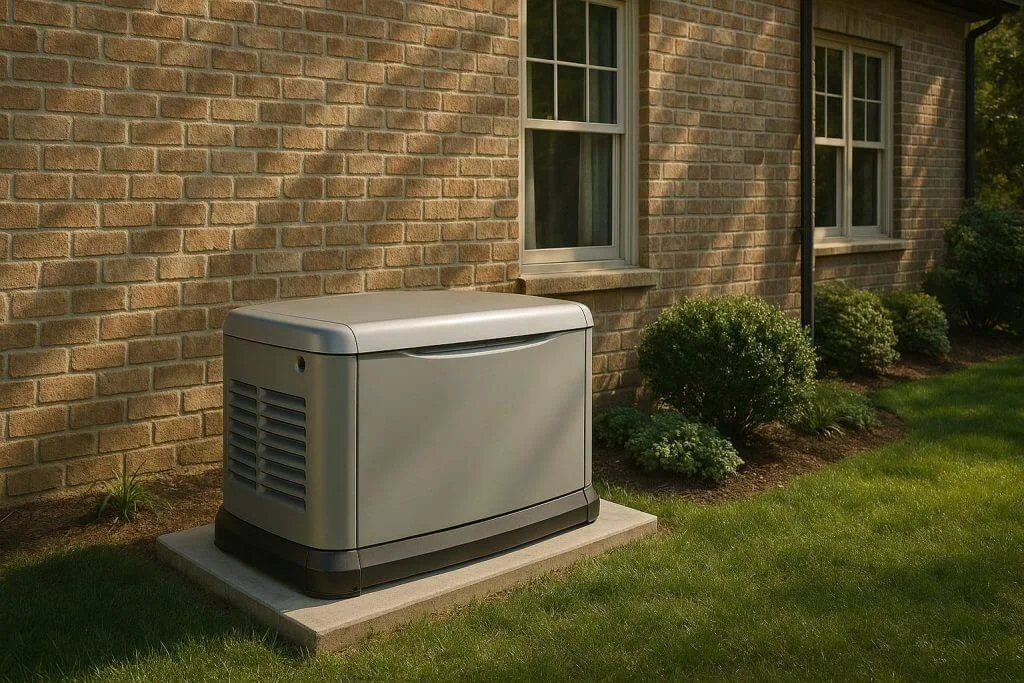
The installed price for a whole-house generator runs $12,000 to $20,000 for most homes. That figure covers the unit, the automatic transfer switch, wiring, the gas line connection, permits, and inspection. Where you land in that range depends on the kW rating you need, the condition of your service panel, and how far the unit sits from the meter.
Your quote climbs past the top of that range when the panel needs upgrading, or the gas meter has to be resized. Grounded Electric installs standby systems that meet safety and code requirements, the kind covered in more depth in this breakdown of what a whole-house generator actually is. This guide breaks down pricing, sizing, the install itself, and what the whole thing is worth.
Key Takeaways
- Installed pricing for a generator for a whole house runs $12,000 to $20,000, driven by kW rating, gas source, and site conditions.
- The total covers equipment, the transfer switch, wiring, gas hookup, permits, and inspection.
- Most homes need 14-26 kW to support air conditioning, sump pumps, and key circuits.
- Quotes rise when the unit sits far from the panel or meter, or when the service needs upgrading first.
- The physical installation takes 1 to 2 days; permitting and scheduling take several weeks.
Average whole-house generator installed price
What is the average installed price?
The average installed price of a home standby system is $12,000 to $20,000, in line with this guide to home generator installation costs in NJ. That covers equipment, wiring, gas connection, permitting, and inspection.
Homes with newer service panels usually land toward the lower end. Older homes often need panel work first, which adds to the total. A load check before anything gets ordered keeps surprises out of the final invoice.
Why installed prices vary so much between quotes
The whole house generator cost you see quoted online varies widely because each source measures something different. Generac lists $8,000 to $16,000 nationally for the unit plus equipment and labor. Big-box retailers advertise averages closer to $6,900, which typically exclude panel upgrades, long gas line runs, and permit fees.
Three things push real quotes higher than those headline numbers. Licensed labor rates vary widely by market. Permitting and utility coordination add both time and fees in dense suburban towns. Older housing stock often needs a service upgrade before anything can be connected.
A quote that looks unusually low is usually missing line items, not beating the market. Ask which of those five components are included, and check this standby generator installation cost breakdown for the line-by-line version before comparing the two numbers side by side.
Unit rating and site conditions that move the price
Smaller units carry only priority circuits and are priced lower. Larger units carry the full house and are priced higher.
Standby units are rated in kilowatts, which measures the output they deliver. The right rating depends on your home’s connected load. Licensed electricians run that load calculation before quoting.
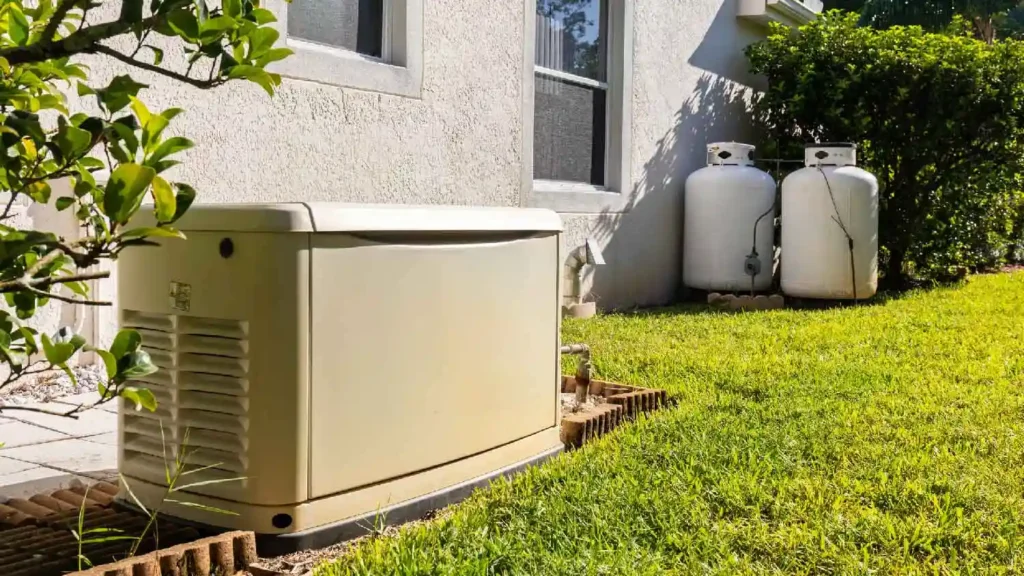
Generac whole-house generator
Price to install a Generac unit
Installing a Generac standby unit runs $12,000 to $20,000 depending on the kW rating and the site work involved, as covered in this guide on how much it costs to install a Generac generator. That includes wiring, transfer switch setup, and the gas hookup.
Natural gas models connect to your existing supply line and start automatically when utility service is interrupted. Licensed electrician Robert “Bobby” Mulholland reviews the system requirements before any work is scheduled.
Home standby generator installation cost breakdown
Breaking down the whole home generator installation cost by component makes it easier to compare one quote against another.
Equipment price
The unit itself accounts for $5,500 to $9,000 of the total. Higher kW ratings cost more and carry more of the house. Portable units are priced lower but need manual setup and refueling, and they cannot be wired into your panel, which is why they are not a whole-home answer.
Price breakdown by component
Site layout and gas source drive the labor portion. Typical line items break down as follows.
Installed Price Breakdown
Line items that make up a whole house generator installed price.
| Line item | Typical range | What it covers |
|---|---|---|
| EquipmentStandby unit | $5,500 – $9,000 | Varies with kW rating and output. |
| ElectricalAutomatic transfer switch | $1,200 – $2,500 | Hands the load over to backup automatically. |
| LaborWiring and connection | $4,000 – $6,000 | Trenching, conduit, panel work, and hookup. |
| GasSupply line run | $1,000 – $2,000 | Line from natural gas or propane source. |
| PermitsPermitting and inspection | $300 – $500 | Municipal fees and required sign-off. |
| Total installed | $12,000 – $20,000 | Complete system, permitted and tested. |
Sources: Home Depot Generator Installation Cost Guide, PowerOutage.us, Team Austin. Ranges shift with kW rating, site complexity, and local permit fees. Figures reflect typical published ranges and full-service installed pricing.
Project Manager and Co-Owner Barret Abramow schedules the work around local permitting rules. All wiring must meet code, and inspection sign-off is part of the job, not an extra.
What happens during a whole-house generator installation
The install process, step by step
The physical work takes one to two days. Your electrician starts with a site walk to pick a spot that drains well, sits clear of windows and vents, and stays close to both the meter and the panel. Shorter runs mean lower labor and materials.
From there, the crew pours a concrete pad or lays a compacted gravel base. The gas line is run and pressure-tested. The automatic transfer switch is mounted beside your main breaker box and wired in.
The last step is a simulated outage. The crew cuts utility service at the panel, confirms the unit starts and picks up the load within seconds, then confirms it hands back cleanly when service returns.
How long the full process takes
Plan on three to six weeks from signed quote to a working system. Most of that window is permitting, utility coordination, and equipment lead time, not labor.
Municipal permit review is usually the longest single step. Gas meter upsizing, when required, adds time because it depends on the utility’s own schedule.
Generator cost by home size and power.
Generator cost for a 2,000-sq-ft house.
A 2,000-square-foot home usually needs 14 kW to 20 kW, with an installed price of $12,000 to $16,000, close to the answer most homeowners get when they ask how much does a Generac generator cost for a 2,000 square foot house.
Square footage is a starting point, not the answer, as this guide on sizing a generator for a 2,000 sq ft house covers in more detail. The real driver is connected load, meaning how many large appliances run at once.
Generator cost for a 3,000-sq-ft house.
A 3,000-square-foot home usually needs 20-26 kW, with an installed price of $15,000 to $20,000, which lines up with the whole-house generator cost for a 3,000 sq ft house once panel and gas line work are factored in. Larger homes typically require more HVAC tonnage and heavier electrical circuits, which increase both the rating and the labor.
Installed Price by Home Size
Typical kW rating and installed range by square footage.
| Home size | Typical rating | Installed range | What it carries |
|---|---|---|---|
| Under 1,500 sq ft | 14 kW – 18 kW | $12,000 – $14,000 | Central air, refrigeration, lighting, sump pump. |
| 2,000 sq ft | 14 kW – 20 kW | $12,000 – $16,000 | Full HVAC, kitchen circuits, well and sump pumps. |
| 3,000 sq ft | 20 kW – 26 kW | $15,000 – $20,000 | Multiple HVAC zones plus all major appliances. |
| 4,000+ sq ft | 26 kW and up | $18,000 – $20,000+ | Whole home including pool equipment and shop circuits. |
Square footage is a starting estimate. Connected load determines the actual rating, so two homes of identical size can need different units.
Generator sizing and power requirements
Sizing comes from a load calculation, not a square footage formula. Shortcut formulas that multiply square footage by a fixed number, the kind some national retailers publish, routinely undersize a home by half. This guide explains which Generac generator size I need, and the generator size chart shows typical ratings by load.
An undersized unit can overload under real conditions and damage connected equipment, a risk that most often shows up in homes running 200-amp service with little headroom to spare. Licensed electricians total your actual startup and running loads before recommending a rating.
How distance affects the installed price
The distance between the unit, the panel, and the meter directly affects your quote. Longer runs mean more conduit, more wire, more trenching, and more hours. A unit placed 60 feet from the panel can add $1,000 to $3,000 over one placed 15 feet away.
Balancing run length against setback rules and noise usually finds a spot that works without inflating the bill.
Factors that affect installation cost
What Moves Your Quote Up or Down
Conditions that shift the total within, or beyond, the standard range.
| Condition | Effect on price | Why |
|---|---|---|
| Panel at capacity or outdated | Adds $1,000 – $2,500 | Service upgrade required before a transfer switch can be added. |
| Long run to panel or meter | Adds $1,000 – $3,000 | More trenching, conduit, wire, and labor hours. |
| Gas meter undersized | Adds time and utility fees | Supply must carry the unit plus existing appliances at full load. |
| Rock, hardscape, or tight access | Adds $500 – $2,000 | Excavation and material handling take longer. |
| Newer panel, short run, clear access | Lands near $12,000 | No preparatory work needed before hookup. |
Panel and gas system requirements
Your service panel condition is the single biggest wildcard. Older panels often lack the capacity or breaker space to accommodate a transfer switch, necessitating an electrical panel upgrade before the standby work can proceed.
Gas supply matters just as much. Your meter must deliver sufficient volume to run the unit at full load while also supplying your furnace and water heater. If it cannot, the utility has to upgrade your gas meter before the system can be connected.
Installation complexity and permitting
Complexity comes down to run lengths, obstacles, and access. Rock, mature landscaping, tight side yards, and long trenching runs all add hours. Permit fees vary by municipality and are non-negotiable.
Inspection confirms the work meets code and protects you if you sell the home later. Unpermitted work routinely surfaces during a title search and gets expensive to correct after the fact.
Is a whole-house generator worth the installed price?
For homes that lose service more than once or twice a year, a standby system usually pays for itself through avoided damage rather than convenience. A single sump pump failure during a multi-day outage can cost more to remediate than a mid-range unit costs to install.
The math shifts on four things:
- Damage prevented. Frozen pipes, basement flooding, humidity and mold, and a full refrigerator and freezer of spoiled food.
- Medical and work dependency. Home oxygen, CPAP, refrigerated medication, and remote work all fail when the power is out.
- Resale. In regions with frequent storm outages, a permitted standby system is a documented improvement buyers will pay for.
Homes that lose service once every few years for a couple of hours are harder to justify. That is a real answer, and any honest quote should tell you so.
Operating and maintenance costs
Annual maintenance cost
Annual service averages about $425 and covers scheduled inspections and upkeep, including Generac service in NJ. That plan typically includes routine checks and emergency support.
Skipped maintenance, covered in more depth in this annual generator maintenance cost guide, is the most common reason a standby unit fails on the day it is needed. Batteries, oil, and filters all degrade whether the unit runs or not.
Lifespan and running costs
A properly maintained standby unit lasts 15 to 25 years. Natural gas models run roughly $2 to $5 per hour, and most homes spend $100 to $300 per year on gas depending on how often service drops.
Propane runs meaningfully higher per hour than natural gas. It is limited by tank capacity, so it needs refills during long outages, and any propane gas line installation should be sized for your unit’s full draw. Natural gas runs continuously as long as the utility supply holds. You can estimate your own numbers with this fuel consumption calculator.
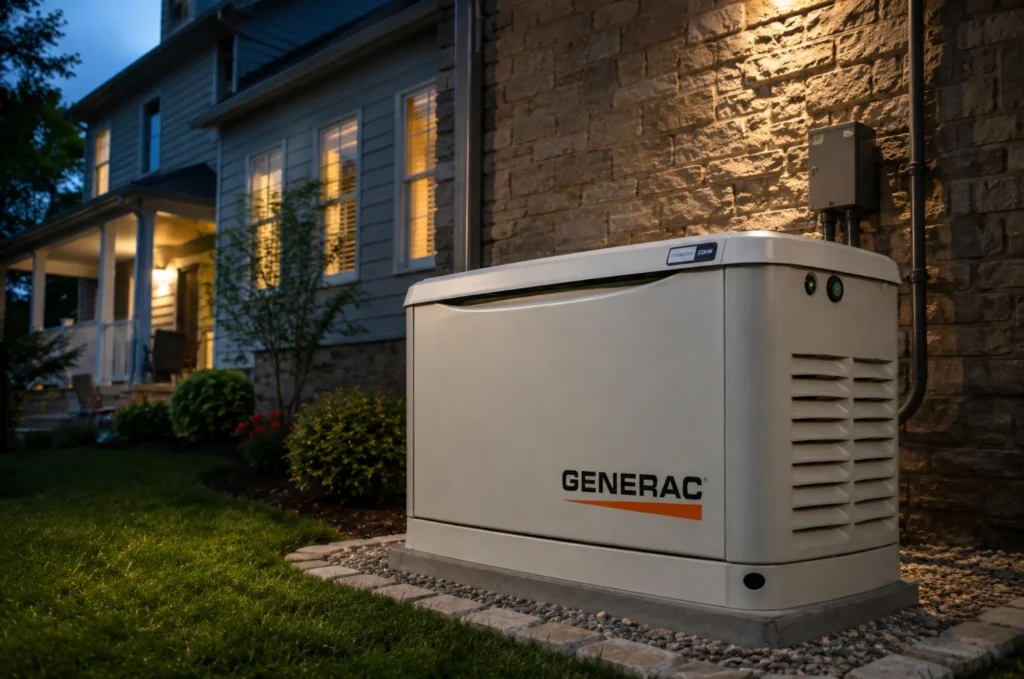
Whole-house generator installation FAQ
How much does it cost to install a whole-house generator?
Installed pricing runs $12,000 to $20,000 depending on kW rating, gas source, and site conditions. Panel upgrades and gas meter work push the total higher. Permitting and inspection are included in that range.
What does a Generac home generator cost installed by home size?
A 2,000 square foot home runs $12,000 to $16,000 at 14 kW to 20 kW. A 3,000 square foot home runs $15,000 to $20,000 at 20 kW to 26 kW. Connected load, not square footage alone, sets the final rating.
Is there a whole house generator cost calculator?
There is no single calculator that returns an accurate installed price because panel condition and run distances must be verified on-site. You can estimate operating expense with a fuel consumption calculator, then get a load calculation for the install side.
How long does the installation take?
The physical installation takes 1 to 2 days. The full timeline runs three to six weeks from the signed quote, with permitting and utility coordination taking most of that time.
Does a quote cost anything?
Grounded Electric provides free quotes on most jobs. A diagnostic visit, when needed to assess existing conditions, typically costs $150 to $300.
What size unit does a whole house actually need?
Most homes land between 14 kW and 26 kW. The number comes from totaling your startup and running loads, including HVAC, well and sump pumps, and kitchen circuits.
Consult a licensed generator installation expert.
A consultation determines your correct kW rating, site requirements, and total price. A licensed electrician reviews your service panel, gas supply, and load needs.
Schedule a consultation with Grounded Electric to review goals, wiring, and budget.
