


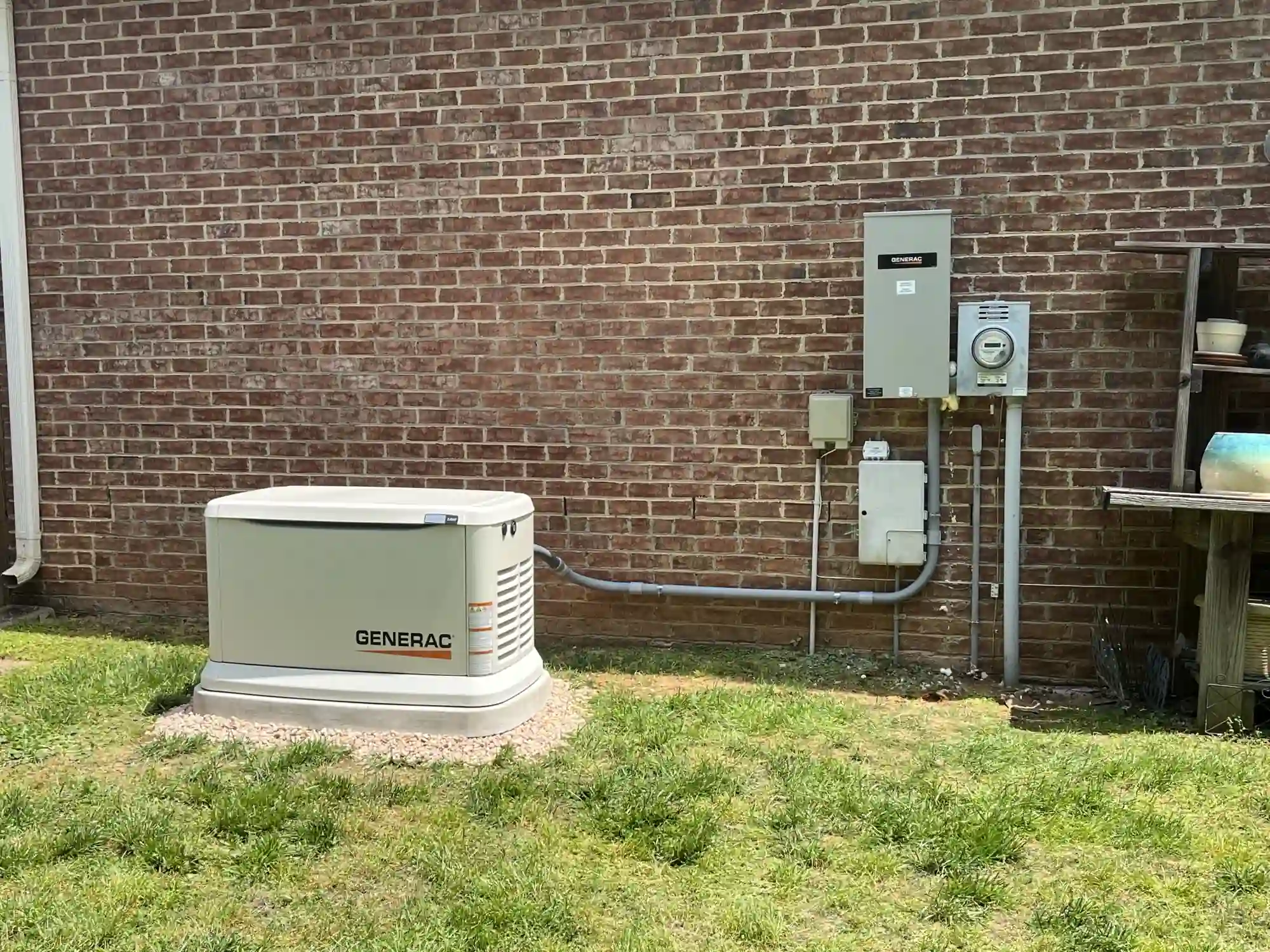
A whole-house standby system runs $8,000 to $16,000 installed for a typical project across most of the United States. In New Jersey, expect $12,000 to $20,000 for the same scope. Large properties that need a service upgrade or extensive fuel line work often fall above both ranges.
Where you land inside that range depends almost entirely on how much of your house you want running during an outage. Properties needing only essential circuits sit near the bottom. Whole-house coverage on a larger property tends to rank near the top, especially when panel or fuel upgrades come into play.
That figure covers the unit, transfer switch, labor, permits, fuel connection, testing, and final inspection. Two identical floor plans can price $4,000 apart depending on panel condition and how far the gas line sits from the pad.
Key Takeaways
- Nationally, a complete standby setup runs $8,000 to $16,000. In New Jersey, the typical range is $12,000 to $20,000.
- Equipment alone accounts for roughly one-third to one-half of what you spend. Labor, permits, materials, and fuel work make up the rest.
- Capacity, fuel source, and site preparation are the three factors that most affect your final number.
- Accurate pricing requires a site visit, because online estimates cannot account for real electrical and code requirements.
- Ownership runs $300 to $700 per year once the unit is live, covering service, battery replacement, and fuel.
Whole House Generator Cost in NJ
New Jersey homeowners typically spend $12,000 to $20,000 for a complete standby setup, which sits above the $8,000 to $16,000 national average. Higher licensed electrician rates, township permit fees, and utility coordination all push New Jersey pricing upward.
Final numbers shift based on load requirements, fuel availability, and local permitting. For a closer look at whole-house generator pricing specifically, that page breaks down installed price by full-property scope.
| Coverage level | Typical capacity | National installed | New Jersey installed |
|---|---|---|---|
| Essential circuits | 10–14 kW | $8,000 – $11,000 | $12,000 – $14,000 |
| Mid-range coverage | 16–18 kW | $10,000 – $13,500 | $14,000 – $17,000 |
| Whole-property backup | 20–22 kW | $12,000 – $16,000 | $16,000 – $20,000 |
| Large property with upgrades | 24–26 kW | $16,000 – $20,000 | $20,000 – $25,000+ |
Average Home Generator Cost, Installed
For most single-family properties in New Jersey, the average lands between $14,000 and $17,000 once load calculations are complete.
Partial backup systems that cover essential circuits, meaning heat, refrigeration, sump pump, and a few outlets, land closer to $12,000 to $14,000. Full-property coverage pushes toward $16,000 to $20,000. Panel condition and the distance to your natural gas or propane connection both affect where you land.
Installed Price vs Equipment-Only Pricing
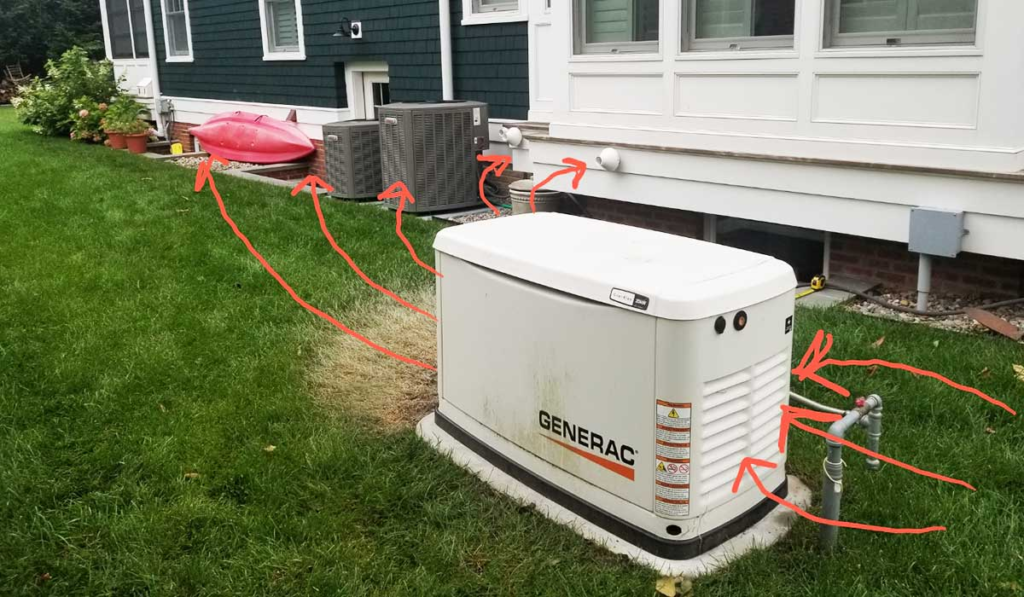
Equipment-only pricing runs about $5,000 to $9,000 depending on capacity and model, but that number covers the hardware and nothing else.
The installed figure is higher because it includes labor, permits, inspections, and utility coordination, which typically adds $7,000 to $11,000 in New Jersey. That’s why a fully commissioned setup commonly totals $12,000 to $20,000 here. If you’re comparing the price of a Generac generator installed against a bare equipment quote, that gap is exactly where the money goes: labor, code compliance, and utility coordination that a sticker price never includes.
Comparing sticker prices alone is misleading, since they reflect neither real labor requirements nor code compliance. For a full breakdown of installation cost components beyond what’s covered here, that guide walks through each line item in more depth.
Professional install work typically includes:
- The unit itself and mounting hardware
- Transfer switch and wiring
- Electrical labor and system connection
- Fuel hookup for natural gas or propane
- Permits, inspections, and commissioning tests
Where Your Money Actually Goes
Roughly one-third to one-half of your total spend goes toward the actual hardware. Everything else pays for labor, materials, permits, and fuel connection.
Generac’s own breakdown puts the unit at about one-third of a national project, with system equipment, materials, and labor making up the remaining two-thirds. On New Jersey jobs, hardware often runs slightly higher as a share, at 40-45 percent.
Barret Abramow attributes the difference to equipment pricing being set nationally while the labor portion tracks the local market. Knowing this split matters when you compare quotes, since a low bid usually means someone cut scope on the install side, not on the unit.
| Component | Example spend | Share of total |
|---|---|---|
| Standby unit (20 kW) | $6,800 | 43% |
| Transfer switch and wiring | $2,300 | 14% |
| Electrical labor | $3,800 | 24% |
| Fuel connection and piping | $1,500 | 9% |
| Pad and site preparation | $700 | 4% |
| Permits, inspections, commissioning | $900 | 6% |
| Total | $16,000 | 100% |
Whole House Generator Cost by Size
Capacity for a 2,000 Sq Ft House
Square footage alone will not tell you what capacity you need. Connected load will, and the gap between the two is where most sizing mistakes happen.
A common retail sizing shortcut is to multiply square footage by three to get a starting kW figure, which puts a 2,000 sq ft property near 6 kW. Treat that as a floor for essential circuits only, not a whole-house answer. For the specific case of a 2,000-square-foot property, that sizing guide runs through the full appliance-by-appliance math. Central air, well pumps, and electric ranges carry high starting watts that the formula ignores entirely, which is why most 2,000 sq ft properties need 14 to 18 kW for meaningful coverage.
These tiers summarize common standby capacity ranges and the high-level descriptions from manufacturers and industry guides. Exact results depend on your load calculation.
| Property size | Essential circuits only | Whole-property coverage | NJ installed range |
|---|---|---|---|
| 1,500 sq ft | 10–12 kW | 14–16 kW | $12,000 – $15,000 |
| 2,000 sq ft | 12–14 kW | 14–18 kW | $13,000 – $16,500 |
| 3,000 sq ft | 14–16 kW | 18–22 kW | $15,000 – $19,000 |
| 3,500 sq ft | 16–18 kW | 22–26 kW | $17,000 – $22,000 |
| 4,500+ sq ft | 18–22 kW | 26 kW+ | $20,000 – $25,000+ |
How Much Is a Generator for a 3,000 Square Foot House
A 3,000 sq ft property typically needs an 18 to 22 kW standby unit, which runs $15,000 to $19,000 installed in New Jersey and $11,000 to $16,000 nationally.
The square-footage shortcut would suggest 9 kW here, which is too low for most properties this size. Once you account for central air, a well pump, or an electric dryer, actual demand usually ends up being double that figure. A load calculation settles it, and the difference between a 9 kW guess and a real 20 kW requirement is roughly $6,000.
Generac Generator Cost for a 3,500 Sq Ft House
For a 3,500 sq ft property in New Jersey, expect $17,000 to $22,000 for a complete standby setup with whole-property coverage.
Properties this size almost always need 22-26 kW, and many require a panel upgrade to accommodate the transfer switch. If your service is currently 200 amps, confirming your panel can support the new load is worth doing before you get a quote. When both a service upgrade and a new gas run are needed, the total can reach $25,000 or more. For more detail, see what size Generac do I need?
Cost to Install a 22kW Standby Unit.
A 22 kW setup runs $16,000 to $20,000 installed for a typical mid-size New Jersey property with central air.
That figure covers the unit, fuel piping, electrical wiring, transfer switch work, and required code clearances. It’s the most commonly specified capacity for whole-property backup, which is why it anchors the upper half of most quote ranges.
Generac Home Generator Installation Cost in NJ
What Is the Average Cost of a Generac Generator Installed
Most New Jersey homeowners land near $15,500 for a complete standby setup, with the typical spread running $12,000 to $20,000. The national median sits closer to $12,000.
Smaller properties running essential circuits sit near the low end. Larger properties with whole-property coverage sit near the high end. Grounded Electric is Generac-certified, which reflects compliance with the manufacturer’s training standards.
Generac Generator Cost Including Installation
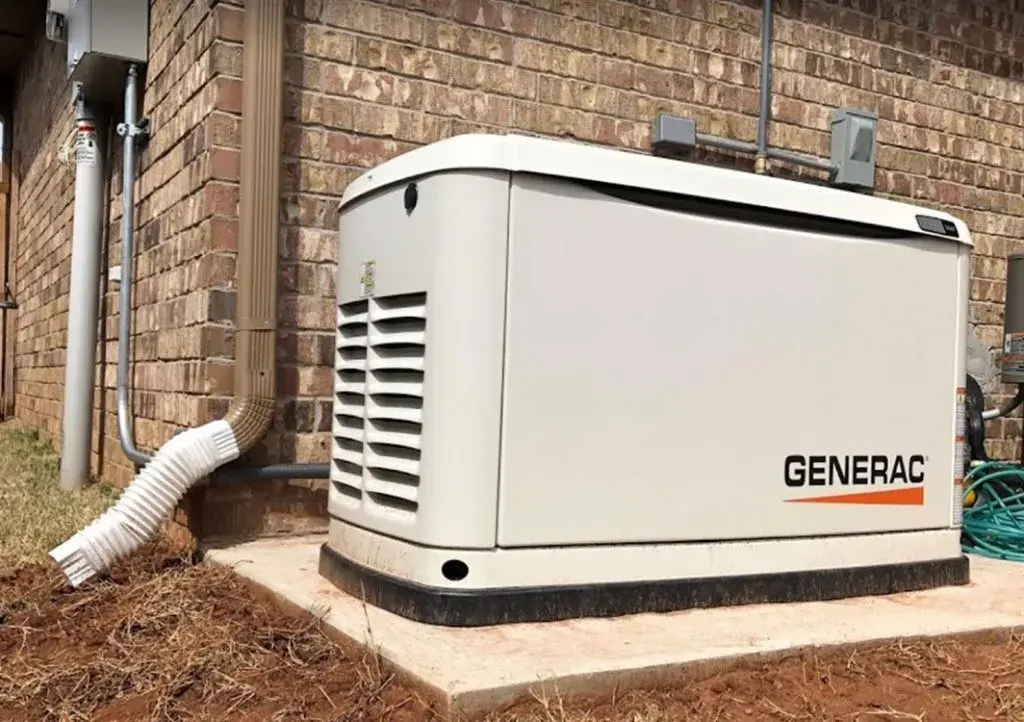
Combining equipment and labor, the cost of a Generac generator, including installation, typically ranges from $12,000 to $20,000 for a complete system in New Jersey.
That’s the number to budget against, since equipment-only quotes exclude the majority of the work. If you want the full cost-plus-installation math spelled out line by line, that page walks through it in detail. Learn more about Generac installation in NJ and how local factors shape pricing. Panel or gas upgrades push the total higher.
Generac Prices Installed and What Shifts Them
Four things move the price of a Generac generator installed more than anything else, and three of them have nothing to do with the unit you pick.
- Distance to the fuel source. A long natural gas run adds material and trenching labor and, in some townships, may require upgrading your gas meter to handle the added demand. Propane requires a tank, which can add $5,000 to $ 8,000 to the cost of properties without one.
- Panel condition. An undersized or outdated service panel needs to be upgraded before a transfer switch is installed.
- Site access and pad work. Tight side yards, grade issues, and drainage problems all add hours.
- Township permitting. New Jersey municipalities vary widely in fees and inspection scheduling.
Financing Options for Backup Power
Most standby systems can be financed, with monthly payments commonly starting at around $109 for qualified buyers through national programs.
Generac offers manufacturer-backed financing through its dealer network, and many local contractors also offer third-party lending options. Terms depend on credit and total project value. Financing is worth pricing out before you narrow your capacity choice, since the monthly gap between partial and whole-property coverage is often smaller than the upfront gap suggests. You can review current terms on Generac’s installation resource page.
How Long Installation Takes
The physical install itself usually takes one to two days once the crew is on site, though the full process from signed quote to a running system runs three to eight weeks. Bobby Mulholland notes that most of that gap comes down to permitting and utility scheduling, not the mechanical work.
Township review alone can take two to four weeks in parts of New Jersey. Site prep, whether a concrete pad or a compacted gravel base, happens before the crew arrives. Commissioning ends with a simulated outage to confirm the transfer switch engages correctly.
Contractor availability tightens sharply during storm season, so timing a project for spring usually secures an earlier start date.
What a Standby System Costs to Own
Budget $300 to $700 per year once the unit is live, covering annual service, battery replacement, and fuel consumption during outages.
Manufacturer maintenance plans generally run $200 to $500 annually and cover oil changes, filter replacement, and a full system check. See the full breakdown of yearly service pricing for a standby unit. Batteries need replacing every three to five years, and replacement battery pricing typically falls under $300. Skipping annual service is the most common reason a unit fails during the outage for which it was bought.
Fuel is the variable. Natural gas units consume only during runtime, so a mild year costs almost nothing, while a week of outages adds up. You can estimate your own fuel consumption directly, or review the operating expenses of a standby unit for a fuller picture.
Is It Worth Installing a Whole House Generator
For properties in outage-prone areas with a sump pump, medical equipment, or a well, a standby system usually pays for itself in avoided damage within a few major storms.
Outside those conditions, the math is closer. Water damage from a failed sump pump routinely costs more to remediate than the standby system itself, which is why properties with basements and high water tables tend to see the fastest payback. Frozen pipes and spoiled food carry real costs too. Against that, a portable fridge unit and a few circuit runs run $1,000 to $3,000 if you’re willing to run extension cords and refuel by hand.
Standby systems also tend to help at resale in regions with frequent outages, though the return varies by market and is not guaranteed. Long-term performance depends on regular standby generator maintenance, so factor that into the decision rather than treating the purchase as one-and-done.
How to Get an Accurate Generator Installation Quote
Accurate pricing requires an on-site visit, a load calculation, and a fuel supply check.
Licensed electrician Robert “Bobby” Mulholland stresses proper evaluation before any final number is given. Online estimators miss code rules and site limits, which is where quote-to-invoice surprises come from. Ask about permits, fuel work, timelines, and commissioning tests. Barret Abramow, Project Manager and Co-Owner, coordinates these steps to keep projects compliant.
Finding Home Generator Installers Near You
A search for home generator installers near me should turn up a licensed electrical contractor with manufacturer certification, not a general handyman or an equipment reseller who subcontracts the electrical work.
Grounded Electric is a licensed New Jersey electrical contractor (license number 16590), serving Bergen County and North Jersey. Manufacturer certification matters here because it affects warranty validity. When you compare bids, confirm each one includes permits and inspections, since that’s the line item most often omitted from a low quote.
To get precise pricing for your property, consider scheduling a consultation so these factors can be reviewed on-site and documented accurately.
