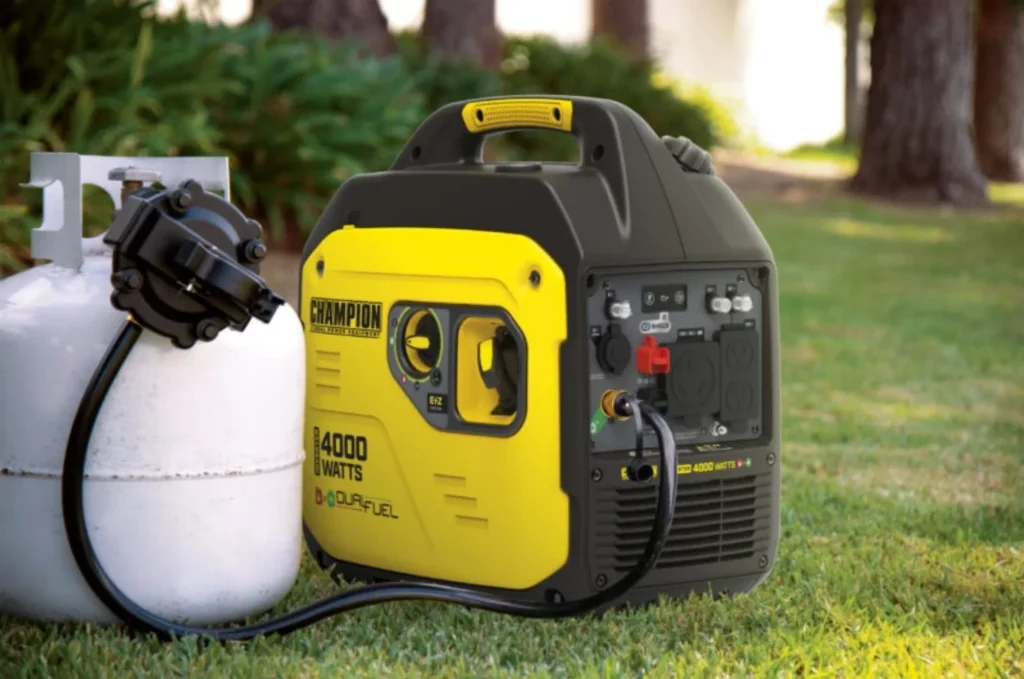


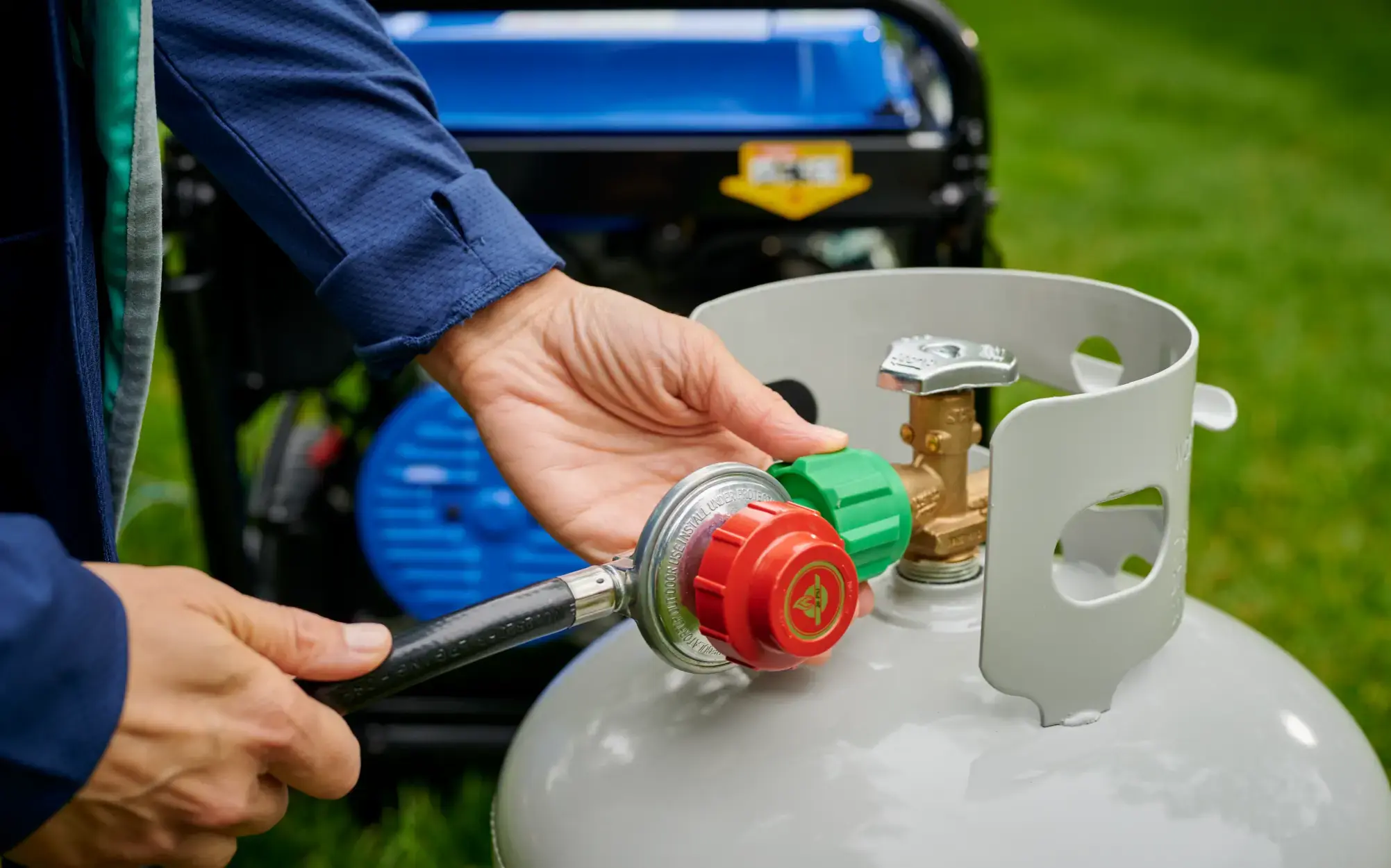
Propane generators are a dependable backup power option during outages. How long one lasts comes down to three things: cylinder size, power output, and how hard you push it. As a quick answer, a 5,000-watt portable unit on a standard 20-lb tank runs for about 5 to 6 hours at half load.
Three things decide your number: cylinder size, wattage, and load. The rest of this guide breaks each one down.
Grounded Electric, led by expert electrician Robert “Bobby” Mulholland and project manager Barret Abramow, installs propane backup systems across New Jersey.
Key Takeaways
- Run time depends on tank size, wattage, and load; a 20-lb cylinder typically powers a mid-size unit for 5 to 6 hours at a moderate draw.
- Large fixed tanks (250 to 1,000 gallons) can keep a standby system going for several days to over two weeks.
- The math is simple: usable gallons divided by hourly fuel use at your load.
- LP gas burns cleaner and stores longer than gasoline, though it can cost more per hour to run; most people prefer it for long emergencies.
- Trimming your electrical load and keeping the unit serviced stretches every gallon.
How Long Does a Generator Run on Propane?
It depends on the size of the unit and how much power you’re pulling. If you’re asking how long a 5,000-watt generator will run on propane, the answer at half load on a 20 lb cylinder is 5 to 6 hours.
That baseline comes from a fairly light draw. Push the unit closer to full load, or drop down to a smaller cylinder, and the number moves fast in both directions.
How to Calculate Propane Run Time
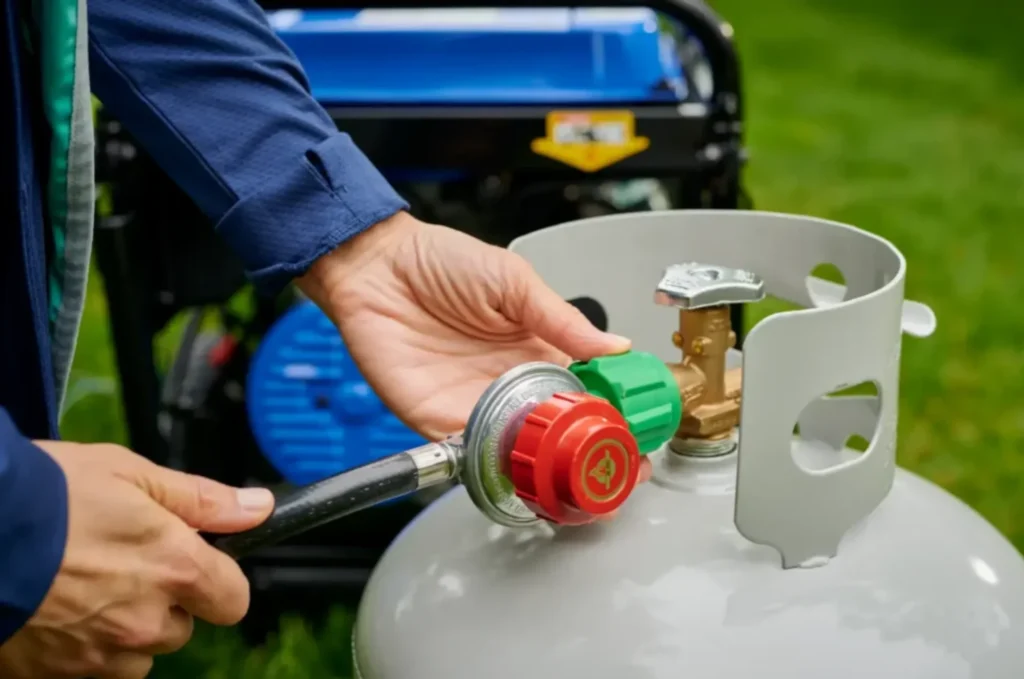
Here’s the formula: usable gallons in the tank divided by the gallons your unit burns per hour equals your hours of power.
A full 20 lb cylinder holds about 4.6 usable gallons. If your machine burns 0.8 gallons an hour at half load, that’s 4.6 ÷ 0.8, or roughly 5 to 6 hours. Push the load higher, and the fuel drains faster.
Always leave a cushion for startup surges, since motors and compressors spike when they kick on. To skip the math, run your numbers through Grounded Electric’s generator fuel consumption calculator, or see full sizing and load planning in Grounded Electric’s generator guide.
Run Time by Generator Size
Wondering how long a 20 lb propane tank lasts on a generator, or what to expect from a 7,500-watt unit? The table below shows typical fuel consumption at half load and the runtime you’d get from two common cylinder sizes. If you haven’t settled on a wattage yet, this generator size chart breaks down sizing by home and appliance load first.
| Generator Size | Fuel Use at Half Load | 20 lb Cylinder (4.6 gal) | 100 lb Cylinder (23.6 gal) |
|---|---|---|---|
| 2,000W | ~0.4 GPH | 10 to 12 hours | 2+ days |
| 5,000W | ~0.8 GPH | 5 to 6 hours | 25 to 30 hours |
| 7,500W | ~1.2 GPH | 3 to 4 hours | 18 to 20 hours |
| 10,000W | ~1.6 GPH | 2.5 to 3 hours | 12 to 15 hours |
| 12,000W | ~2.2 GPH | ~2 hours | up to 10 hours |
| 13,000W | ~2.4 GPH | under 2 hours | 9 to 10 hours |
For example, a 7,500-watt generator on a 20-lb propane tank runs about 3 to 4 hours at half load, while a 13,000-watt generator runs leaner, around 2 hours on the same size cylinder, or 9 to 10 hours on a 100-lb tank.
These are half-load figures. Fuel curves from manufacturers like Generac and Champion show consumption climbing sharply as load increases, so running closer to full capacity can meaningfully shorten these numbers. Check your unit’s spec sheet for its exact curve if you plan to run it hard.
How Long Different Propane Tanks Last
Wondering how long a propane tank will run a generator? Cylinder size is the biggest lever on how long you stay powered, and it also sets your refill cost:
- 20 lb tank: a few hours to half a day, depending on the unit (see the table above); exchange runs about $20 to $25
- 100 lb tank: up to around 24 hours in light use; a retail fill costs roughly $70 to $90
- 250-gallon tank: 4 to 5 days; a bulk fill (about 200 usable gallons at 80% capacity) runs around $400 to $600
- 500-gallon tank: 7 to 10+ days, enough to carry a Generac standby unit through most outages; a full fill (about 400 usable gallons) typically costs $800 to $1,200
- 1,000-gallon tank: up to two weeks; a full fill (about 800 usable gallons) runs $1,600 to $2,400
Ranked by runtime per dollar, the 500-gallon tank offers the best balance of extended runtime and refuel cost for most standby setups. 20-lb and 100-lb cylinders make sense only for short-term or portable use, since their per-gallon cost is the highest in the group.
Tanks are filled to 80% of rated capacity, not 100%, under the NFPA 58 Liquefied Petroleum Gas Code, leaving room for propane to expand safely as temperatures shift. That’s why a “full” 500-gallon tank holds 400 usable gallons, not 500.
Portable cylinders suit short jobs and light backup. Fixed tanks are built for multi-day outages and cost less per gallon the bigger they get, since bulk delivery beats retail exchange pricing; a 20 lb exchange runs closer to $4.50 to $5.50 a gallon once you factor in the convenience, while a bulk fill lands closer to $2 to $3 a gallon.
Suppose you’re weighing which; here’s how to choose a generator for your home. Moving from a portable cylinder to a fixed tank also means running a dedicated supply line to the unit; here’s what propane gas line installation for a generator actually involves.
Prices above vary by region, season, and local supplier, so treat them as planning numbers rather than quotes.
How Long Can a Propane Generator Run Continuously?
With steady maintenance and a reliable fuel supply, some units can run for up to 200 hours before needing a break. On a 500-gallon fixed tank, that works out to roughly 8 days of continuous operation for a mid-size standby system, at a fuel cost in the $800 to $1,200 range for the full tank.
For Generac units specifically, see how long a Generac generator can run continuously for model-based limits. Generac-certified installs from Grounded Electric are set up for safe, long operation with lower fuel draw.
Dirty fuel, skipped maintenance, and high ambient temperatures all shorten that 200-hour ceiling, so routine servicing matters as much as tank size.
Propane vs Gasoline: Cost and Performance
Gasoline packs slightly more energy per gallon and often costs less by the hour to run. A 5,000-watt dual-fuel unit burning about 0.8 gallons of propane an hour costs roughly $2 an hour at $2.50 a gallon; the same unit on gasoline, burning closer to 0.4 gallons an hour, runs about $1.30 an hour at $3.25 a gallon.
That $2.50 figure reflects bulk-delivery pricing; small-cylinder exchanges run higher per gallon because you’re paying for convenience, not volume. These per-gallon prices are national averages (EIA) and vary by region and season.
Propane costs a bit more per hour to run but wins on the things that matter in an emergency: it burns cleaner, stores for years without going stale, and starts reliably in the cold. For long storage or cold-weather starts, most people lean toward propane despite the higher hourly cost.
Homes with a utility gas line have a third option in natural gas systems, which never need refueling, though it’s worth checking how much natural gas a generator uses per hour before you commit to that route.
If diesel is also on your list, this guide compares a diesel generator vs a propane generator to help you pick the fuel that fits.
Run Time by Popular Generator Brand
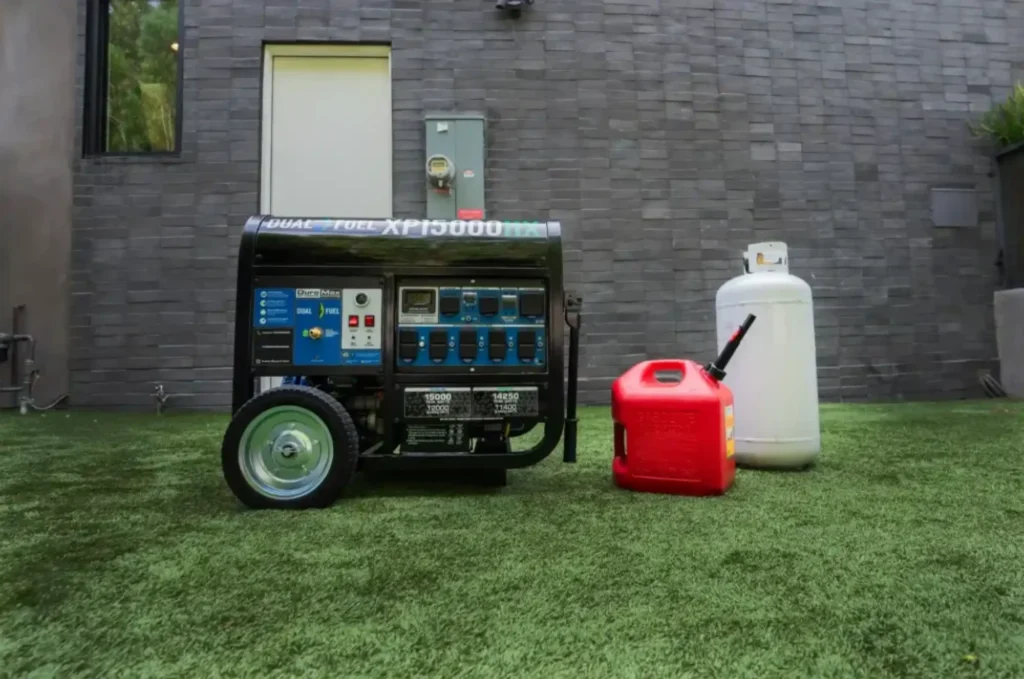
Real-world numbers vary by model and load, but here’s what common units deliver on a 20 lb cylinder ($20 to $25 to refill) at half load. If you’re asking how long a Champion generator will run on propane, or how a Predator 5000 compares, the numbers below cover both:
- Champion 3,800W: up to 10.5 hours, with larger cylinders stretching that further
- Firman 4,550W: around 12 hours, depending on the model and how hard you run it
- Predator 5000 (Harbor Freight dual-fuel): draws about 1 GPH on propane, so expect roughly 4 to 5 hours per 20 lb cylinder at moderate load; lighter loads stretch it further
At the same $20 to $25 refill cost, the Champion and Firman stretch further on that fuel spend than the Predator, which needs a refill roughly twice as often.
Tips to Make Your Propane Last Longer
Cutting your load is the fastest way to add hours. Shut off anything non-essential, stagger heavy appliances so they don’t run at once, and keep filters and plugs clean. Service the unit every 100 hours, and if you’re running a standby system, check how often to change the oil in a Generac generator, since oil intervals run on their own hour-based schedule separate from general servicing.
Habits That Stretch Your Fuel
- Power only the circuits you truly need
- Avoid running high-draw items at the same time
- Clean filters and spark plugs on schedule
- Store cylinders in a cool, ventilated spot
- Keep the load between 50 and 75 percent, the range most manufacturer spec sheets recommend for fuel efficiency and engine life
One more thing before you start saving fuel: never run a unit in or near an enclosed space. Read up on carbon monoxide deaths from generators. Ventilation is not optional.
Frequently Asked Questions
How much propane does a generator use per hour?
Anywhere from about 0.4 gallons an hour for a small 2,000-watt unit to 2.5 gallons or more for a 12,000-watt machine. At national average prices of roughly $2.50 to $3 per gallon (EIA), that works out to about $1 to $7 per hour, depending on your unit and load.
Do Generac generators run on propane?
Yes. Most Generac home standby systems run on propane or natural gas, and several of their portable models are dual-fuel, allowing you to switch between gasoline and LP.
How long will a 20 lb propane tank run a generator?
Between roughly 2 and 12 hours, depending on the size of the unit, with a refill cost of about $20 to $25. A small inverter can run for 10-plus hours on one cylinder, while a large 12,000-watt unit may empty it in about 2 hours.
Is propane or gas better for a backup generator?
For long-term emergency use, propane usually wins because it stores for years and starts cleanly in cold weather. Gasoline can make sense for short, occasional use.
Propane Generator Run Time: What It Comes Down To
Your hours of power hinge on three things: cylinder size, unit wattage, and the load you place on the system. Use the table above to size your tank to your unit, and you won’t be caught guessing when the power goes out.
Grounded Electric’s Generac-certified team can help you size the right setup and make sure it’s ready for long, safe operation.
Schedule a consultation with Grounded Electric