



To hook up a Generac generator to a house, you need an automatic transfer switch, correctly sized conductors, and a fuel supply that holds steady pressure under load. The unit connects to your electrical panel via that switch, which prevents power from backfeeding onto utility lines.
Who can install a Generac generator depends on licensing. Electrical and gas work both require a licensed contractor in nearly every US jurisdiction, and manufacturer coverage usually depends on an authorized start-up.
Grounded Electric is a Generac-certified installer, and its crews follow the same sequence on every job.
This guide covers placement clearances, fuel pressure targets, transfer switch wiring, cost ranges by unit size, and what proper testing looks like. You can also review our detailed Generac generator installation guidelines for added clarity.
Key Takeaways
- A standby unit connects through an automatic transfer switch, sized conductors, and a fuel line that holds pressure under load.
- Air-cooled models need 18 inches from the house wall and 60 inches from any openable window, door, or vent.
- Natural gas requires 3.5 to 7 inches of water column at the inlet; LP vapor requires 10 to 12 inches of water column at the inlet.
- All-in cost runs roughly $6,000 for a 10kW essential-circuit setup to $18,000 for a 24kW whole-house system.
- Site work takes one to two days, but permits, gas utility sign-off, and equipment lead time push the full timeline to four to twelve weeks.
Quick Overview Of The Generac Generator Installation Process
The sequence is consistent on almost every residential job:
- Load calculation and unit sizing
- Site selection and clearance verification
- Pad prep, either a composite pad or a 4-inch concrete slab on compacted gravel
- Setting the unit and connecting the fuel line
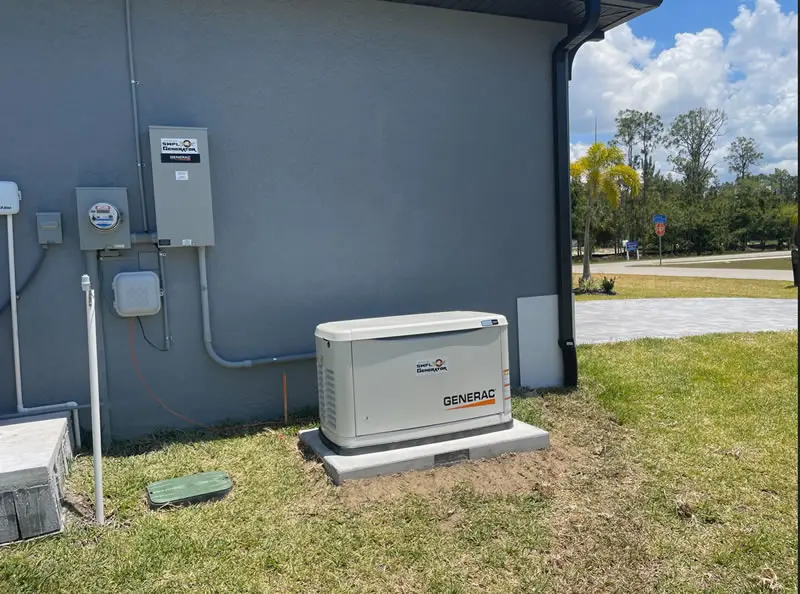
- Mounting the transfer switch beside the main panel
- Running power conductors and control wiring between the unit and the switch
- Permit inspection
- Simulated outage test under load
Each step has to meet code before the next one is signed off. The final load test confirms the system handles real demand, not just idle operation.
How To Wire A Generac Generator
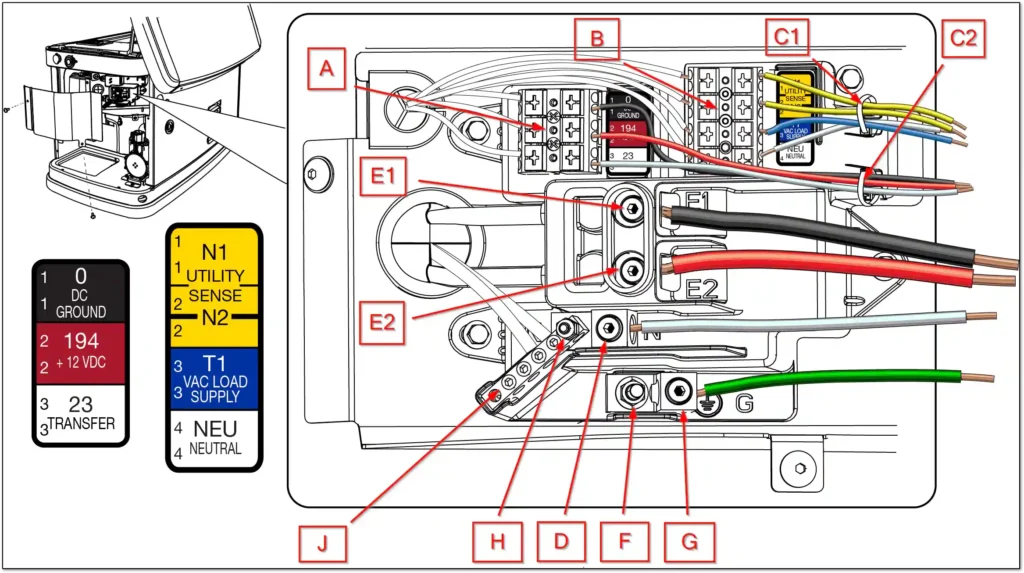
Wiring runs on two separate paths: power conductors that carry the unit’s output to the transfer switch, and a low-voltage control harness that signals the switch when to transfer.
Both need their own conduit. Bobby Mulholland pulls them separately on every job, because running control wire alongside power leads is one of the most common causes of nuisance faults after startup.
Wire Sizing By Unit Output
Conductor size follows the unit’s output breaker rating and is then checked against NEC 310.16 and any local amendments. Typical starting points:
| Unit size | Approx. output breaker | Typical copper conductor |
|---|---|---|
| 10kW | 44A | #8 |
| 16 to 18kW | 70 to 75A | #4 |
| 20 to 22kW | 85 to 90A | #3 |
| 24 to 26kW | 100A | #3, or #1 aluminum |
Control wiring is 14 AWG minimum. Runs longer than about 100 feet often need conductors bumped up a size to hold voltage drop within a commonly used design target of 3 percent, which matters more than people expect on properties where the unit sits well away from the panel.
Important Manufacturer Safety Requirements
Generac requires approved fuel materials and a controlled bend radius on the flexible connector. A kinked connector restricts flow and shows up later as a low fuel pressure fault under load.
Electrical work has to match the unit’s output rating exactly. Oversizing the breaker does not add capacity; it removes the protection the unit was designed around.
Connecting The Unit To Your Home
The connection runs through the transfer switch, never directly into the panel. Barret Abramow checks panel age and busbar condition before anything gets tied in, since a 1970s panel with aluminum branch wiring often needs replacement first.
Leave the manufacturer’s service clearances open on all sides. Units boxed in by fencing or new landscaping run hot and lose output on summer days when you need them most.
How To Hook Up A Generac Whole-House Generator
A whole-house setup starts with a load calculation, not a catalog. Most 1,500 to 2,500-square-foot homes with central air land between 18kW and 22kW; homes with two AC compressors or electric heat usually need 24kW or more. If your home falls in that range, our breakdown of how big a generator you need for a 2,000 sq ft house walks through the exact math.
The larger the unit, the more the fuel side drives the job. A 22kW model burns roughly 276 cubic feet of natural gas per hour at full load, so your meter has to cover that on top of every existing appliance.
Homeowners weighing the numbers can review whether Generac generators are worth the investment before committing to full-home coverage.
What You Need Before Work Begins
Tools, Materials, And Permits
Generac installation requirements break into three permit categories in most towns: electrical, gas or plumbing, and sometimes zoning if the unit sits near a property line.
Everything within reach of the unit needs to be outdoor-rated, including conduit, fittings, and the disconnect, if required by your jurisdiction. Review what a Generac generator runs off of if you are still deciding between natural gas and propane.
Permit and inspection fees typically range from $150 to $800, depending on the municipality. Grounded Electric handles sourcing and filing so nothing stalls at inspection. Homeowners who want to understand what the visit entails can review our guide to preparing for an electrical inspection.
Using The Generac Installation Manual PDF
Every model ships with a manual, and Generac keeps current product manuals as downloadable PDFs on its support site. Match the document to your exact model number, since clearance and pressure specs differ between air-cooled and liquid-cooled lines.
The manual gives you the placement diagram, fuel routing requirements, and airflow minimums. Read the safety notes even if a pro is doing the work, because they explain why certain layouts get rejected at inspection.
When A Setup Video Helps
A walkthrough video makes component layout easier to picture before your site visit. It shows you where the switch sits relative to the panel and what the fuel connection actually looks like.
It is not a substitute for licensed work, but it helps you recognize each component when your installer points it out during the walkthrough.
Transfer Switch Setup And Wiring
How To Hook Up A 200-AMP Generac Transfer Switch
A 200-amp switch handles full-home systems and must match your main breaker rating. If you’re unsure what size standby generator a 200-amp service can actually support, that’s worth confirming before the switch gets ordered. Undersizing it against the service is an automatic inspection failure.
Service entrance conductors at that rating are typically 2/0 copper or 4/0 aluminum. The switch monitors utility voltage continuously and transfers within about 10 to 20 seconds of a confirmed outage.
Safe Wiring And Panel Connection Steps
Every conductor has to meet its load rating and terminate in an approved connector rated for the wire material. Mixing aluminum and copper without a rated lug is a failure point that shows up as heat damage months later.
The switch bonds into the existing grounding electrode system. After wiring, the panel gets tested for correct polarity, grounding continuity, and neutral isolation before the unit is ever started.
Installations For 10kW And 20kW Units
How To Install A 10kW Unit
A 10kW model powers essential circuits: refrigeration, well pump, furnace blower, and a few lighting and receptacle circuits. It pairs with either a smaller service-rated switch or a load-managed setup.
Wire sizing starts at #8 copper, and the switch has to be compatible with the unit’s control board. Airflow clearance still applies in full even on the smallest units.
How To Install A 20kW Unit
A 20kW unit carries central air plus most of the house. It needs a stronger fuel supply, often a gas meter upgrade, and a pad rated for its weight, since air-cooled models in this class run 400 to 550 pounds.
Wiring has to handle roughly 85 amps of continuous output. Bobby Mulholland verifies gas pressure at the inlet while the unit is running under load, not at rest, because static pressure readings can hide undersized supply lines.
Fuel Line And Electrical Panel Connections
Natural Gas And Propane Hookup Steps
Fuel pressure at the unit inlet is the number that matters. Generac’s own specifications call for 3.5 to 7 inches of water column for natural gas, measured while the unit runs under load; LP vapor requires 10 to 12 inches.
Line sizing depends on total run length and every appliance sharing the supply. If the meter sits far from the pad, adding a dedicated gas line for the unit is usually cleaner than tying into an undersized existing run. Longer runs and undersized pipe are the usual reason a unit starts fine, then shuts down two minutes into an outage.
Valves and regulators go in per the manual, with clean routing to limit pressure loss. Every joint gets leak-tested before startup.
Electrical Panel Connection Requirements
Panel connections must match the breaker rating and follow current grounding rules. Worn breakers, corroded lugs, and double-tapped neutrals get corrected before activation, not after.
If your panel is already at capacity, a service upgrade comes first. That adds cost, but tying a standby system into an overloaded panel just relocates the problem.
Generac Generator Placement, Codes, And Compliance
How Far Does A Generac Need To Be From The House?
Most air-cooled Generac models are listed for 18 inches from the house wall. The clearance that trips people up is the 60-inch minimum from any openable window, door, or vent, which exists to keep exhaust out of the building.
Generac generator location requirements at a glance:
| Clearance point | Minimum distance |
|---|---|
| From the house wall (air-cooled, listed models) | 18 inches |
| From openable windows, doors, and vents | 60 inches |
| Front, for service access | 36 inches |
| Above the unit, no decks or overhangs | 60 inches |
| From shrubs, fencing, and combustible material | 36 to 60 inches |
The table above serves as a Generac generator placement diagram you can reference on site, laid out the same way as Generac’s own installation drawings.
Source: Generac air-cooled standby generator installation guidelines. Always confirm against your model’s manual and your local code, since some towns add setback rules beyond the manufacturer’s numbers. Liquid-cooled units have larger requirements across the board.
Critical Safety Rules You Must Follow
Keep the unit clear of all building openings, including dryer vents and basement windows that are easy to overlook, since exhaust drifting back toward carbon monoxide entry points is the real hazard behind that rule. Exhaust direction should point away from the house and any neighboring structures.
Electrical and fuel work both follow NEC and local fuel gas code. Meeting those rules also keeps manufacturer coverage intact, which matters if you ever file a claim.
NEC Codes And Placement Rules
Beyond clearances, code covers grounding, disconnect requirements, and conductor protection. The pad needs to be level and stable; a settling pad puts stress on the fuel connector and increases vibration noise.
Placement also affects what you hear. Air-cooled units run at about 65 dBA at 23 feet, so putting one under a bedroom window is a decision you will regret during the weekly exercise cycle. If noise is a deciding factor for your site plan, our guide on whether Generac generators are loud goes deeper into what to expect by model and at different distances.
What It Costs To Install A Home Standby System
Generac’s published national range is $8,000 to $16,000 all-in, including the unit itself, though that figure shifts by unit size, as the breakdown below shows. For a closer look at what drives standby generator installation cost beyond the unit price, our dedicated cost guide breaks down labor, permits, and site work separately.
| Unit size | Typical installed cost | Coverage |
|---|---|---|
| 10kW | $6,000 to $9,500 | Essential circuits only |
| 14 to 18kW | $8,500 to $13,000 | Most homes, one AC unit |
| 20 to 22kW | $10,000 to $15,000 | Whole house with central air |
| 24 to 26kW | $12,000 to $18,000 | Larger homes, two AC compressors |
Site conditions drive the rest:
- Electrical panel upgrade: $2,000 to $4,500
- New gas line run: $1,000 to $3,500, depending on distance and pipe size
- Concrete pad: $500 to $1,500
- LP tank, if natural gas is unavailable: $1,500 to $3,500
- Permits and inspection: $150 to $800
The single biggest cost variable is distance. The closer the unit sits to both the gas meter and the electrical panel, the less you spend on conduit, trenching, and pipe.
Testing And Troubleshooting
First Startup And Load Test
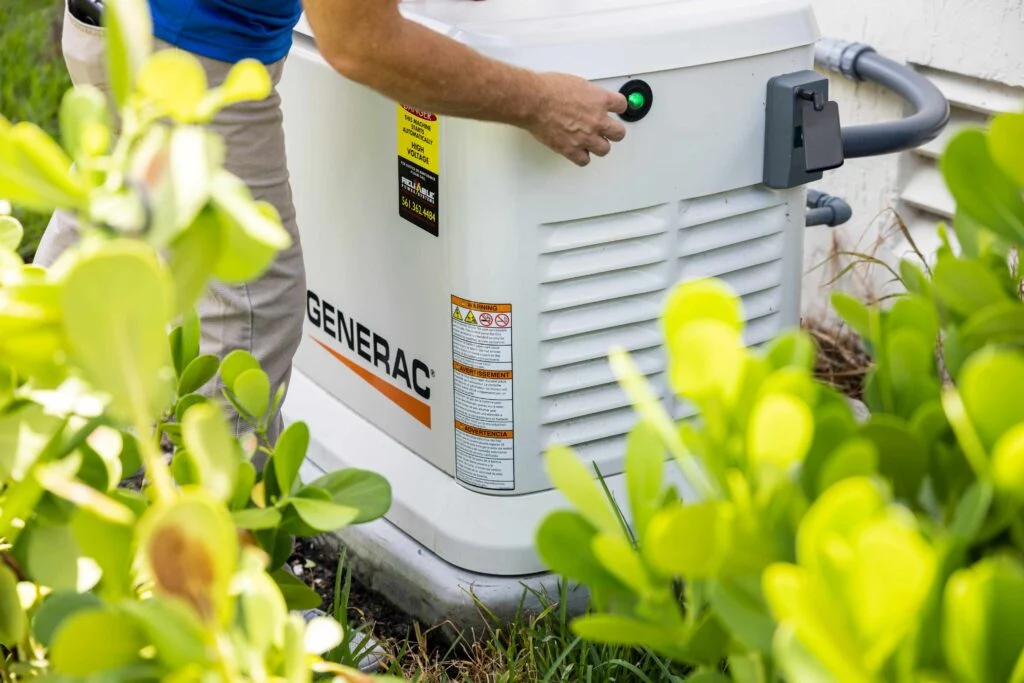
The unit runs under actual load to confirm voltage and frequency stability, not just that it starts. Fuel pressure gets read again with the engine running, and transfer time is timed against spec.
Any diagnostic codes on the controller are cleared and re-verified. Final checks cover the automatic return to utility power, which is the step most DIY setups get wrong.
Fixing Common Setup Issues
The recurring problems are loose terminations, low fuel pressure under load, and control wiring run too close to power conductors. All three are correctable during commissioning if someone is actually looking for them.
Low pressure almost always traces back to pipe sizing or a shared supply that cannot keep up. Correcting it at install is far cheaper than diagnosing a shutdown mid-outage in February.
Timeline And Professional Support
Site work itself runs one to two days. The full timeline is four to twelve weeks, driven by permit turnaround times, gas utility approvals, and equipment availability.
How To Install A Generac Generator Without Costly Mistakes
Professional work prevents the expensive category of error: failed inspections, voided coverage, and undersized fuel supply that only reveals itself during a real outage.
Grounded Electric manages permits, utility coordination, and inspection scheduling as part of the job, so nothing sits in limbo waiting on a filing nobody submitted.
Hiring A Licensed Electrician For Generator Hook Up
An electrician for a generator hookup addresses the two failure points that pose the greatest risk: grounding and the transfer switch connection. A backfeed error puts utility crews in danger and is one of the few mistakes with liability attached to it.
Licensed contractors also carry the inspection relationship. They know which local amendments your town enforces, which saves a second trip and a re-inspection fee.
Real Homeowner Considerations
Cost and clearance get most of the pre-purchase attention, but maintenance interval is what actually determines whether the system works when it matters. Skipped oil changes and untested batteries are the leading causes of a unit failing to start during the outage for which it was bought.
Annual service, battery checks, and keeping the weekly self-test on schedule are what separate a unit that starts reliably in year eight from one that does not. Our breakdown of annual maintenance cost for a Generac generator covers what that upkeep typically runs. Grounded Electric’s guide on whether Generac generators are worth it compares long-term value against those ownership costs.
If you want expert guidance for your home, consider scheduling an appointment with Grounded Electric to review the best installation plan for your needs.
Frequently Asked Questions
Can I Install A Generac Generator Myself?
No, not legally in most of the US. The job combines high-voltage electrical work and fuel gas piping, both of which require licensed trades and permitted inspection in nearly every jurisdiction.
Does Self-Installation Void The Warranty?
It puts coverage at serious risk. Manufacturer warranties generally require start-up and commissioning by an authorized dealer, and an unpermitted install can also create problems with your homeowner’s insurance.
Can I Plug A Generator Directly Into My House?
No. Connecting a unit to your electrical system without a transfer switch sends power back onto utility lines, which can electrocute line crews and destroy your own equipment. The transfer switch exists specifically to prevent that.
How Close Can A Standby Unit Sit To The House?
Most air-cooled Generac models are listed for 18 inches of clearance from the wall, but you still need 60 inches of clearance from any openable window, door, or vent. Check your model’s manual and local code before finalizing the spot.
What Size Unit Runs A House With Central Air?
Homes with a single central AC system usually need 18-22kW. Two compressors, electric heat, or a well pump plus AC typically pushes you to 24kW or higher. A load calculation gives you the real number.
How Long Does The Whole Process Take?
Four to twelve weeks from signed proposal to a tested system. The on-site work is only one to two days; the rest is permits, gas utility sign-off, and equipment lead time.
